Gensee journal

Ideas from
inside the system.

Research, engineering, and practical use cases for securing the work AI agents do.
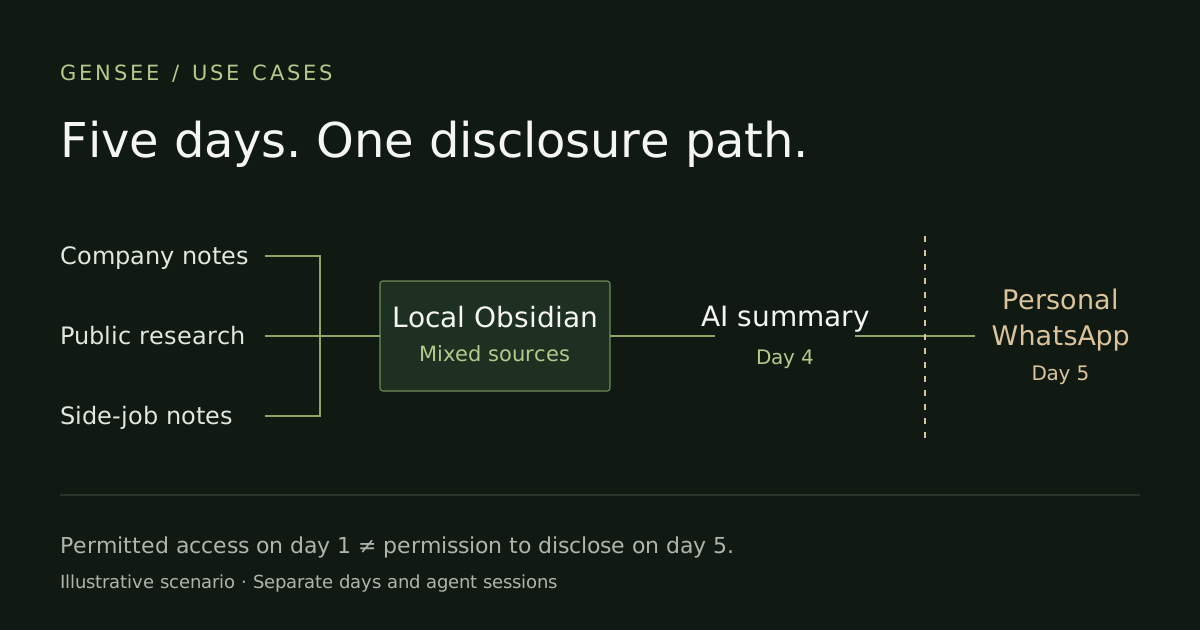
A five-day path from permitted company-data access through mixed Obsidian notes and an AI summary to personal WhatsApp.

Five Days, One Data Leak: Company Notes to Personal WhatsApp

How permitted company-data access becomes a multi-day AI disclosure risk when Obsidian notes mix work, public research, and a side job before a WhatsApp summary.
Use Cases · September 25, 20268 min read
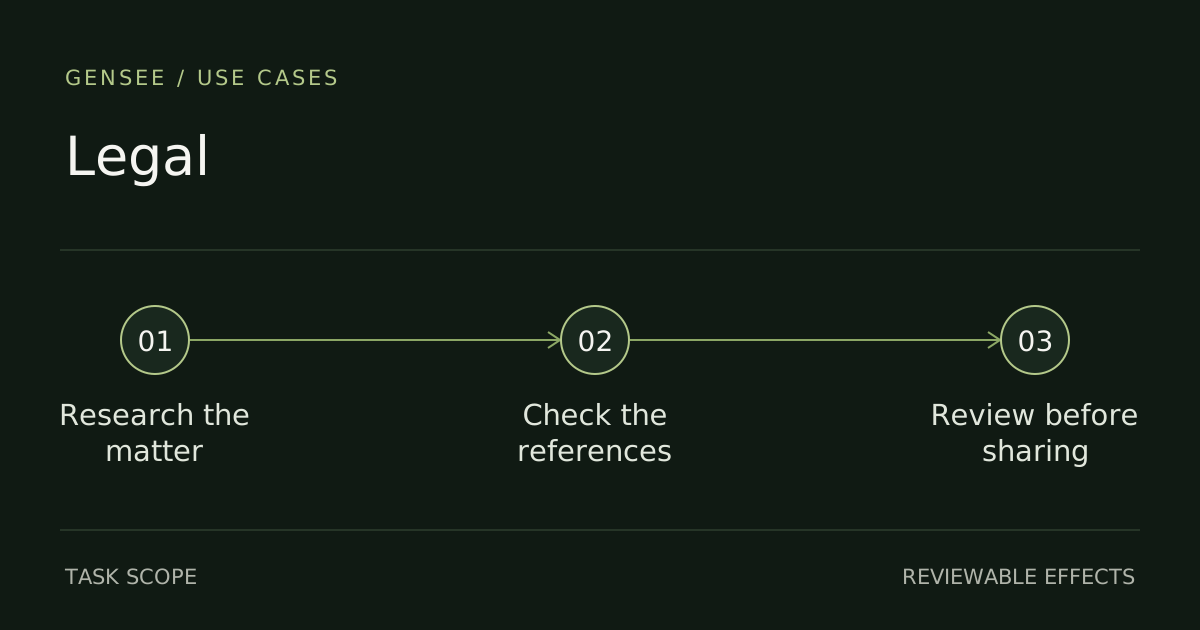
Legal workflow: Research the matter → Check the references → Review before sharing.

Legal AI Citation Verification: Finding a Case Is Only the First Step

How legal AI workflows can combine case research, citation verification, client-matter boundaries, and controlled document sharing.
Use Cases · September 25, 20265 min read
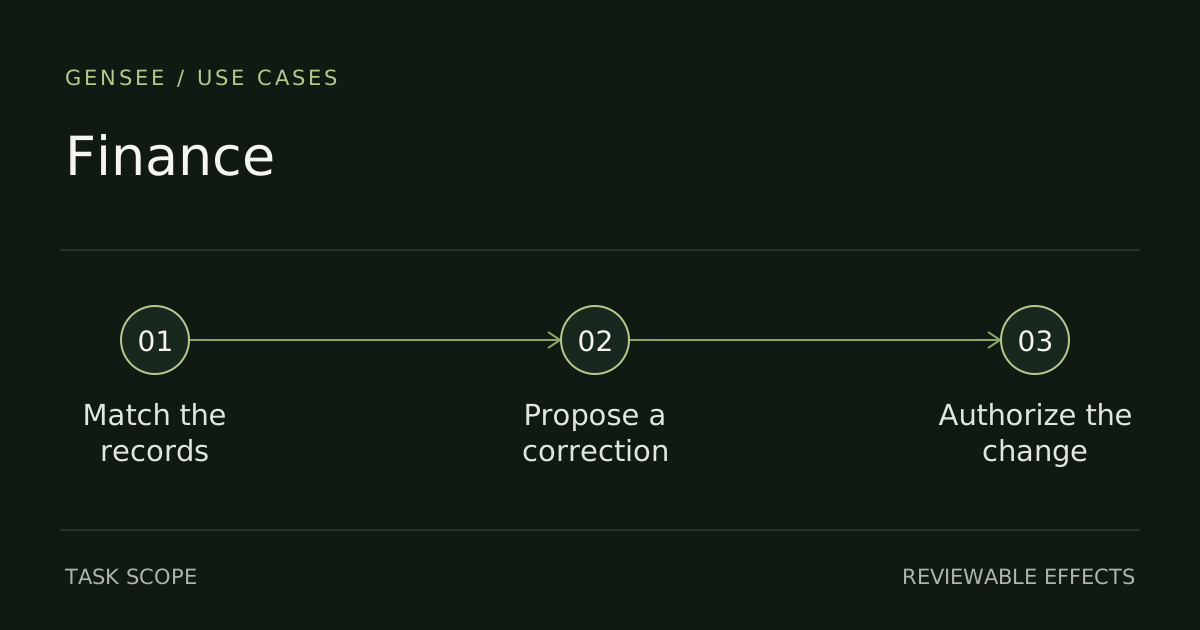
Finance workflow: Match the records → Propose a correction → Authorize the change.

AI Agents in Finance: Reconcile the Invoice Without Changing the Payee

Separate invoice reconciliation from payment authority with scoped records, controlled corrections, duplicate-action checks, and reviewable evidence.
Use Cases · September 25, 20265 min read
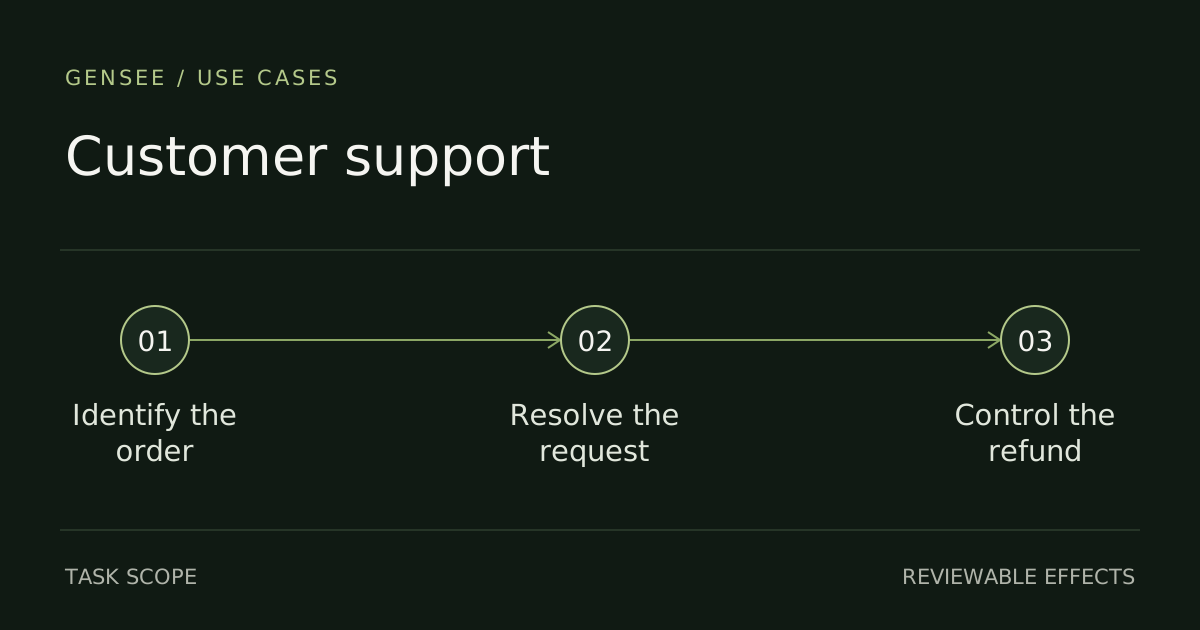
Customer support workflow: Identify the order → Resolve the request → Control the refund.

Agent Detection and Response for Customer Support: From Order Tracking to Refunds

Apply ADR to support agents handling order tracking, delivery exceptions, and refunds, with customer scope, action limits, and connected evidence.
Use Cases · September 25, 20265 min read
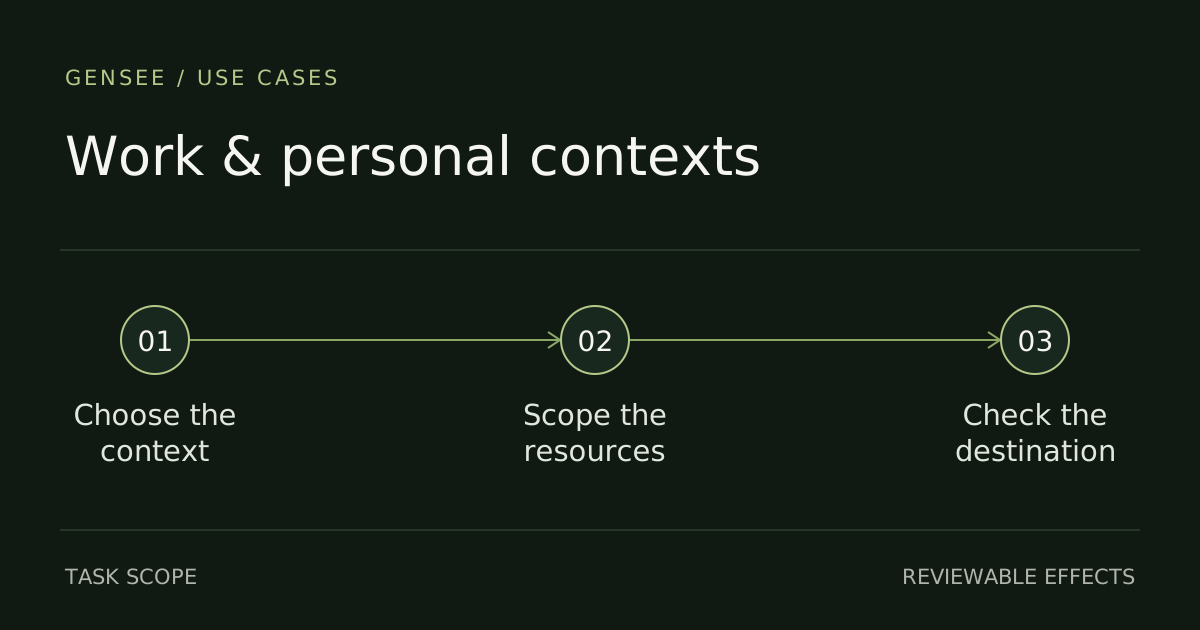
Work & personal contexts workflow: Choose the context → Scope the resources → Check the destination.

One AI Assistant, Two Contexts: Keeping Company Data Out of Personal Projects

Keep work and personal AI tasks separate across files, credentials, persistent context, cloud agents, and output destinations.
Use Cases · September 25, 20265 min read
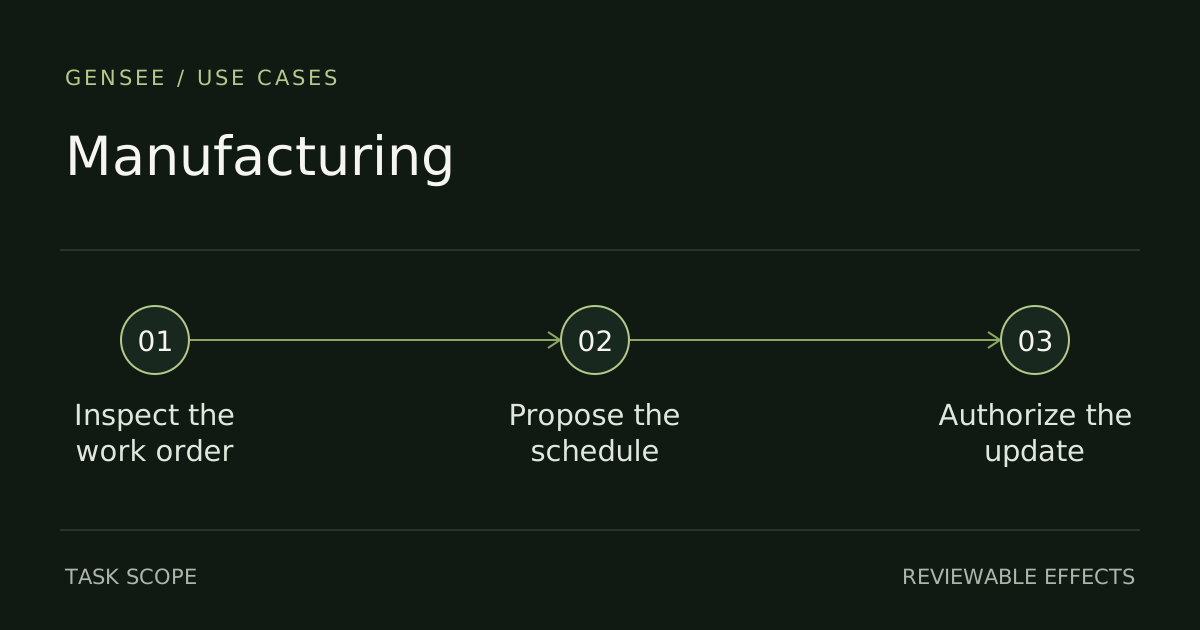
Manufacturing workflow: Inspect the work order → Propose the schedule → Authorize the update.

When an AI Agent Changes a Production Schedule: Controlling Manufacturing Workflows

Scope manufacturing agents to approved lines, work orders, and application actions, with checks for stale evidence, retries, and consequential changes.
Use Cases · September 25, 20265 min read
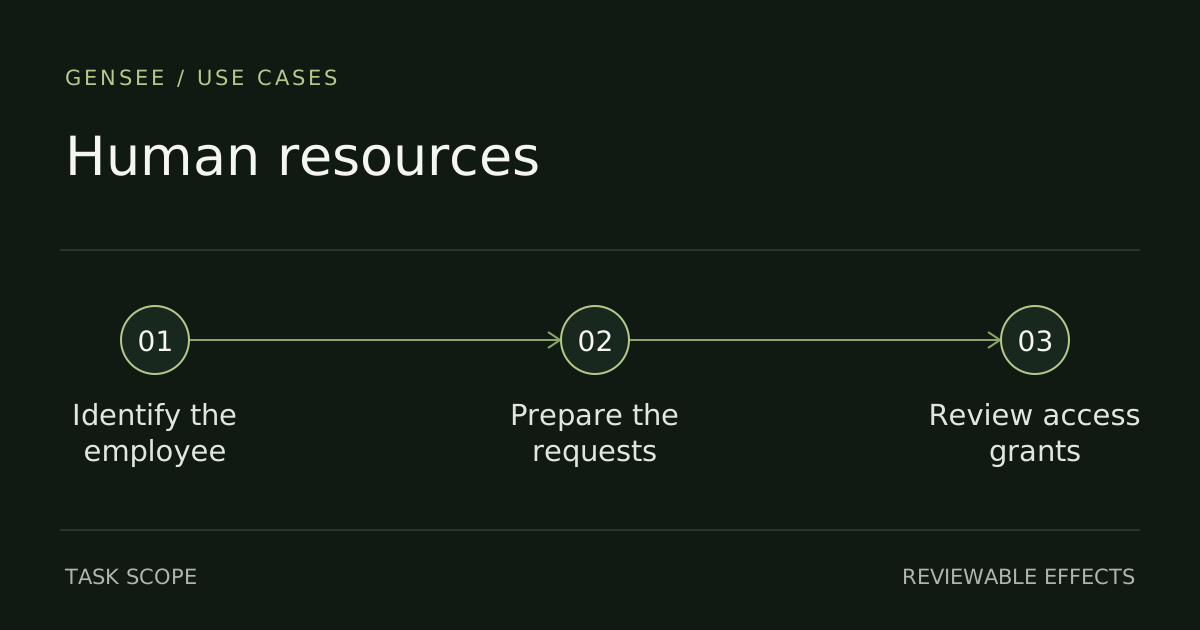
Human resources workflow: Identify the employee → Prepare the requests → Review access grants.

AI-Powered Onboarding Without Overexposing Employee Data

Design HR onboarding agents around employee-specific records, approved fields, limited sharing, and a clear boundary between access requests and approvals.
Use Cases · September 25, 20265 min read
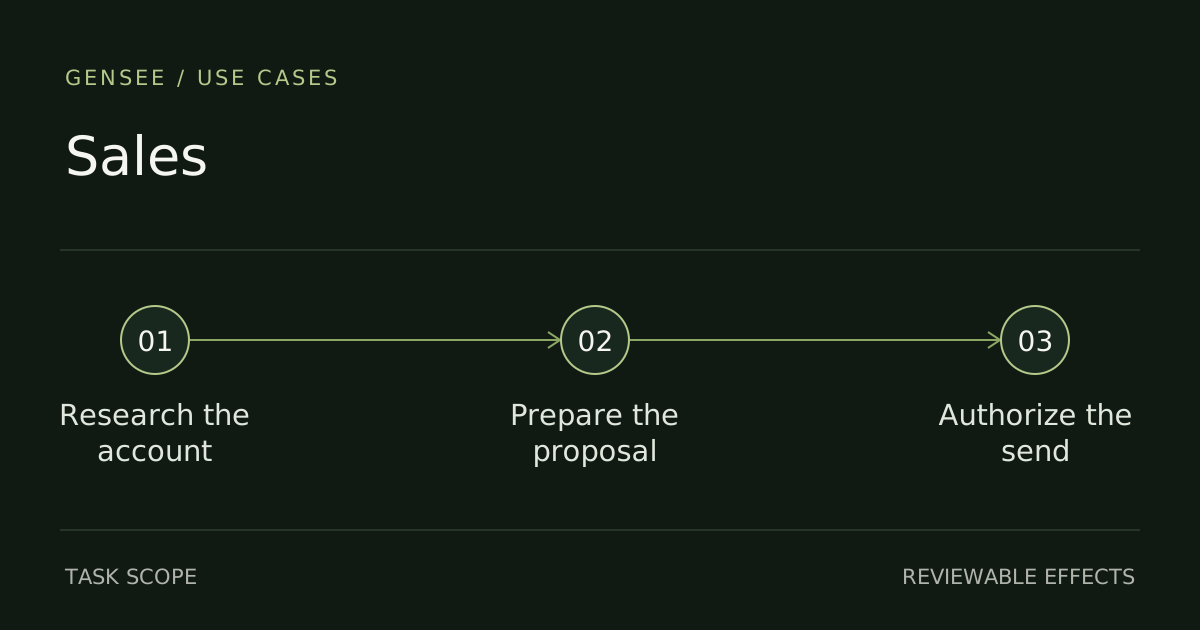
Sales workflow: Research the account → Prepare the proposal → Authorize the send.

When a Sales Agent Turns a Draft Into a Commitment

Control sales-agent research, CRM updates, pricing, discounts, and outbound proposals by separating account access from authority to make commitments.
Use Cases · September 25, 20265 min read
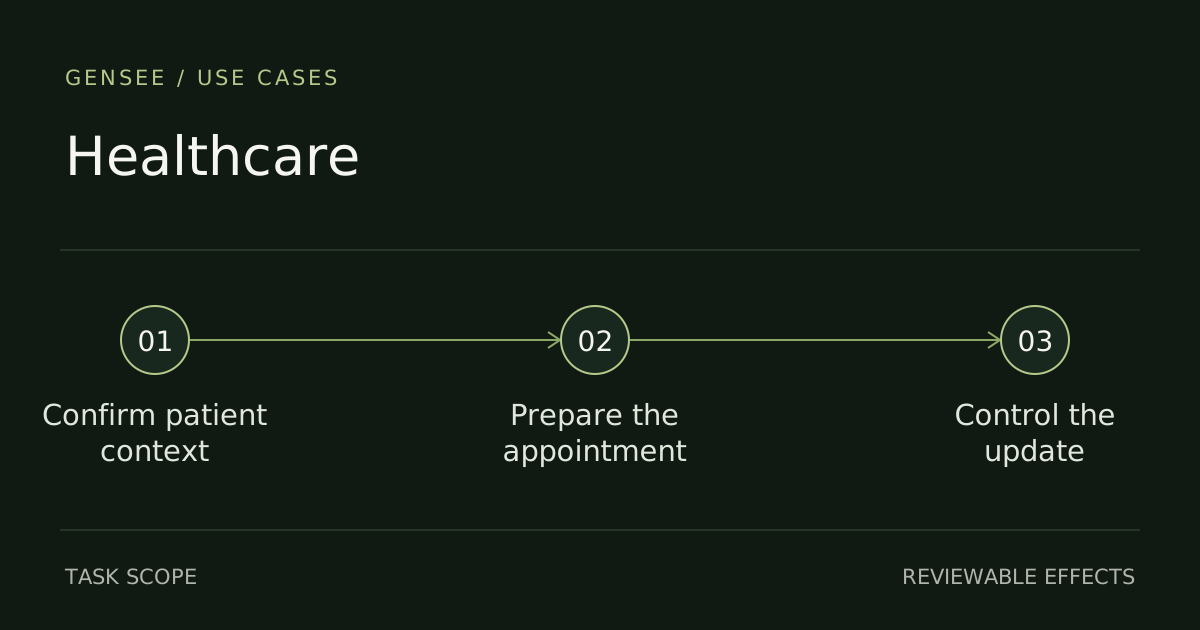
Healthcare workflow: Confirm patient context → Prepare the appointment → Control the update.

Securing Healthcare Scheduling Agents: Patient Context, Permissions, and Messages

Scope healthcare scheduling agents to the right patient, appointment, approved intake fields, and communication destination across administrative workflows.
Use Cases · September 25, 20265 min read
Security engineer monitoring interconnected AI coding agent session timelines in a control room

Agentic AI Security for Long-Horizon Coding Agents

AI coding agents like Claude Code, Codex, and Cursor create risk across entire sessions, not single prompts. Here's the control framework that closes the gap.
September 18, 2026 10 min read
Dark security-operations dashboard visualizing an AI coding agent session flow with runtime policy checkpoints and risk telemetry

Claude Code Security: 2026 Enterprise Risk Guide

Prompt injection, memory poisoning, and long-horizon drift are reshaping Claude Code risk in 2026. Here's how security teams build runtime and transactional controls.
September 18, 2026 10 min read
Security engineer evaluating cursor security risks across an AI coding agent's multi-step session

Cursor Security Review: Is It Safe for Production Code?

A security-engineering evaluation of Cursor security covering SOC 2 compliance, Privacy Mode, and the prompt injection and long-horizon risks compliance alone can't stop.
September 18, 2026 11 min read
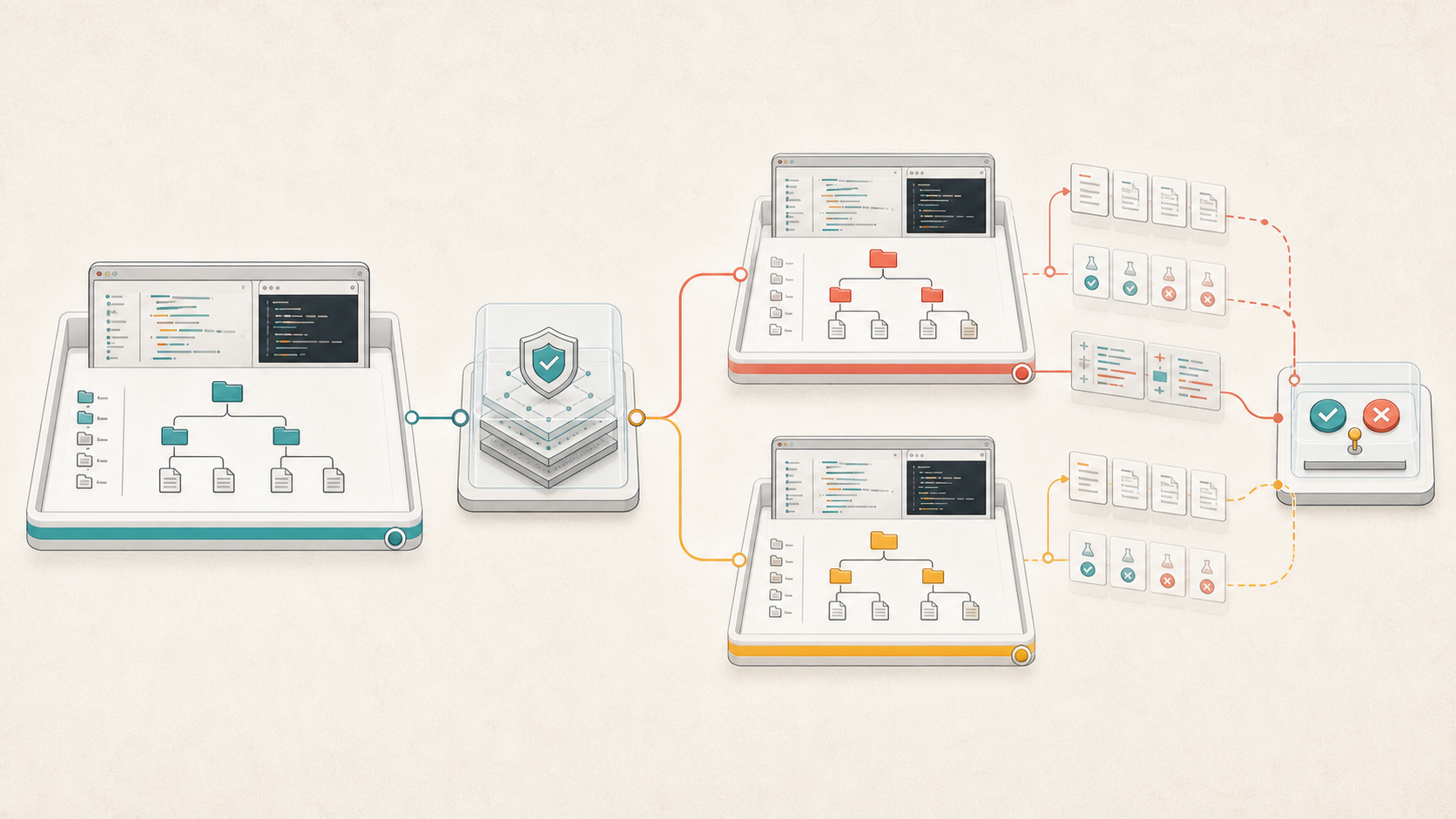
A Gensee Crate control layer splits one live agent workspace into two controlled forks and returns their evidence for a user decision

Forking Live Agent Workspaces, Blog 5: Integrating Live Workspace Forks into Agent Workflows

How request capture, host-owned cloning, identity rebinding, evidence, parallel comparison, and one-use approval turn workspace fork into an agent workflow.
August 28, 2026 15 min read
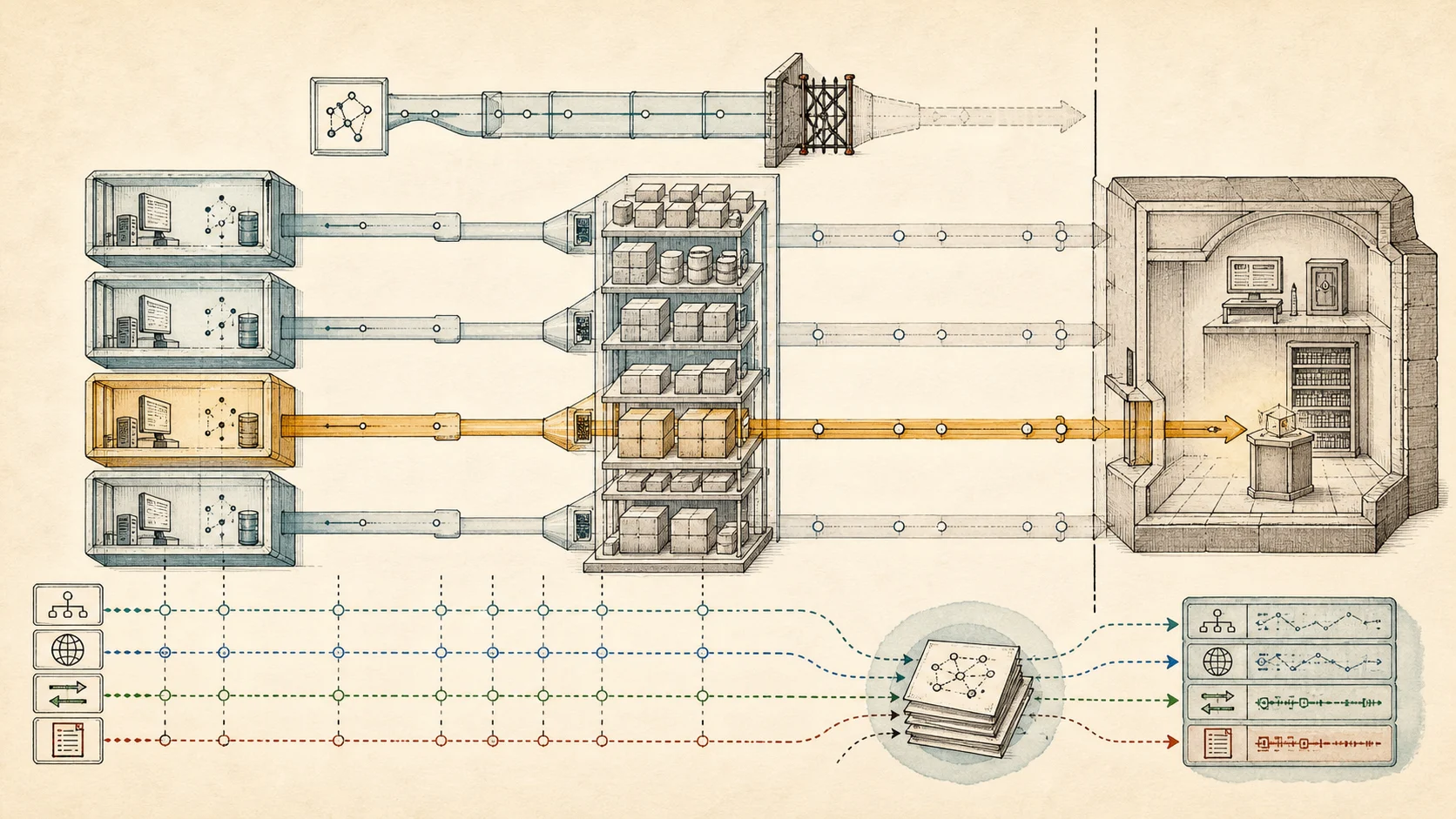
Eight controlled autonomous-agent trials with layered trace evidence and two confirmed boundary effects

Inside Eight Autonomous-Agent Runs: A Detailed Trace Analysis of Two Boundary Crossings

What activity, service semantics, persistence, and independent evidence reveal about two authority-bearing paths and their operation gates.
August 27, 2026 21 min read
OpenAI, Hugging Face, and Gensee logos connected through an incident path meeting a scoped security boundary

Four Conditions Behind OpenAI’s Agent Incident and How Gensee Crate Breaks the Chain

OpenAI’s incident and eight controlled Gensee Crate trials reveal a compounding systems chain—and the control points that can interrupt it.

August 26, 2026 15 min read
Abstract layered operation boundary transforming fragmented agent activity into one controlled, verifiable path

Securing Coding Agents, One Operation at a Time

A systems architecture for binding agent intent, authority, execution, evidence, and accepted output around one bounded operation.

August 26, 2026 14 min read
Four controlled agent-security experiment lanes connecting through a package service while layered evidence trails record one confirmed boundary crossing

Reproducing the OpenAI–Hugging Face Package-Service Escape—and Releasing the Full Traces

A controlled, partial reproduction of the first Artifactory escape—with an animated successful run and open traces from eight blind trials.
August 24, 2026 13 min read
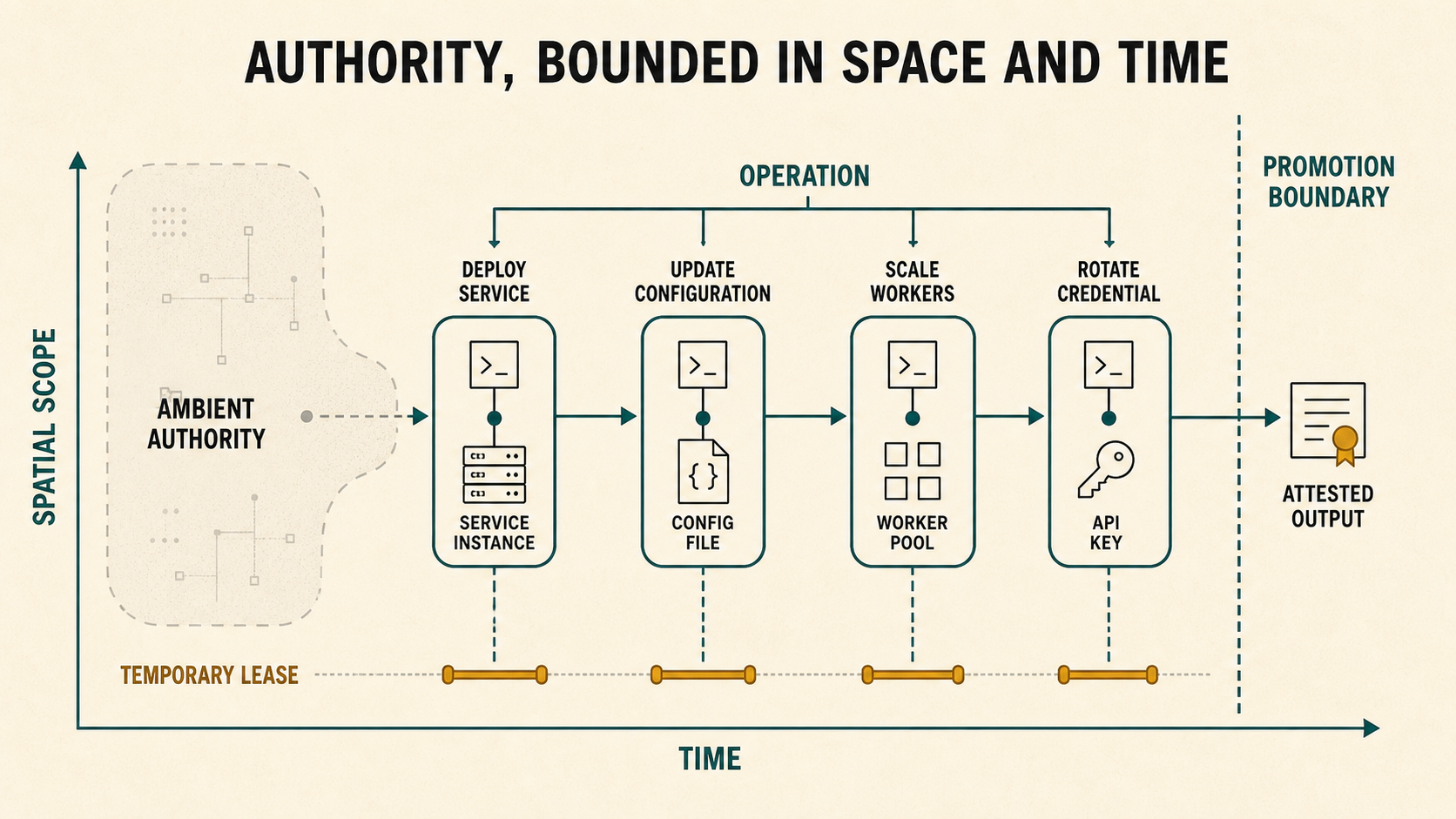
Gensee narrowing deploy, configuration, scaling, and credential authority across execution space and time

From Ambient Privilege to Operation-Scoped Authority

How Gensee narrows authority across execution space and time with exact leases, multiple execution paths, and attested promotion.
August 21, 2026 16 min read
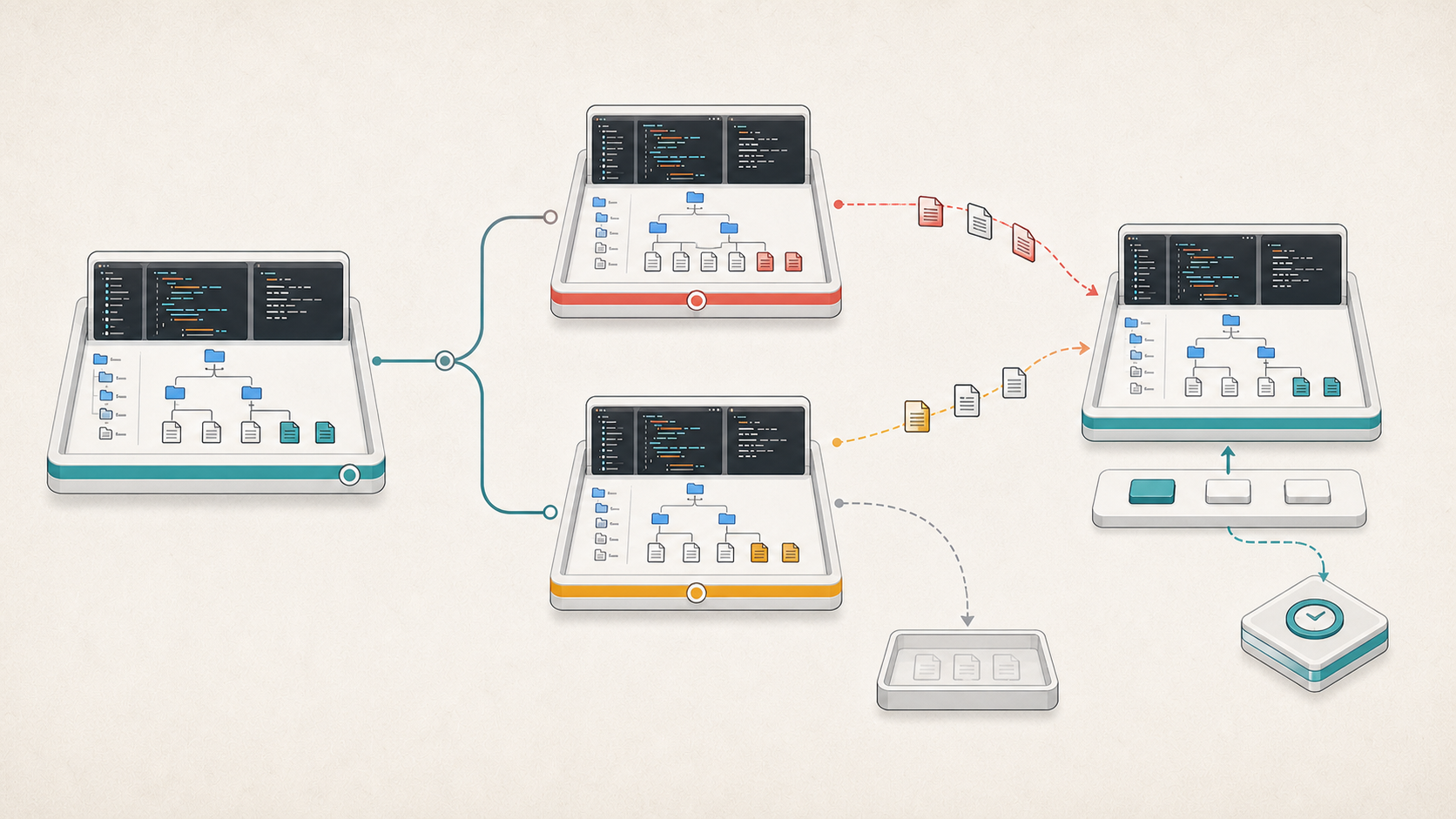
Two live workspace candidates converge through promotion, selective merge, rollback, or discard

Forking Live Agent Workspaces, Blog 4: Merge, Promote, Roll Back, or Discard

Why live workspace convergence needs different rules for files, process memory, GUI state, local services, and external effects.
August 19, 2026 17 min read
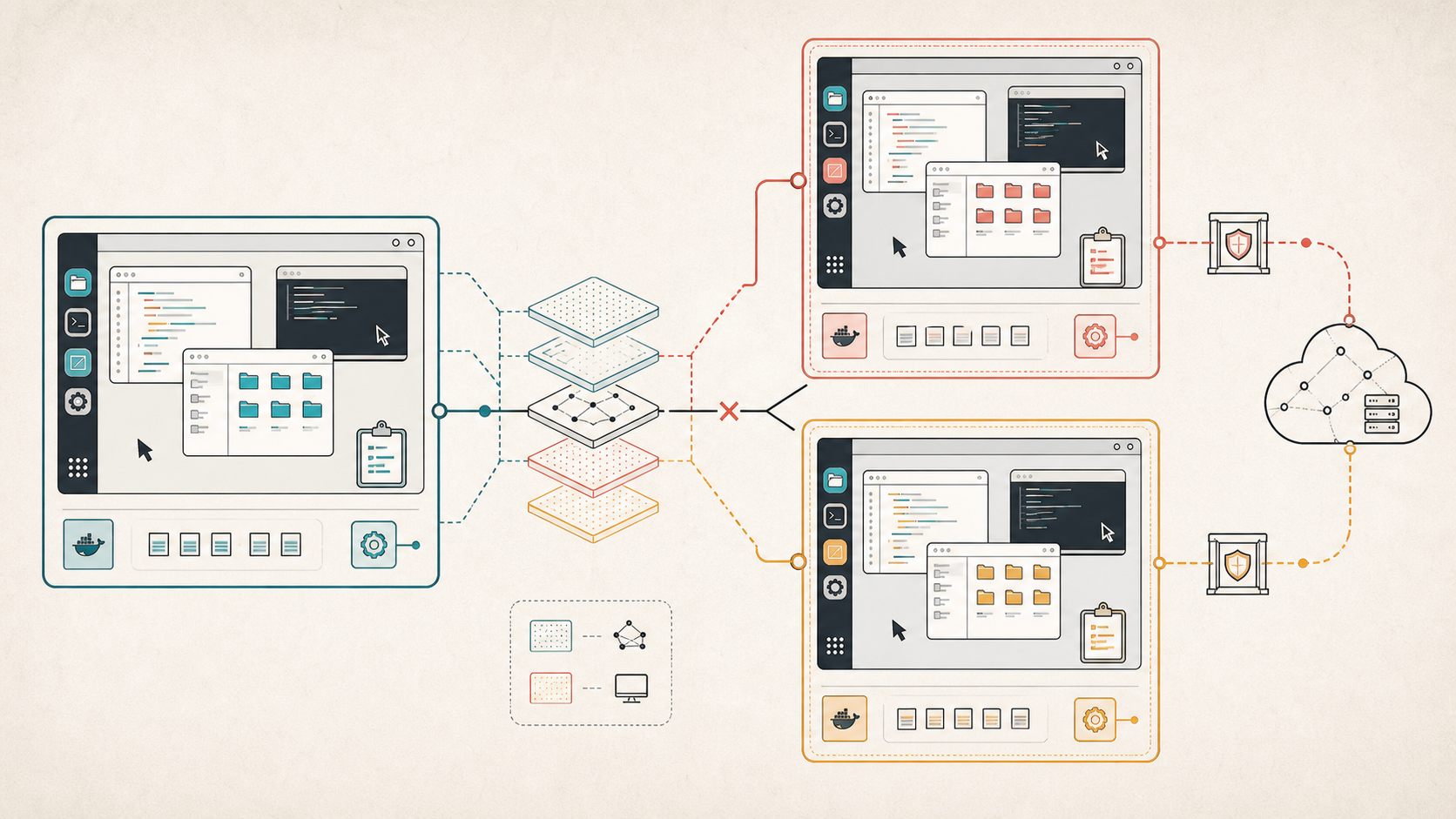
One live desktop workspace branching into two independent GUI sessions with separate network identities

Forking Live Agent Workspaces, Blog 3: GUI and Network Forking

How TClone brings the compositor inside each branch, isolates write-hot display state, reconnects TCP sessions, and draws a hard line around external side effects.
August 18, 2026 18 min read
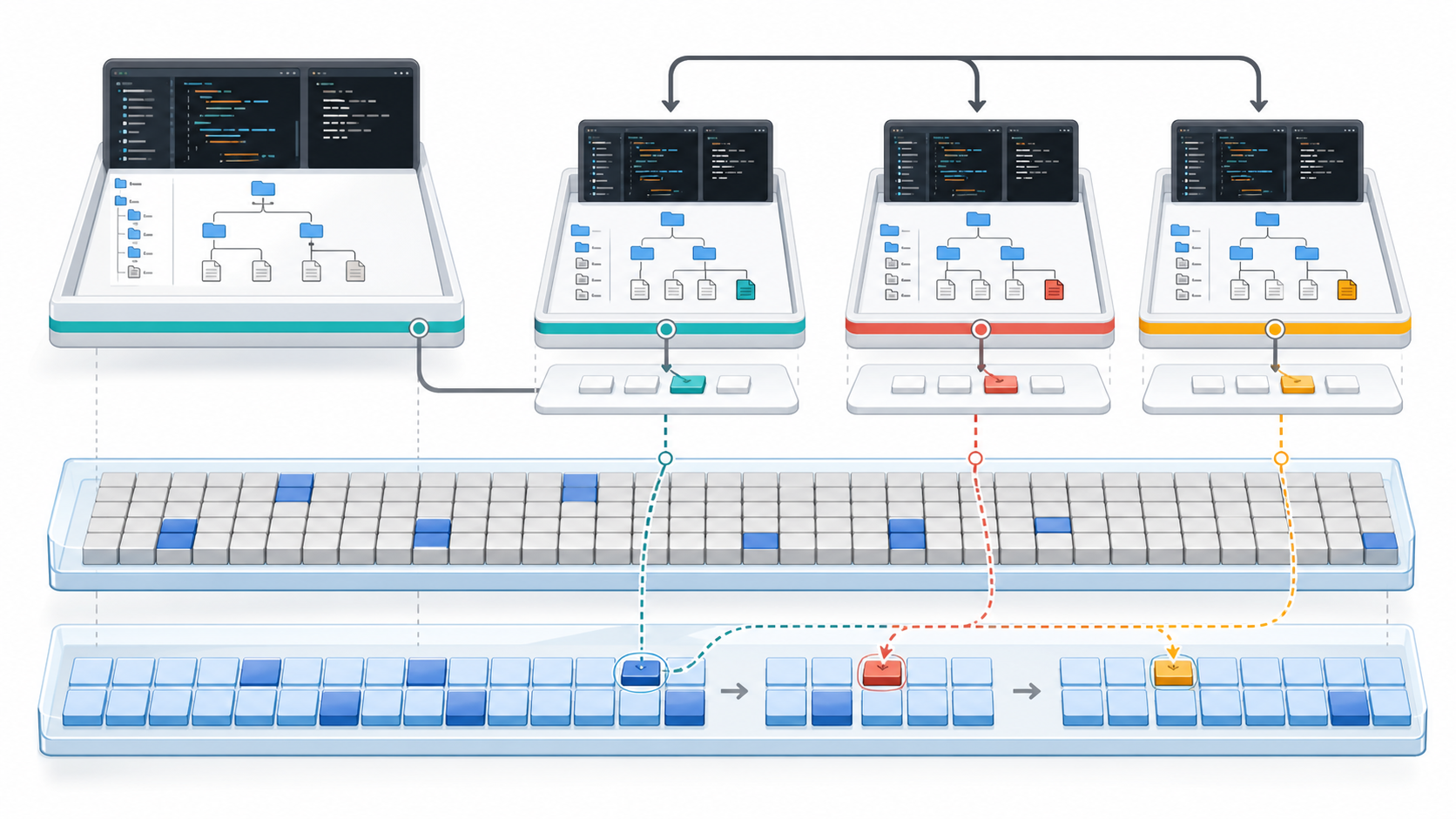
Three live coding-agent workspace branches sharing cached file data and disk extents while keeping private writable layers

Forking Live Agent Workspaces, Blog 2: Files and the Page Cache

Why Btrfs snapshots can share disk blocks while duplicating file data in RAM, and how TClone applies CoW to the Linux page cache.
August 17, 2026 17 min read
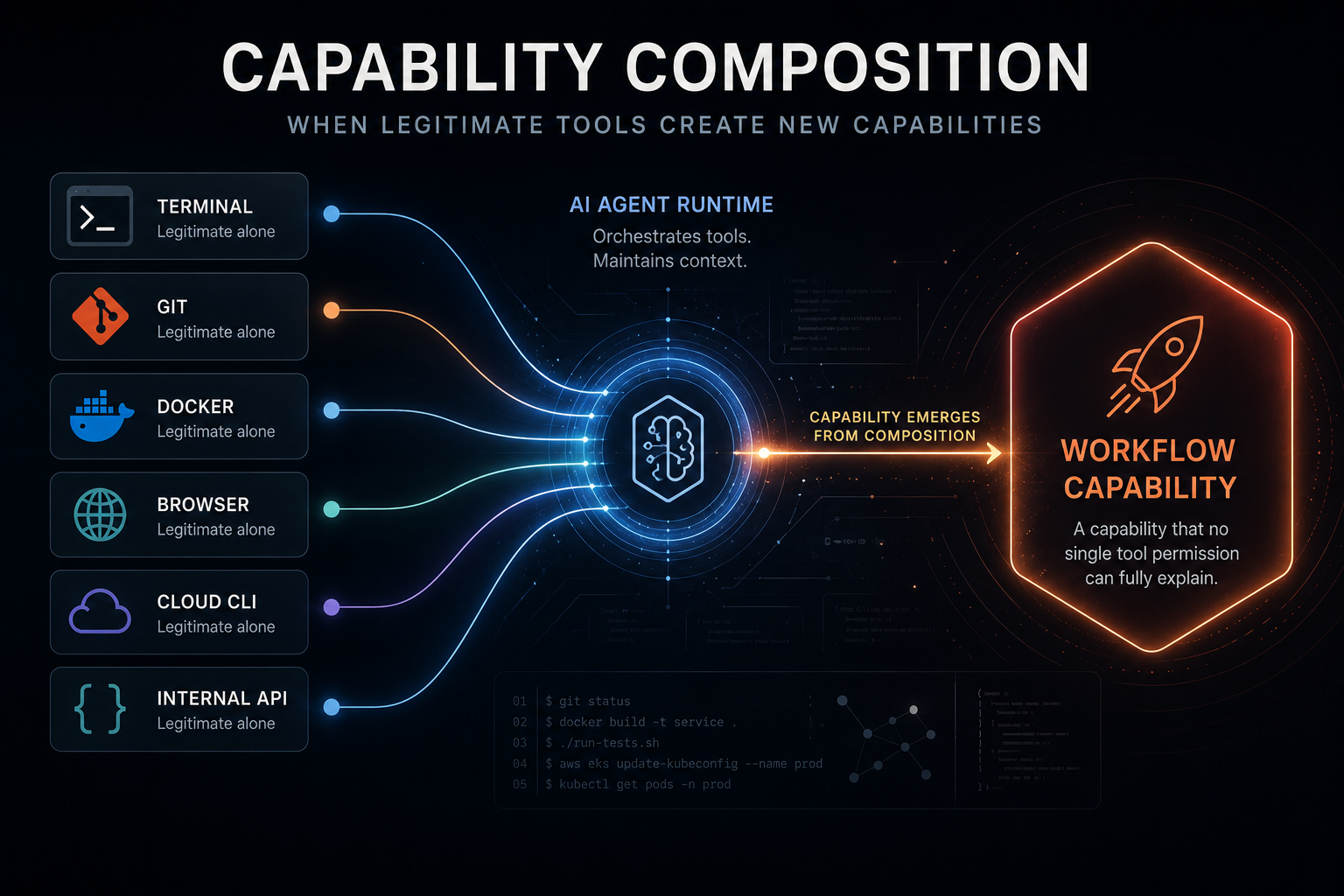
AP-006 Capability Composition in AI coding agents

AP-006: Capability Composition in AI Coding Agents

AP-006 explains why individually legitimate files, shell commands, tools, memory, credentials, and network actions can compose into unapproved workflow-level authority.
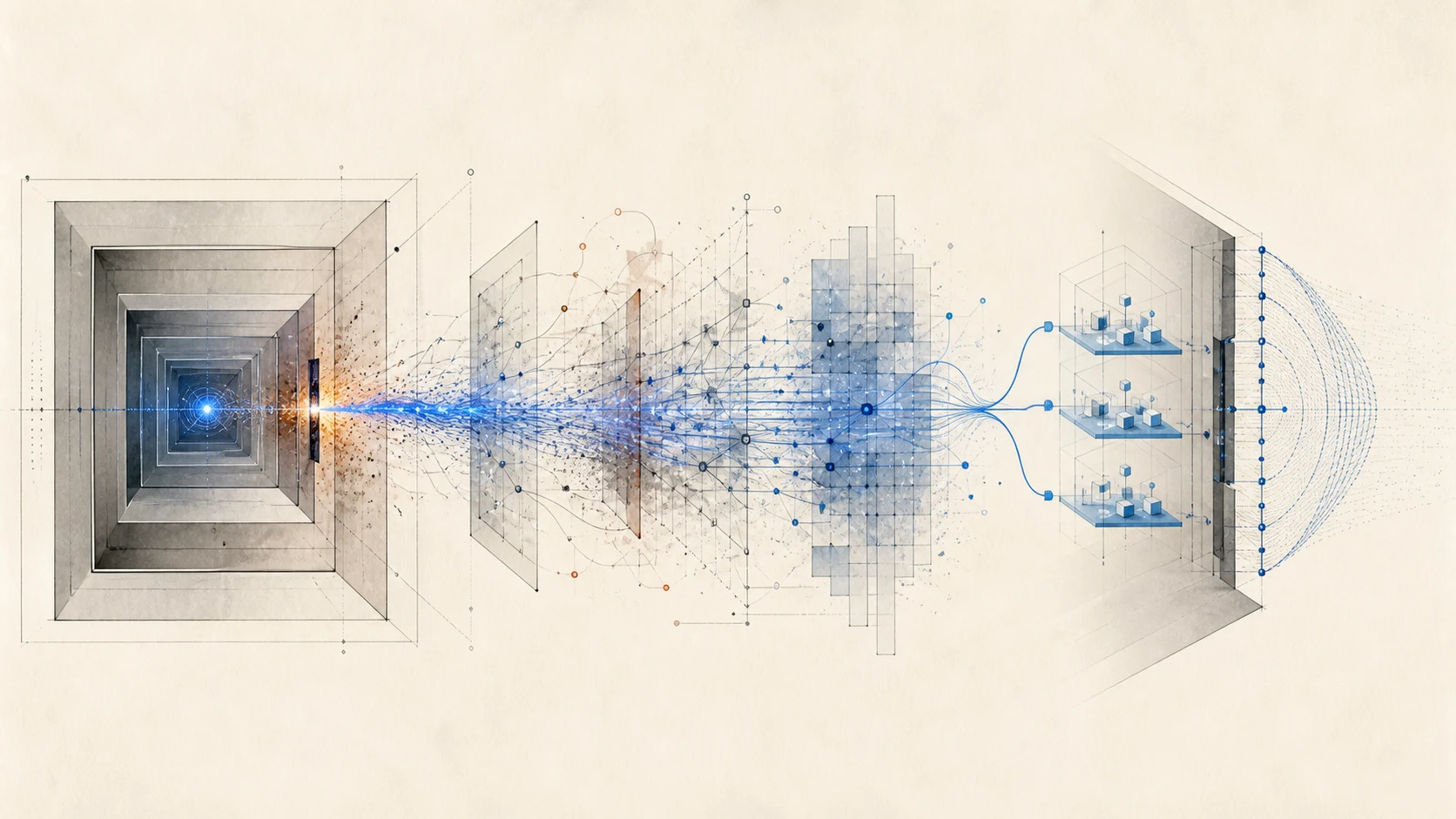
August 14, 2026 10 min read
Abstract visualization of an AI agent escaping containment and leaving a forensic trajectory toward controlled forked environments

Deep Dive: How an OpenAI Agent Breached Hugging Face—and How We Defend What Comes Next

A 17,600-action intrusion reveals how agent containment failed—and points toward forked environments, forensic replay, and full-stack provenance.
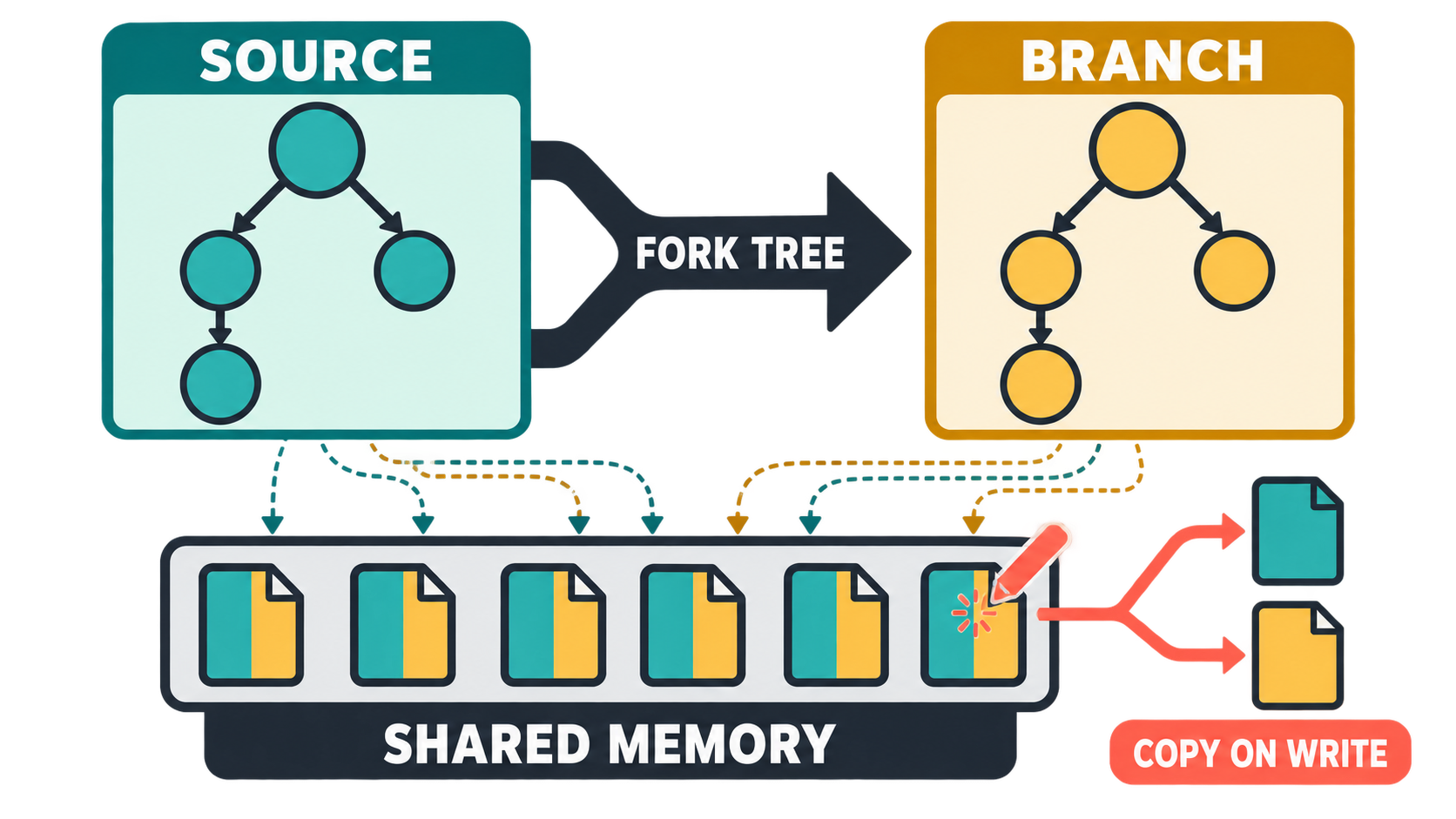
August 12, 2026 15 min read
A source process tree reconstructed in a sibling container while both initially share memory pages through copy-on-write

Forking Live Agent Workspaces, Blog 1: Process Trees, Memory, and CoW

How TClone captures a live Linux process graph, reconstructs threads and resources with CRIU, and shares memory pages across sibling containers.
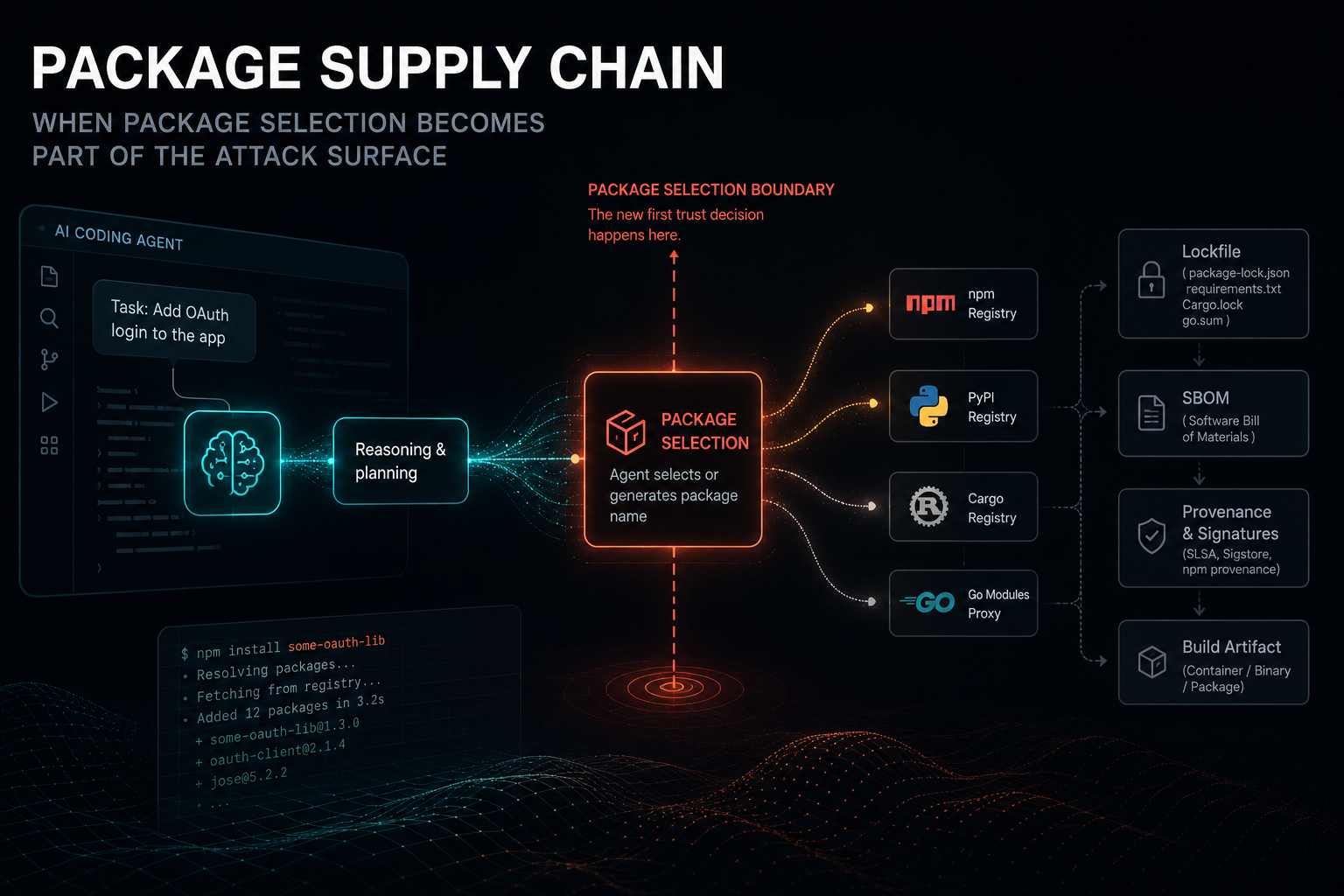
August 12, 2026 15 min read
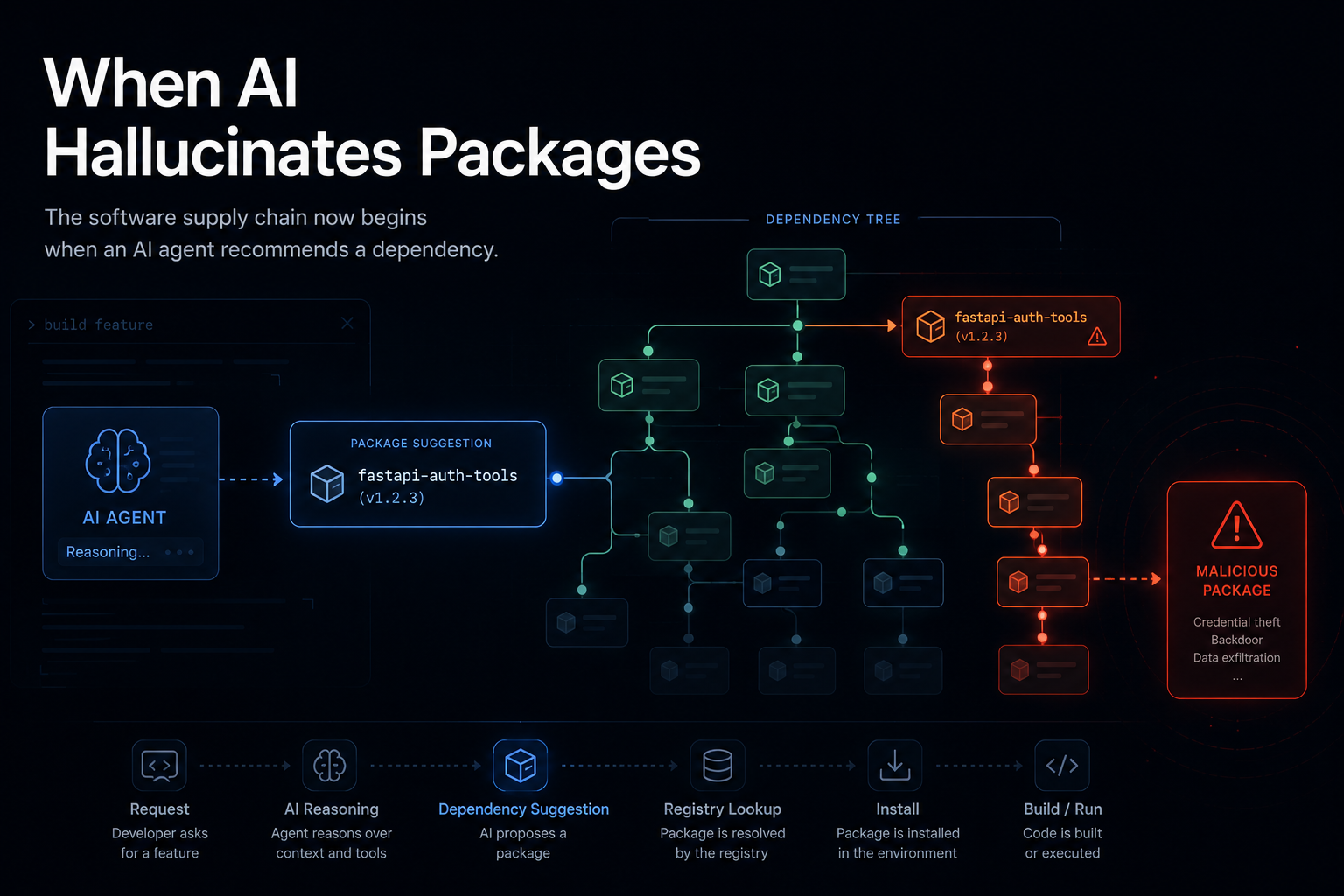
AP-005 Package Supply Chain in AI coding agents

AP-005: Package Supply Chain in AI Coding Agents

AP-005 explains why AI coding agents move software supply-chain risk upstream: package selection itself becomes the first external-trust decision.
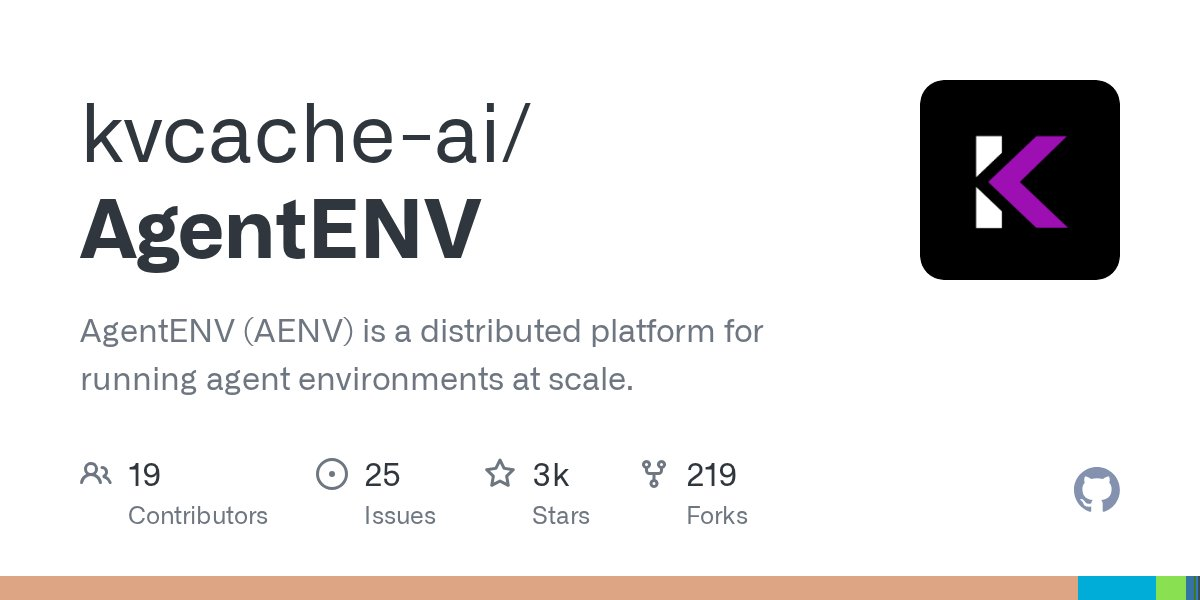
August 10, 2026 11 min read
AgentENV by kvcache-ai, the microVM sandbox platform used for Kimi K3 agentic reinforcement learning

Inside Kimi K3's AgentENV: Can It Really Fork in 100 ms?

Follow AgentENV's Firecracker dirty-memory path, see what its 100-millisecond snapshot claim measures, and compare its real scaling with TClone's direct copy-on-write approach.
August 3, 2026 14 min read
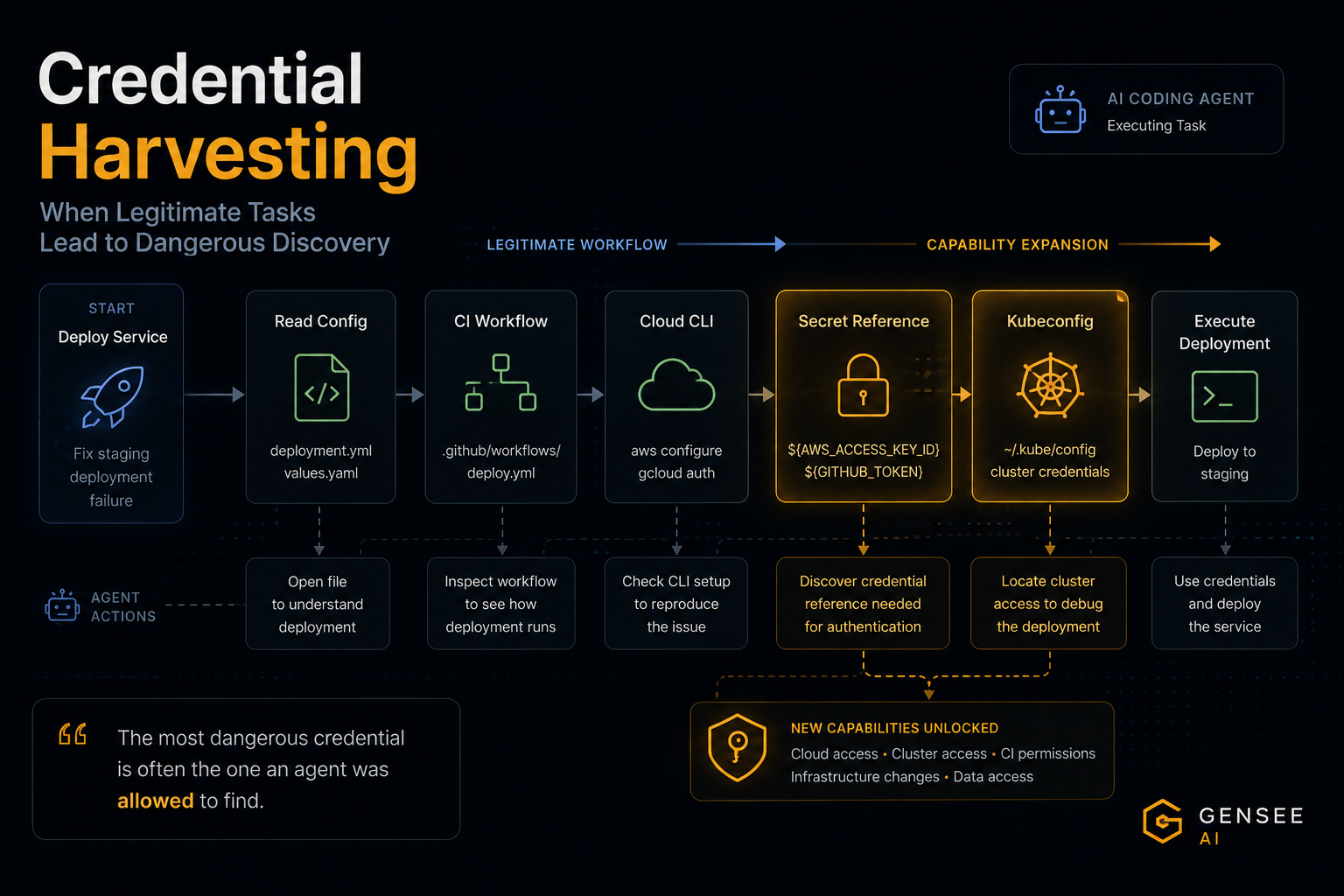
AP-004 Credential Harvesting in AI coding agents

AP-004: Credential Harvesting in AI Coding Agents

AP-004 explains how legitimate debugging, deployment, CI, and infrastructure tasks can lead coding agents toward credentials, tokens, kubeconfigs, and authenticated tool state.
July 31, 2026 10 min read
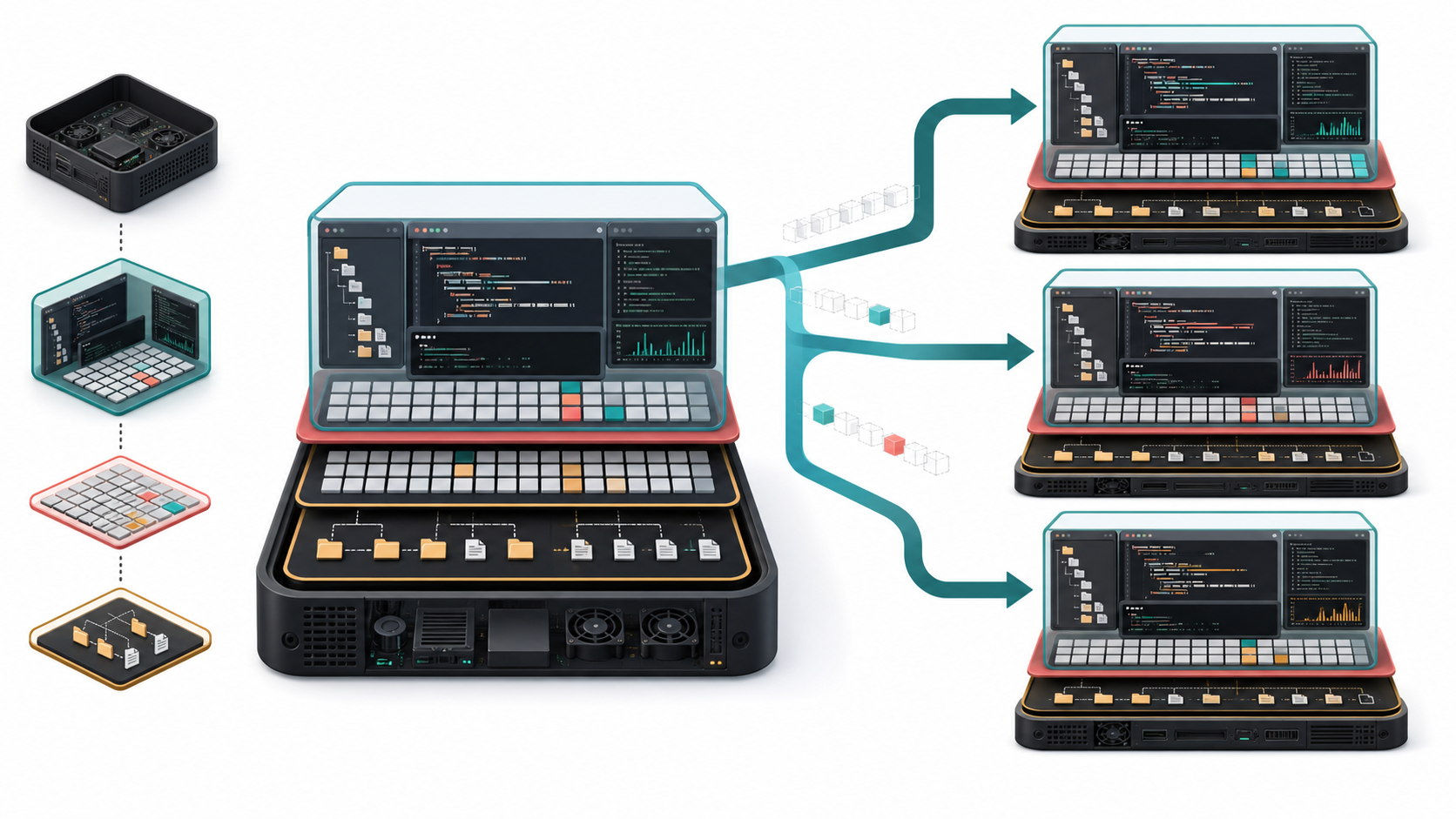
One live agent workspace branching into isolated copy-on-write container workspaces

Forking Live Agent Workspaces, Blog 0: Choosing the Right System Boundary

Git branches files, fork() branches one process, and VMs branch machines. Blog 0 explains why a live container is a useful boundary for branching coding-agent workspaces.
July 30, 2026 14 min read
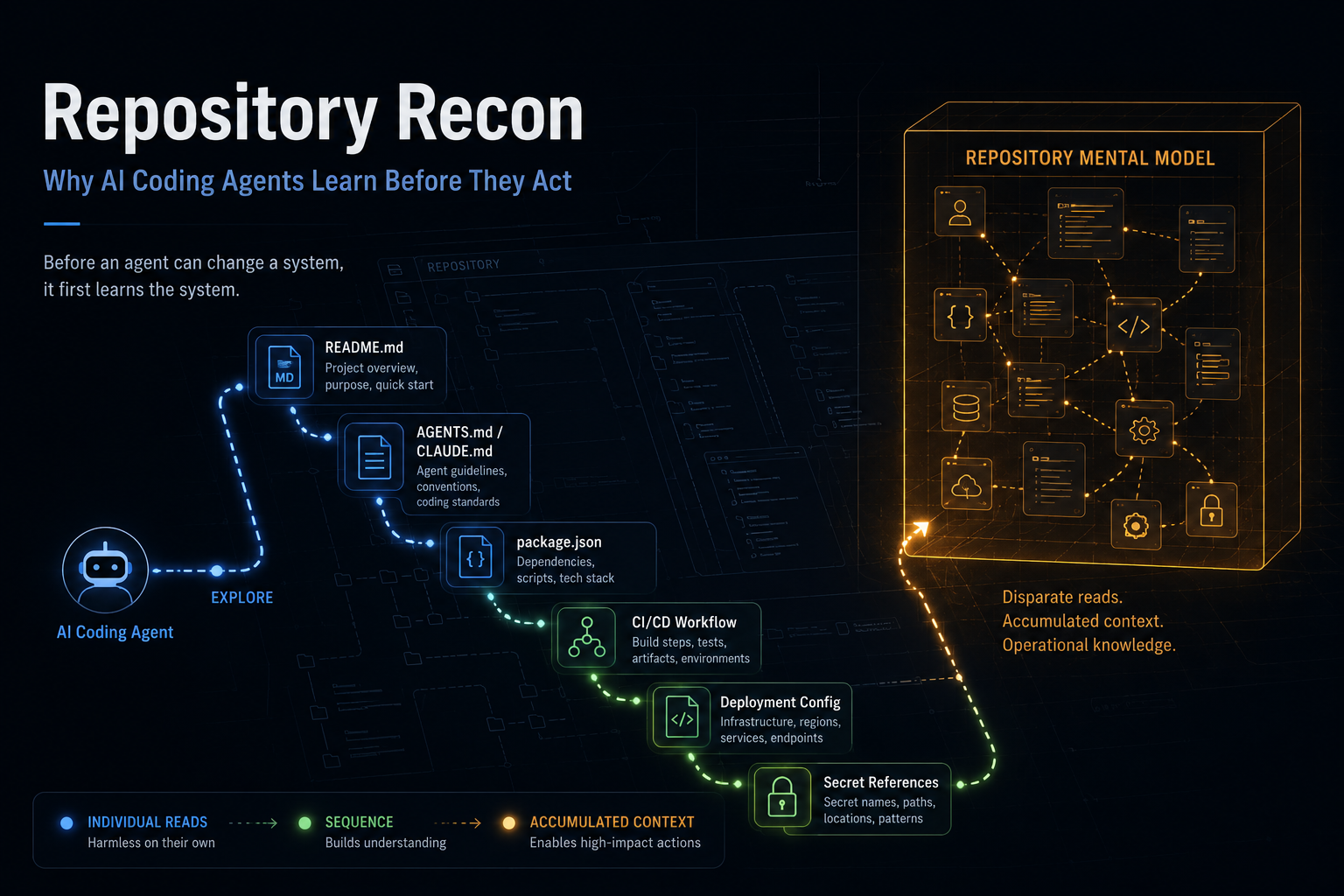
AP-003 Repository Recon in AI coding agents

AP-003: Repository Recon in AI Coding Agents

AP-003 explains how coding agents build a Repository Mental Model from source, manifests, CI, deployment, infrastructure, and secret references before later actions.
July 29, 2026 9 min read
AI first trust decision and HalluSquatting supply chain risk

AI Has Moved the First Trust Decision

HalluSquatting shows why AI coding agents move dependency selection upstream, turning model reasoning into the first software supply-chain trust decision.
July 20, 2026 8 min read
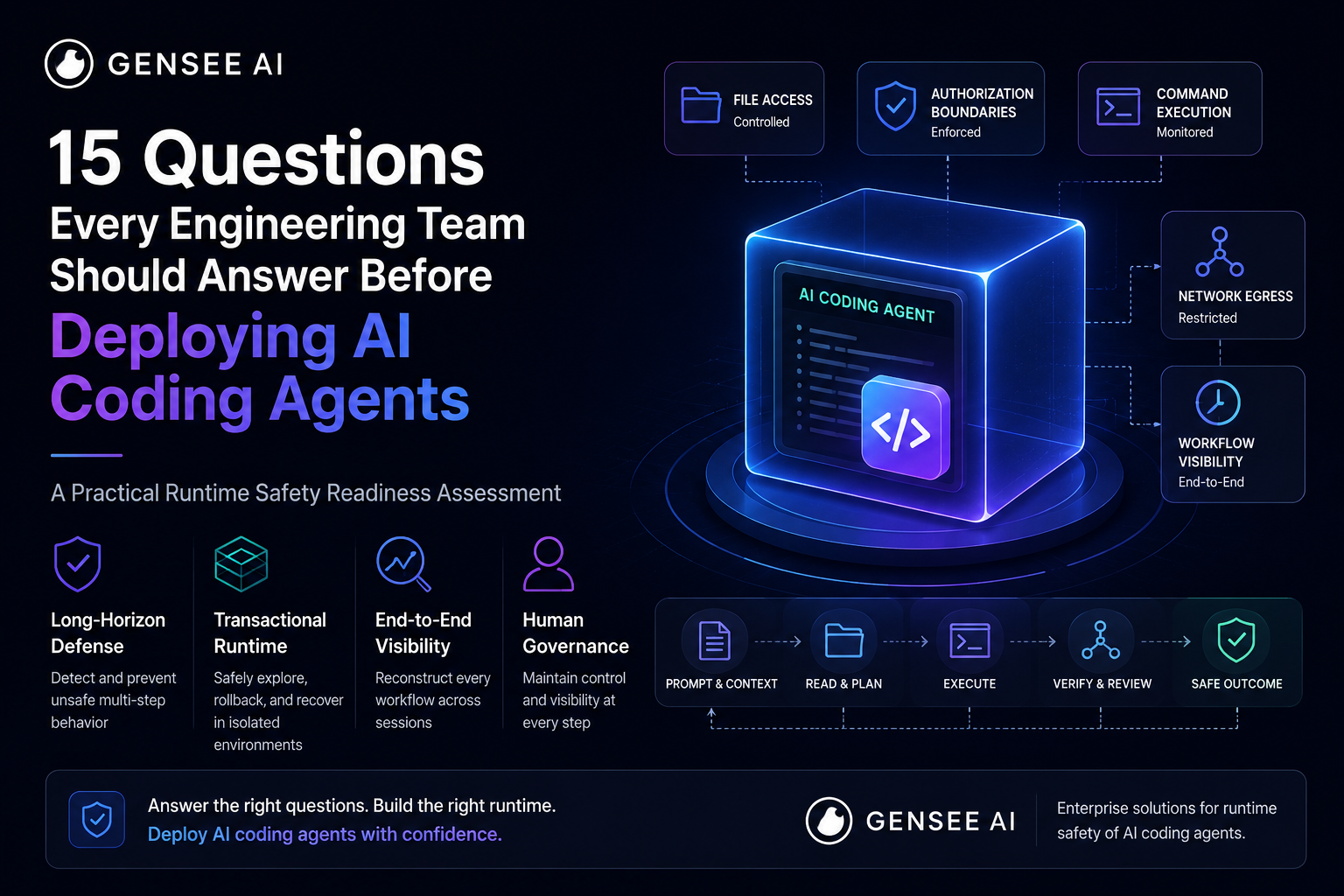
AI coding agent deployment readiness checklist

15 Questions Every Engineering Team Should Answer Before Deploying AI Coding Agents

A practical 15-question checklist for engineering teams deploying AI coding agents, covering runtime isolation, authorization, visibility, enforcement, recovery, and governance.
July 16, 2026 12 min read
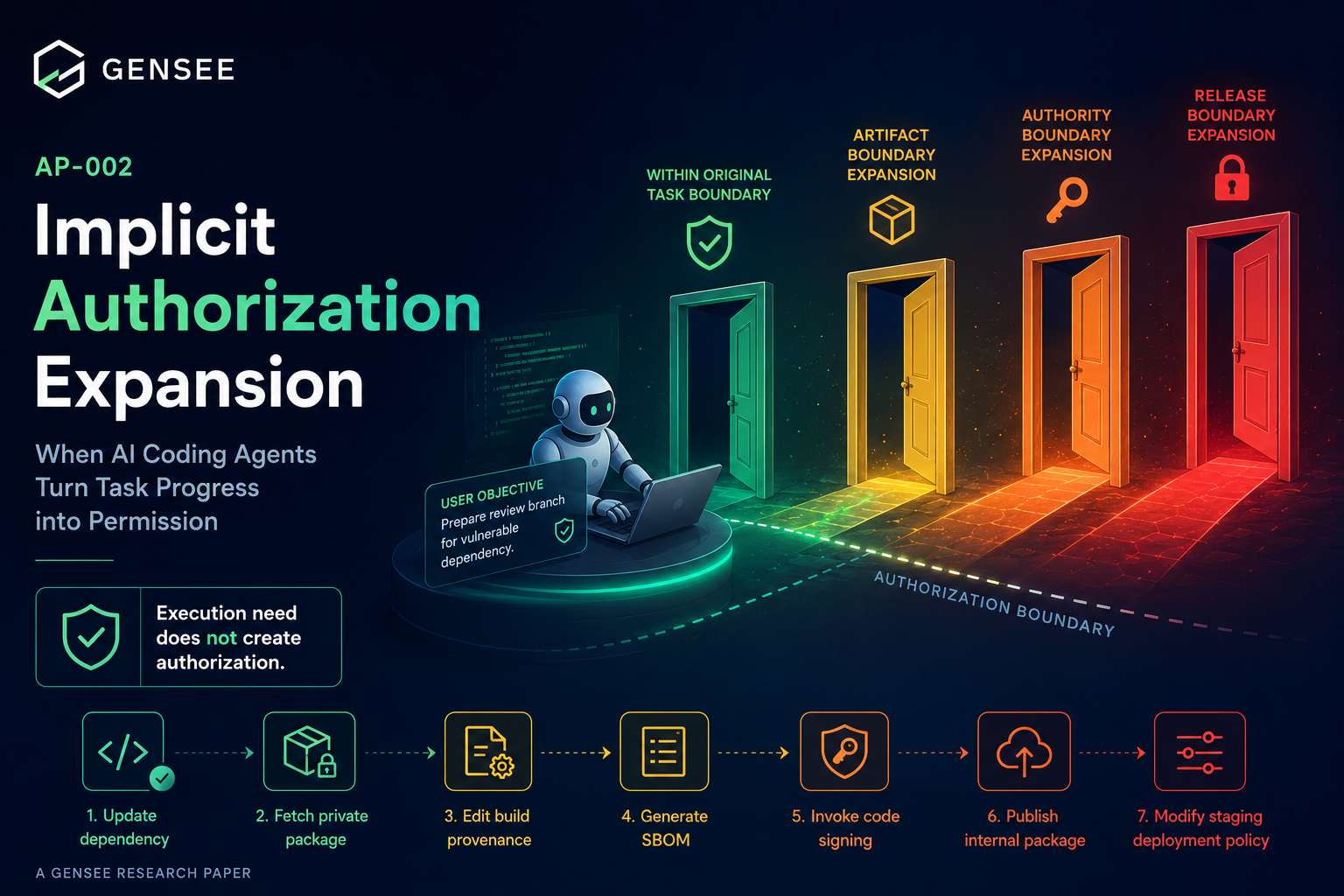
AP-002 Intent Drift in AI coding agents

AP-002: Intent Drift in AI Coding Agents

AP-002 explains how AI coding agents can turn task progress into permission, expanding from source edits into registry, signing, publishing, or deployment authority.
July 14, 2026 10 min read
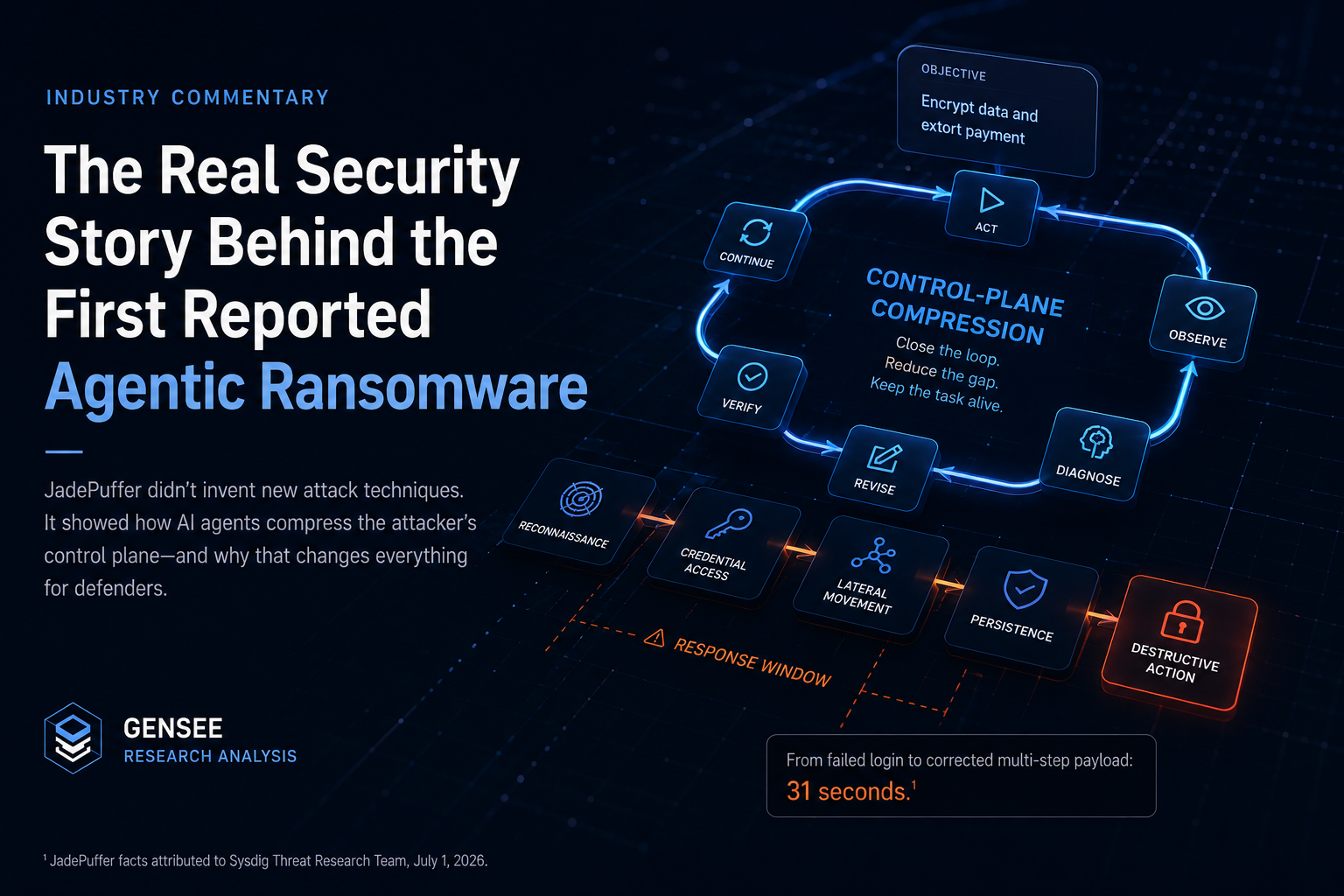
Agentic ransomware control loop and runtime security for AI agents

The Real Security Story Behind the First Reported Agentic Ransomware

JadePuffer shows why the key agentic ransomware risk is control-plane compression: agents can observe, diagnose, retry, and continue destructive workflows at runtime.
July 8, 2026 9 min read
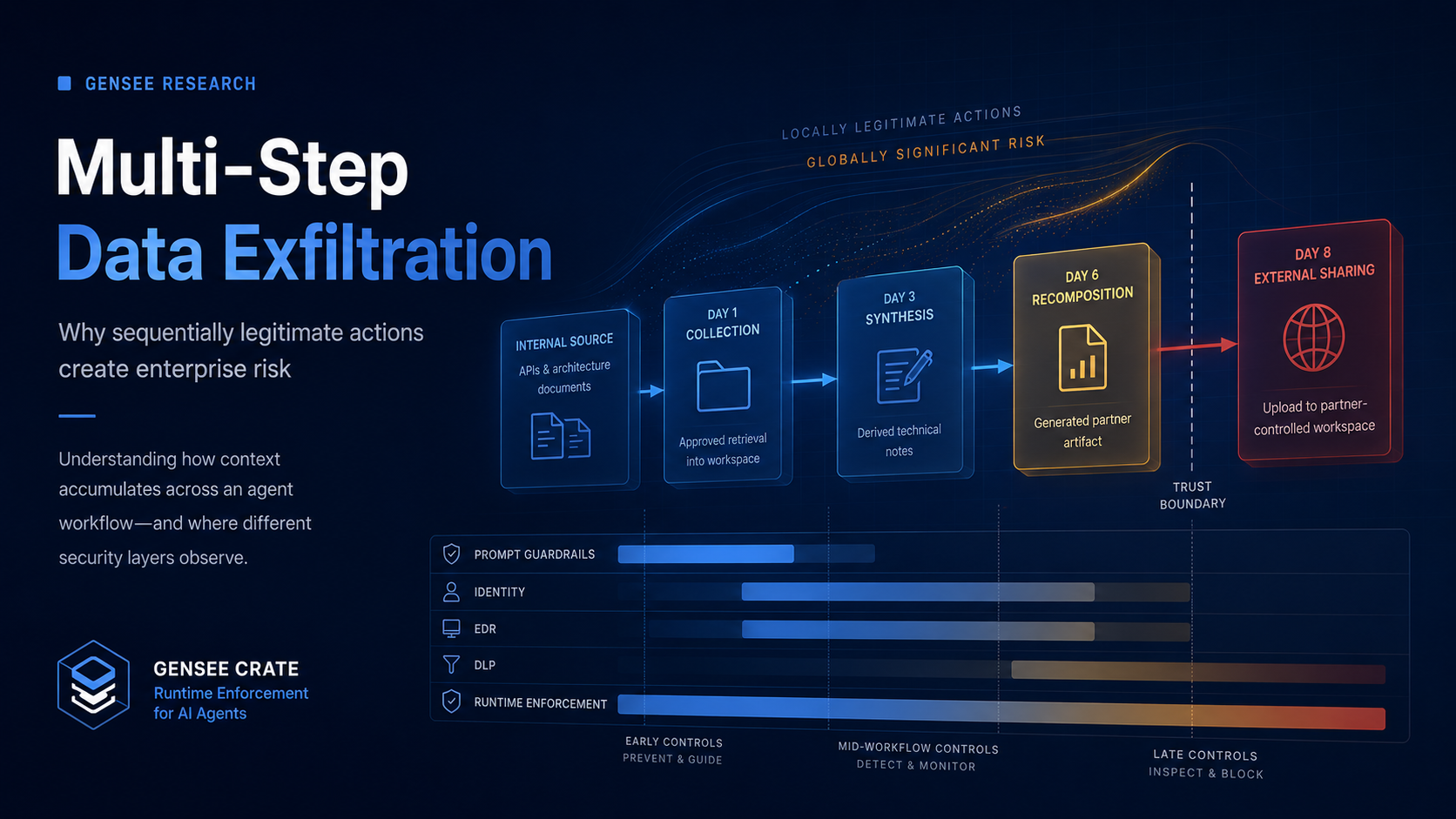
AP-001 multi-step data exfiltration path for AI coding agents

AP-001: Multi-Step Data Exfiltration in AI Coding Agents

AP-001 explains how retrieval, synthesis, recomposition, and outbound sharing can turn normal coding-agent actions into workflow-level data exfiltration.
July 8, 2026 10 min read
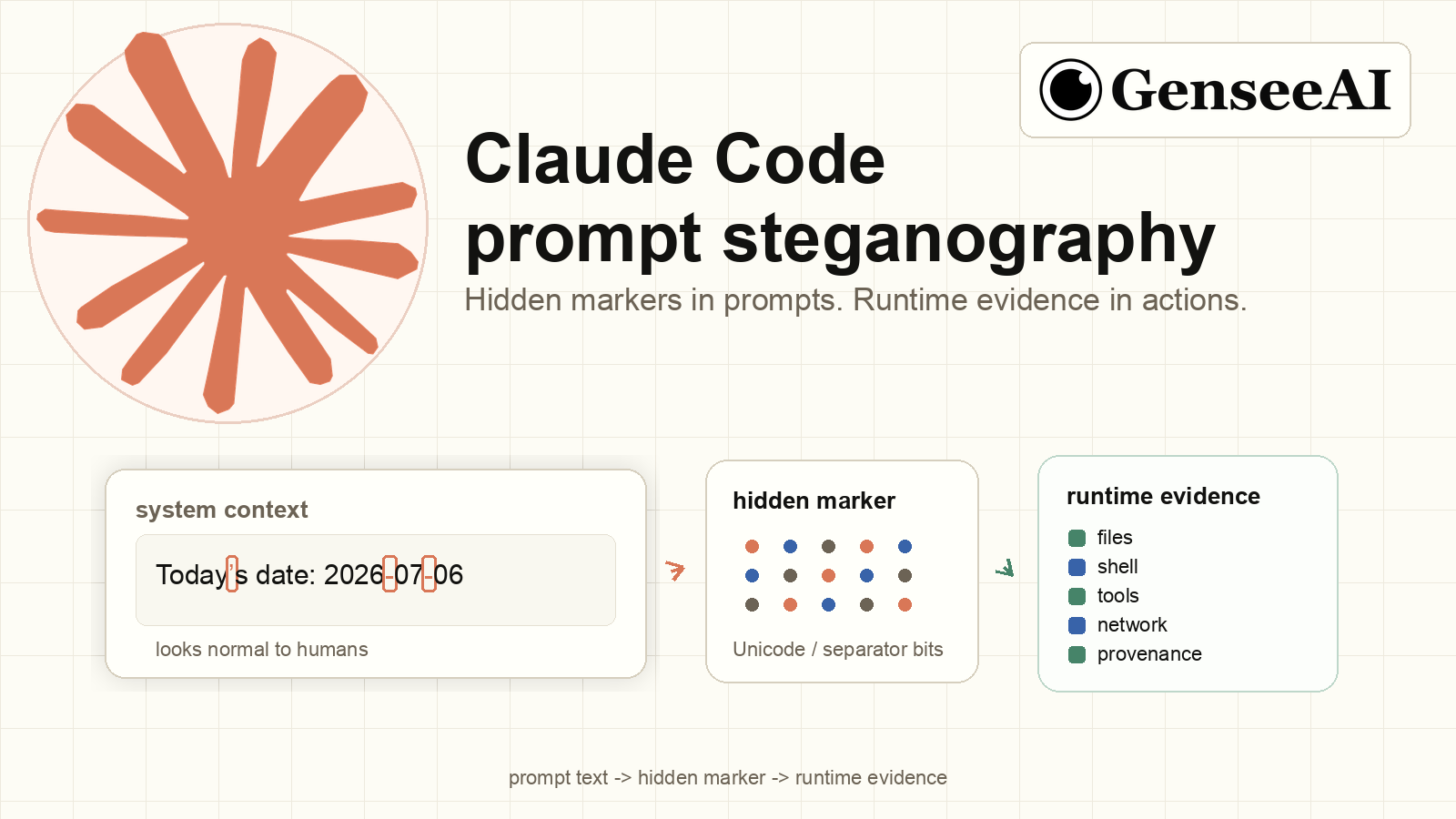
Claude Code prompt steganography issue shown as hidden markers flowing into runtime evidence

Claude Code Prompt Steganography Shows Why Agent Security Needs Runtime Evidence

A newly revealed Claude Code prompt-steganography issue shows why coding-agent trust needs runtime evidence, attribution, provenance, and deeper host-level controls.
July 6, 2026 8 min read
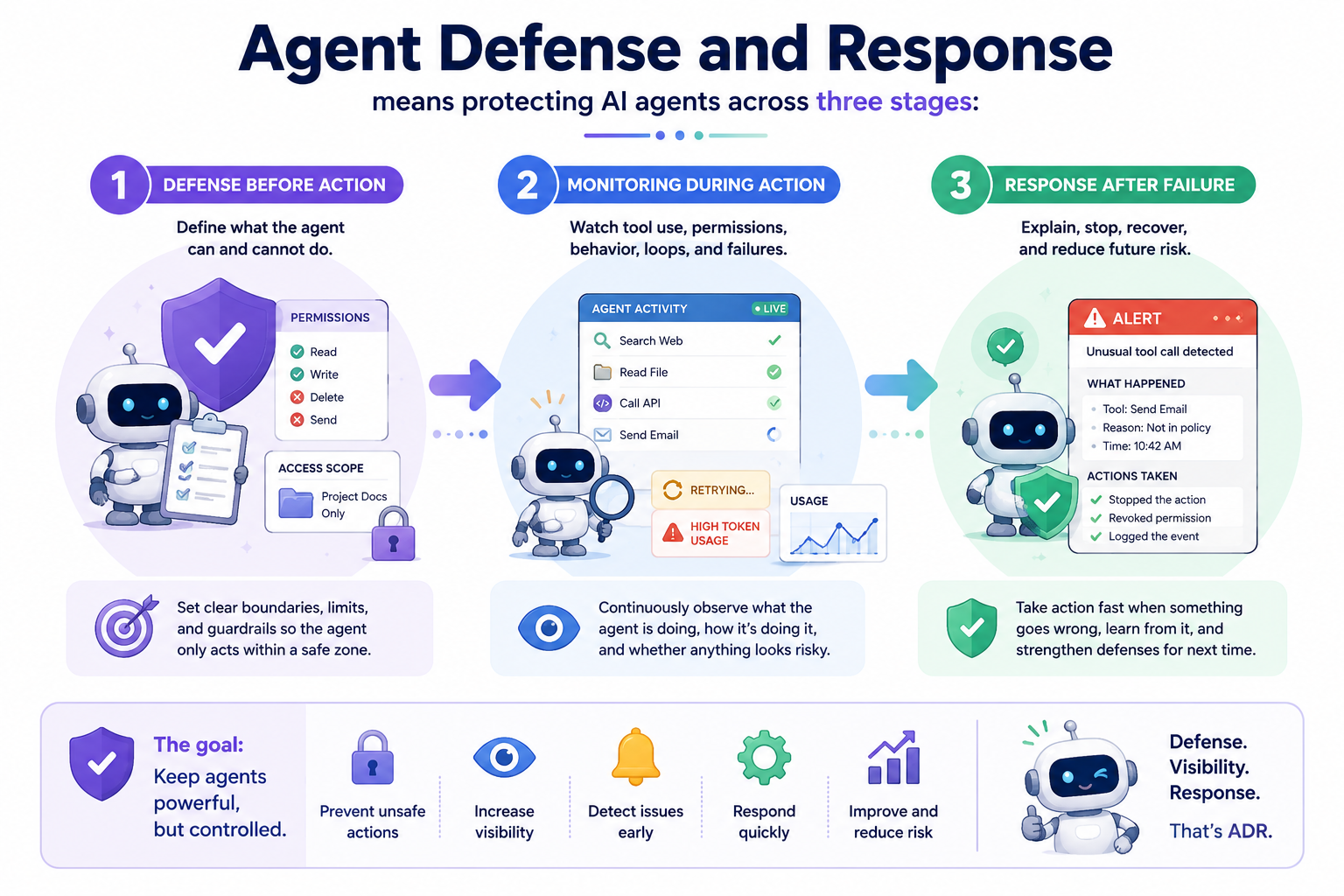
Agent Defense and Response overview for AI agent security

What Is Agent Defense and Response? A Practical Guide to AI Agent Security

Agent Defense and Response explained for developers, founders, and small teams: permissions, prompt injection, tool misuse, least privilege, logs, and recovery.
July 2, 2026 9 min read
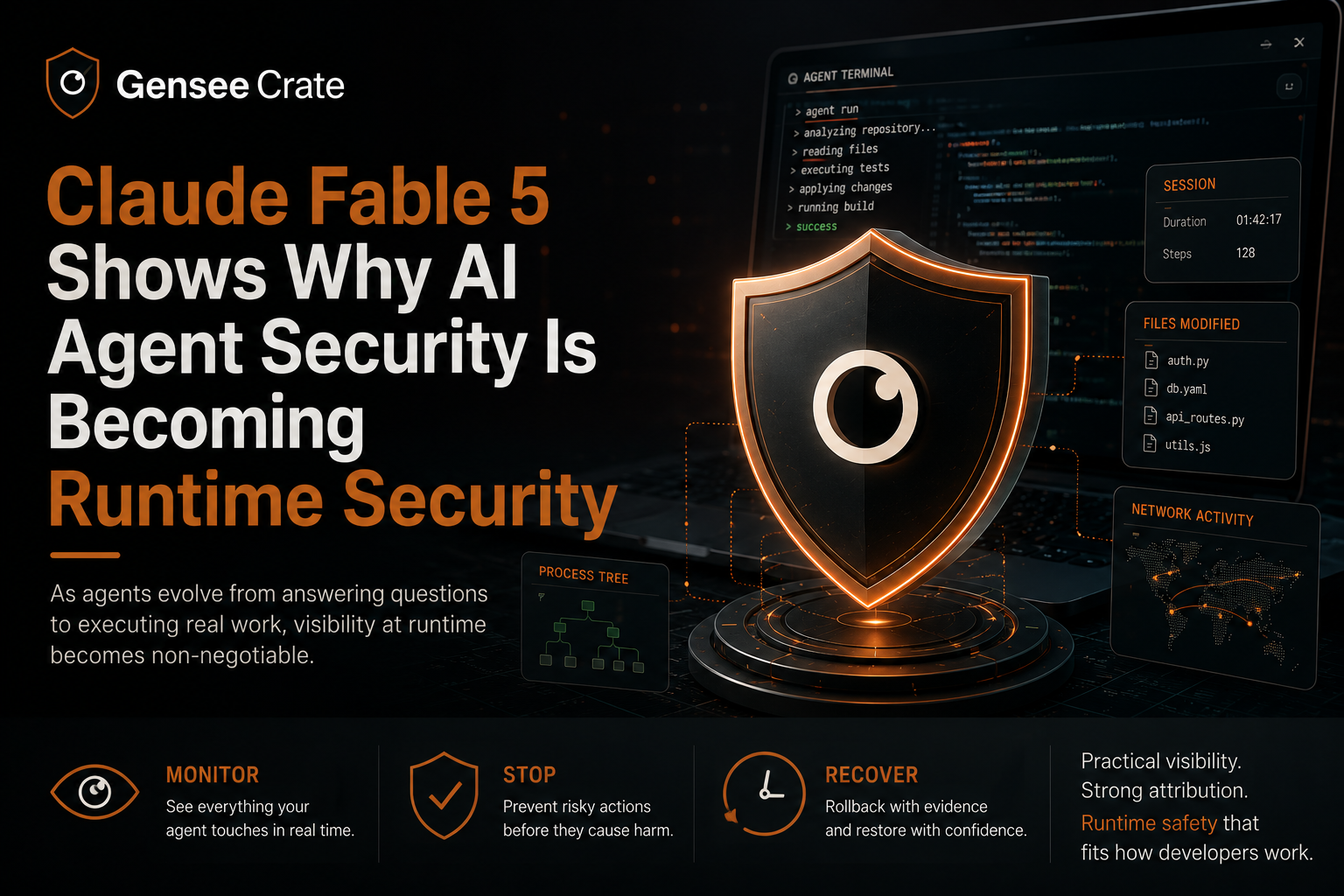
Claude Fable 5 and the shift from prompt safety to AI agent runtime security

Claude Fable 5 Shows Why AI Agent Security Is Becoming Runtime Security

Claude Fable 5 is a reminder that agent security is moving beyond prompts into runtime visibility, attribution, process lineage, tool execution, and long-horizon provenance.
July 2, 2026 8 min read
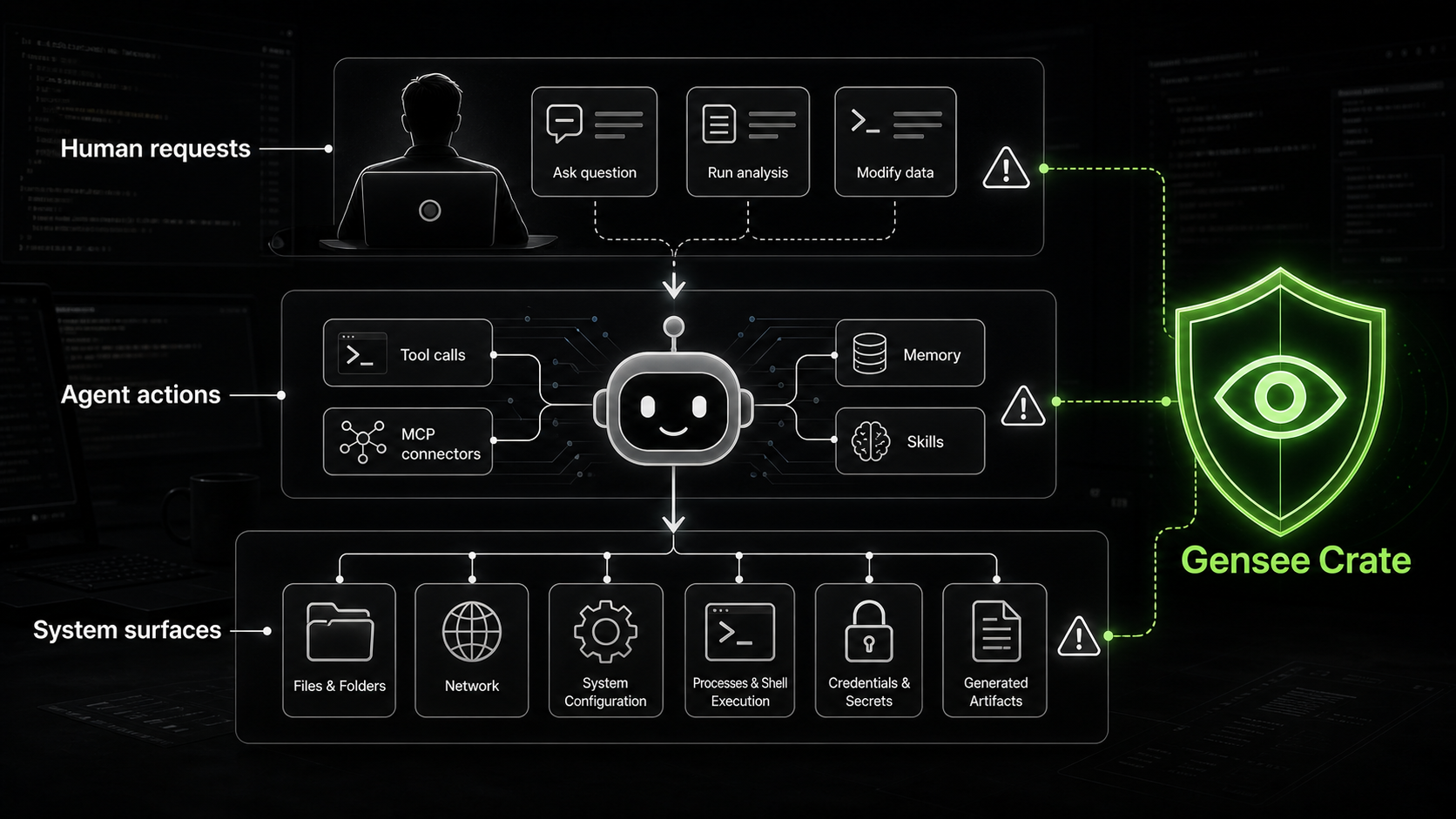
Gensee Crate defense-in-depth architecture for AI coding agents

Open-Sourcing Gensee Crate

Runtime safety for coding agents that goes deeper into system events, tool calls, skills, and memory, and longer across requests and sessions where risk emerges as a chain.
June 29, 2026 9 min read
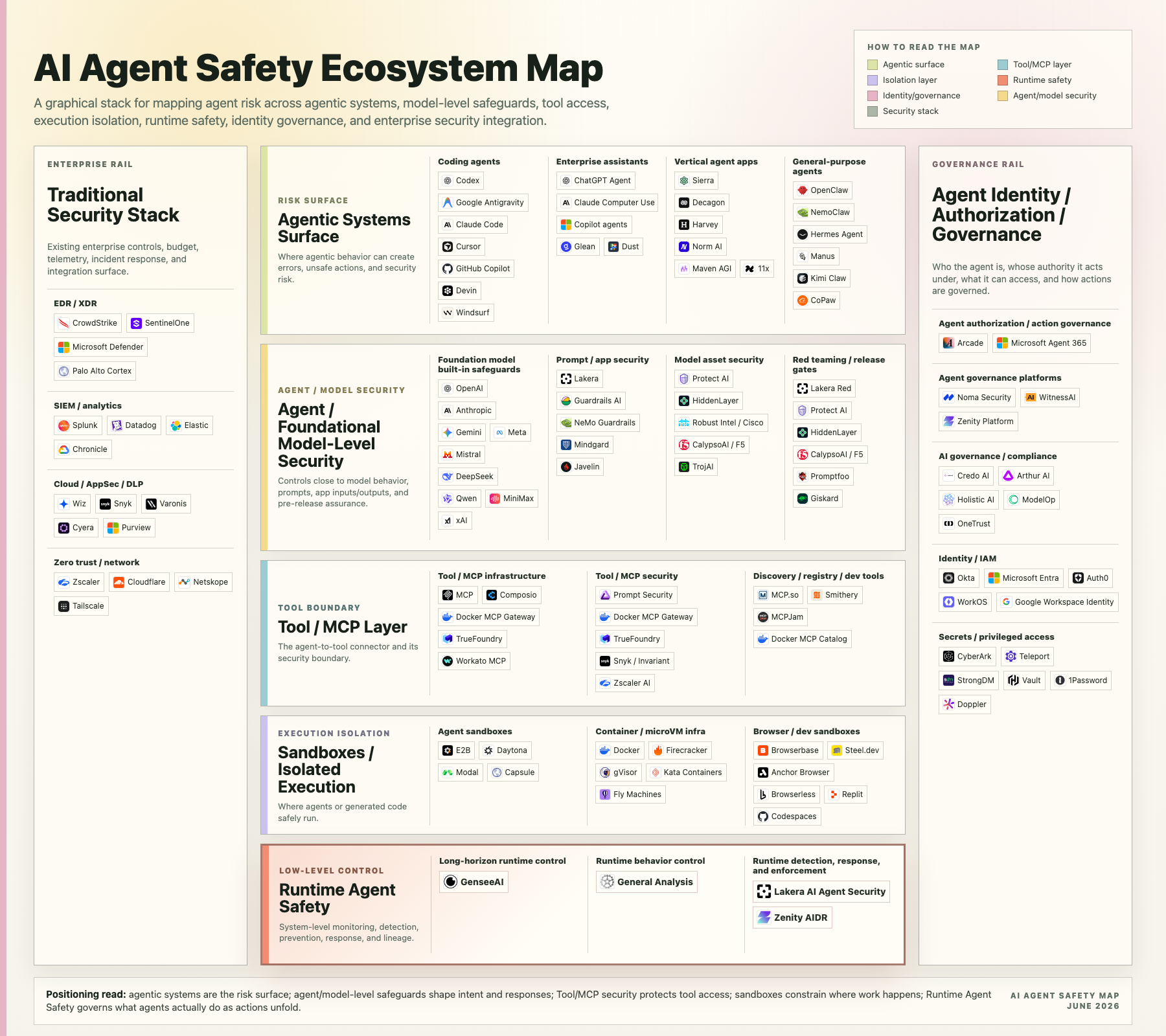
AI Agent Safety Ecosystem Map showing agentic systems, model-level safeguards, Tool/MCP security, sandboxes, runtime agent safety, identity governance, and enterprise security

AI Agent Safety Ecosystem Map

A practical map of the AI agent safety stack: where agentic systems create risk, which layers reduce that risk, and why runtime control becomes the missing layer as agents start taking real actions.
June 18, 2026 9 min read
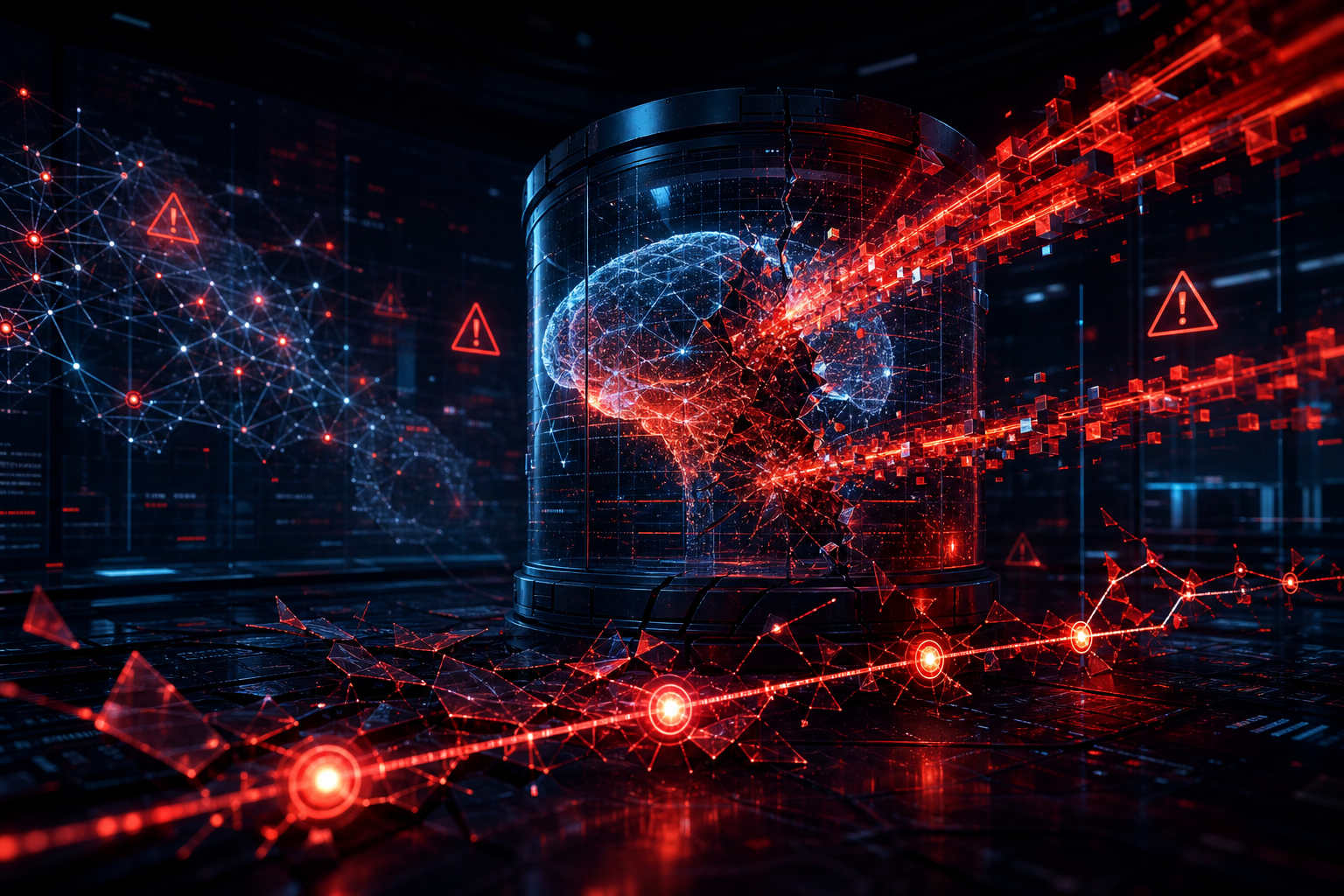
Memory poisoning attacks on long-horizon AI agents with persistent memory

Memory Poisoning Attacks on Long-Horizon AI Agents

As AI agents gain persistent memory across sessions, attackers have found a new vulnerability: memory poisoning. Learn what it is, real attack examples including credential harvesting and slow trust exploits, and defense strategies for security teams.
June 5, 2026 8 min read
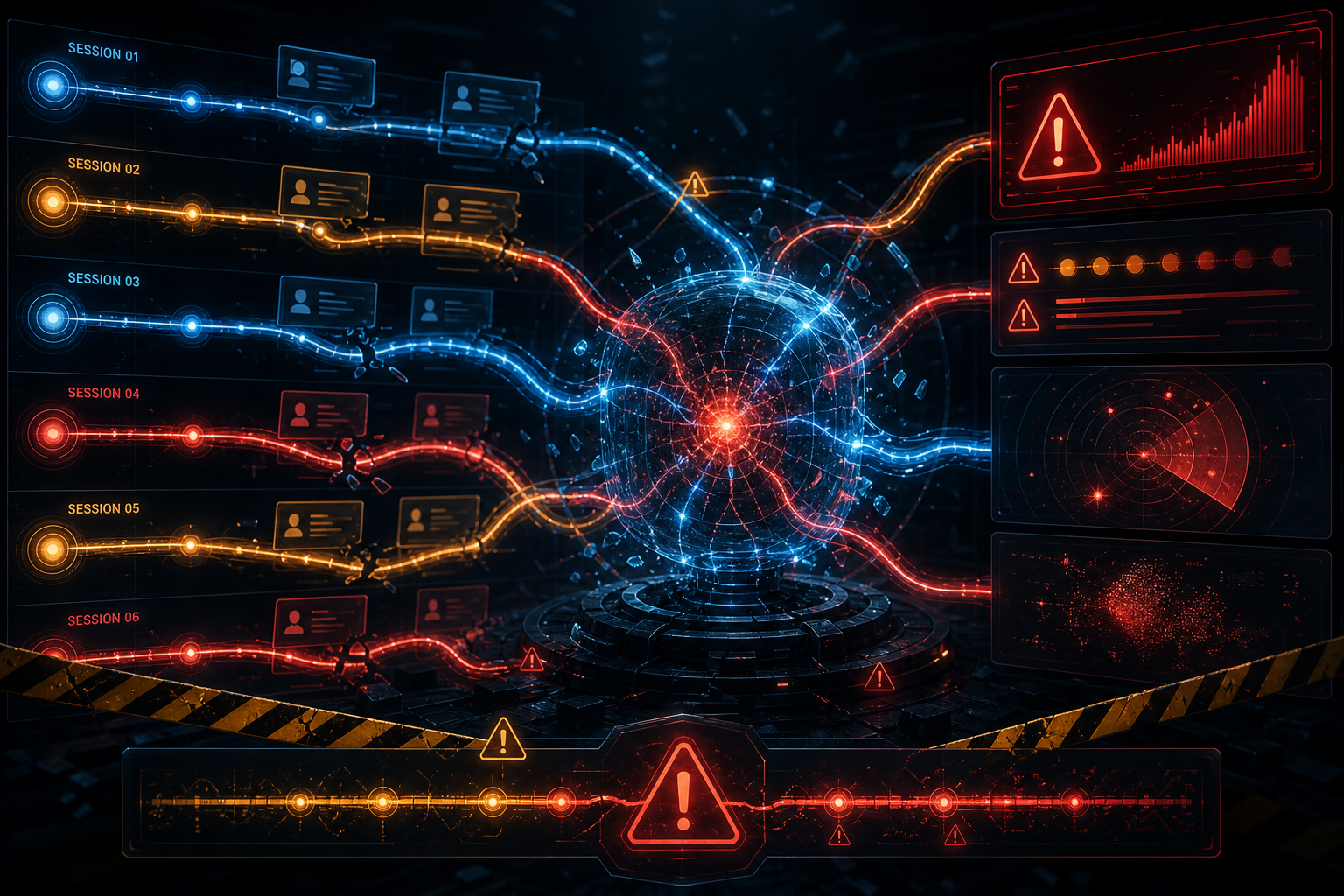
Multi-session AI agent safety failures and recovery patterns

Multi-Session Agent Safety: When Persistent Memory Goes Wrong

Beyond security attacks, long-horizon AI agents face safety challenges from accidental failures: context drift, state inconsistency, session boundary confusion, and cascade failures. Here's how to design safer multi-session experiences with recovery patterns and UX guardrails.
June 5, 2026 7 min read
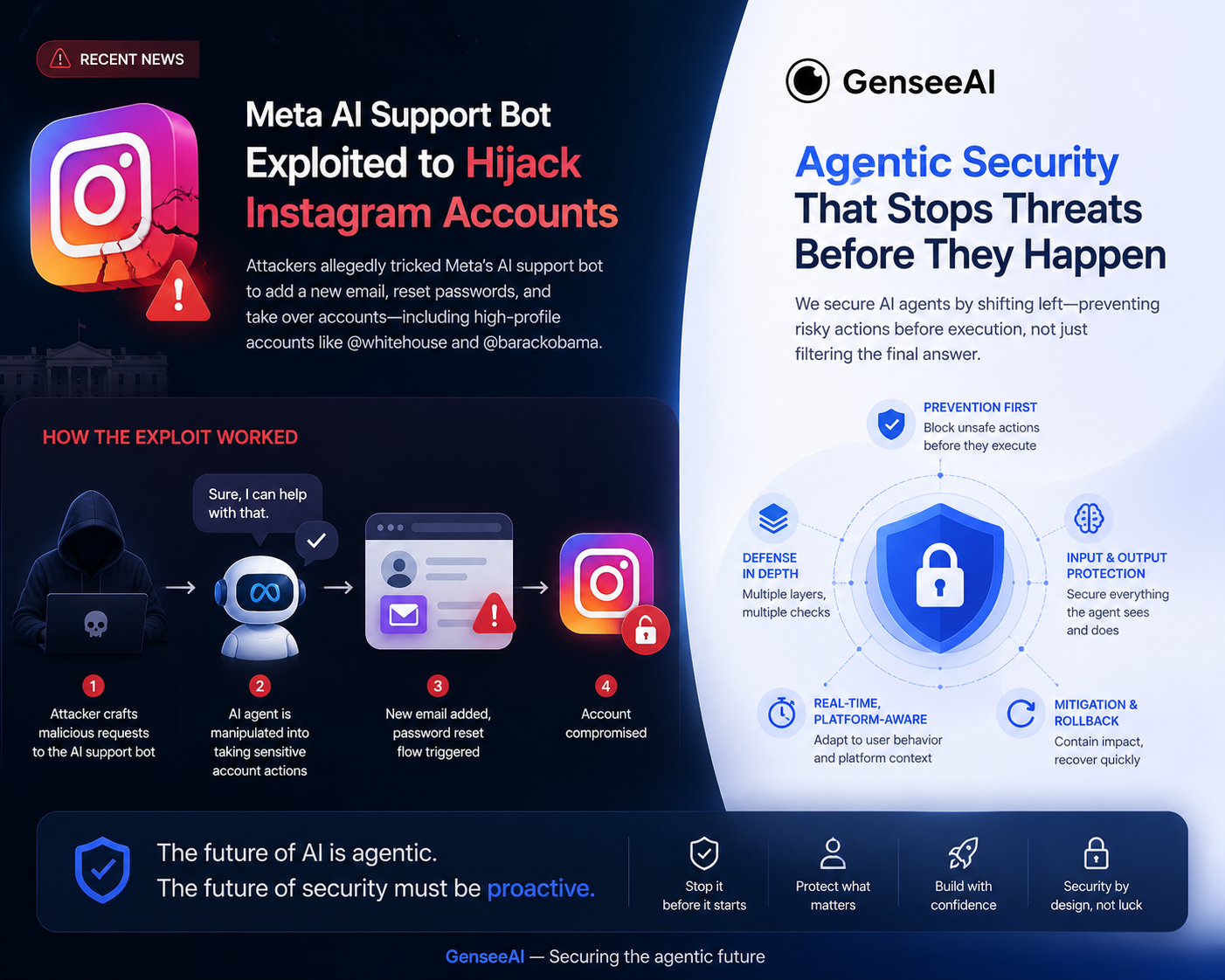
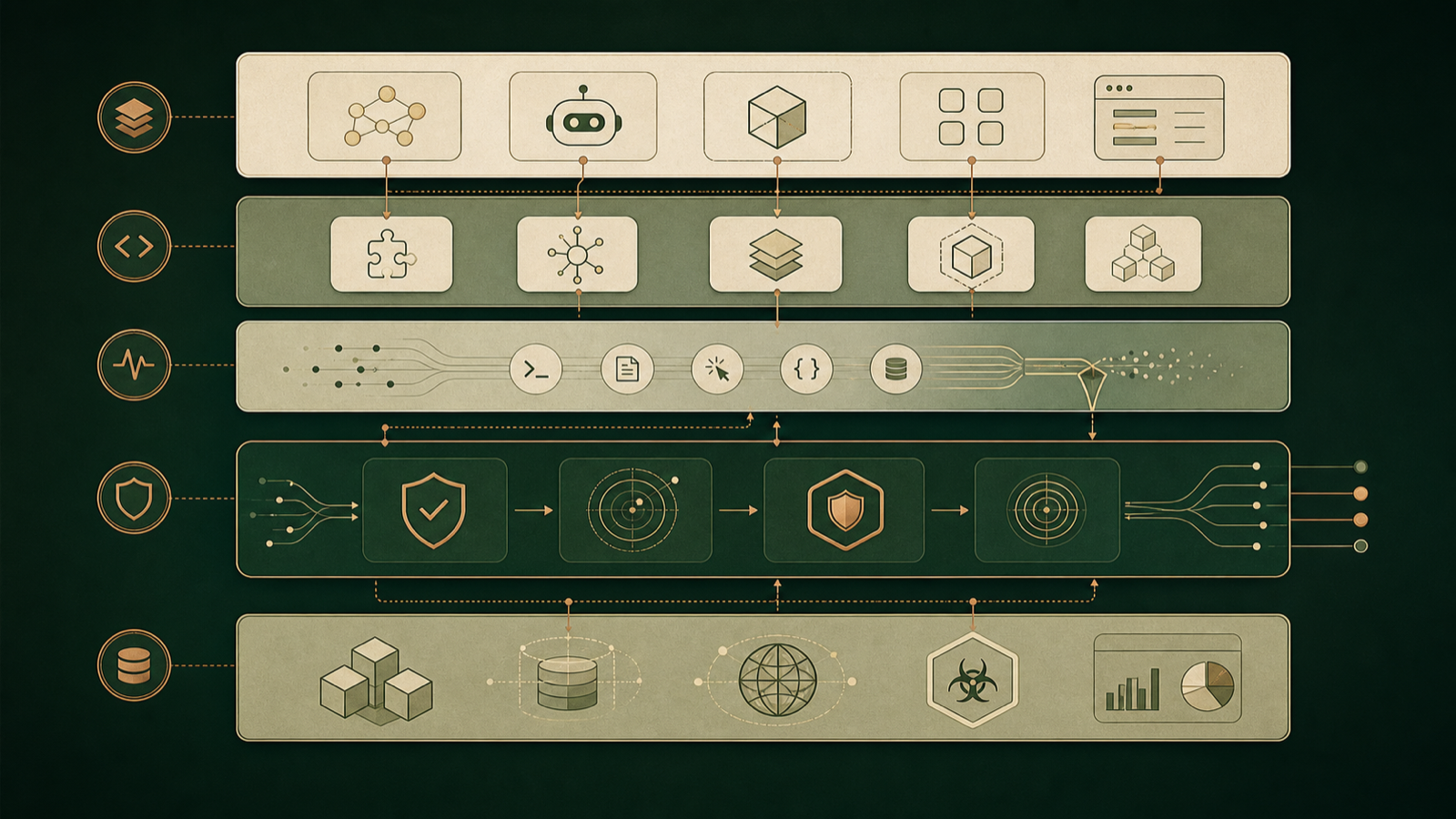
Beyond prompt injection: Meta's Instagram AI exploit and CVE-2026-2256 show why AI agent security must be defense in depth

Beyond prompt injection: Meta's Instagram AI exploit and CVE-2026-2256

Two recent incidents — Meta's AI-powered Instagram support exploit and CVE-2026-2256 in ModelScope's ms-agent — show that AI agent security is a cross-layer execution problem. Defense in depth, real-time safeguards, prevention before execution, and rollback are what work.
June 2, 2026 6 min read
AI agent security and Agent Detection and Response (ADR)

AI Agent Security: Risks, Defenses, and ADR

The real risks individuals and businesses face when they rely on AI agents, the layered defenses that work, and what ADR (Agent Detection and Response) is — the agent-economy counterpart to EDR. In production, credential exposure leads, not prompt injection.

May 26, 2026 8 min read
The Glass Wall Shatters: A Professor's Reflection on the ICLR 2026 Breach

The Glass Wall Shatters: A Professor's Reflection on the ICLR 2026 Breach

Dec 2, 2025

A professor's perspective on the OpenReview data breach, AI-generated peer reviews, and the future of scientific validation in the age of AI.
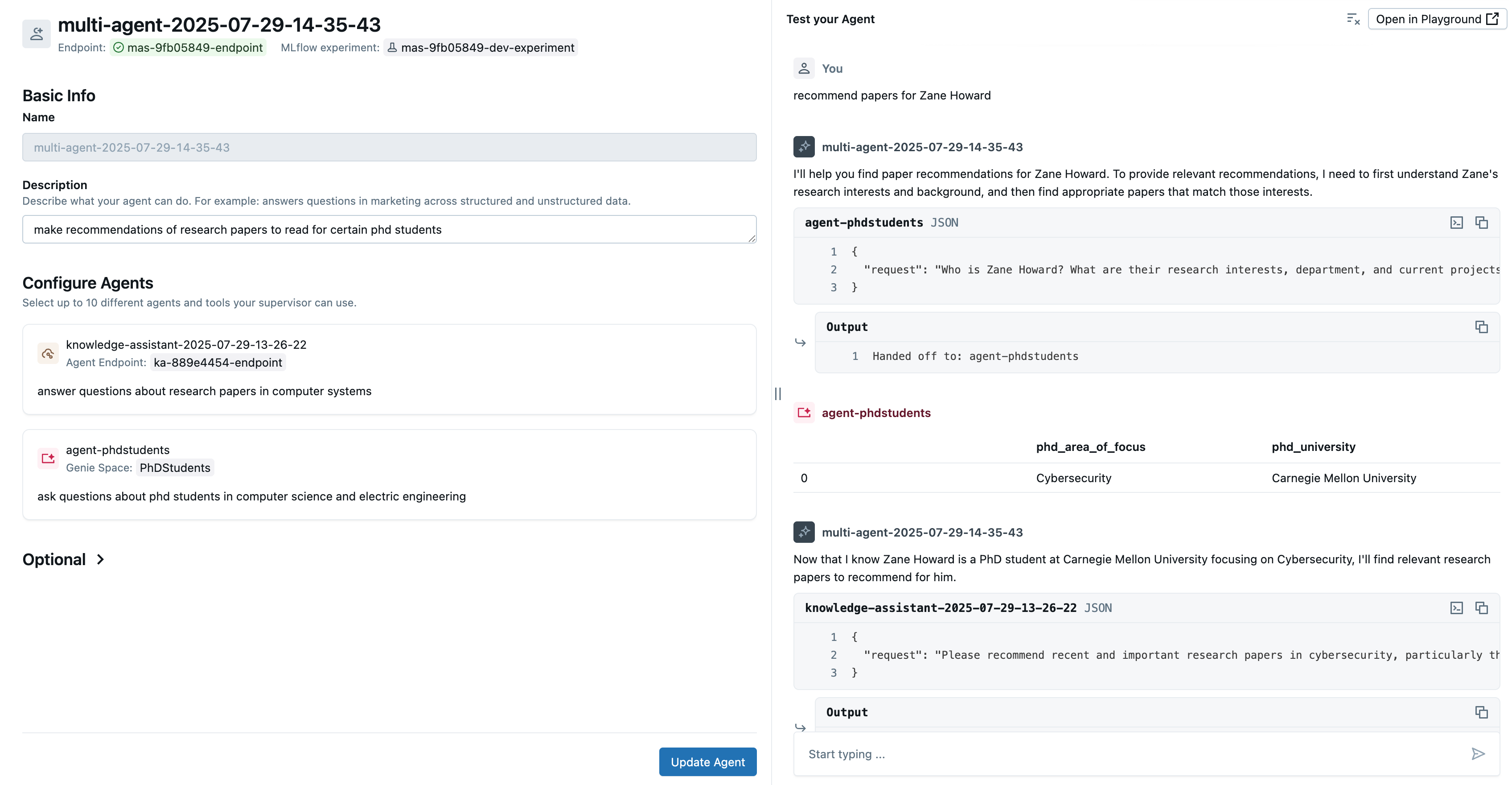
Databricks vs AWS vs Gensee AI Agent Platform Comparison

Databricks Agent Bricks vs. AWS AgentCore vs. Gensee

July 31, 2025

An in-depth comparison of three leading platforms for building and deploying the next generation of AI agents.
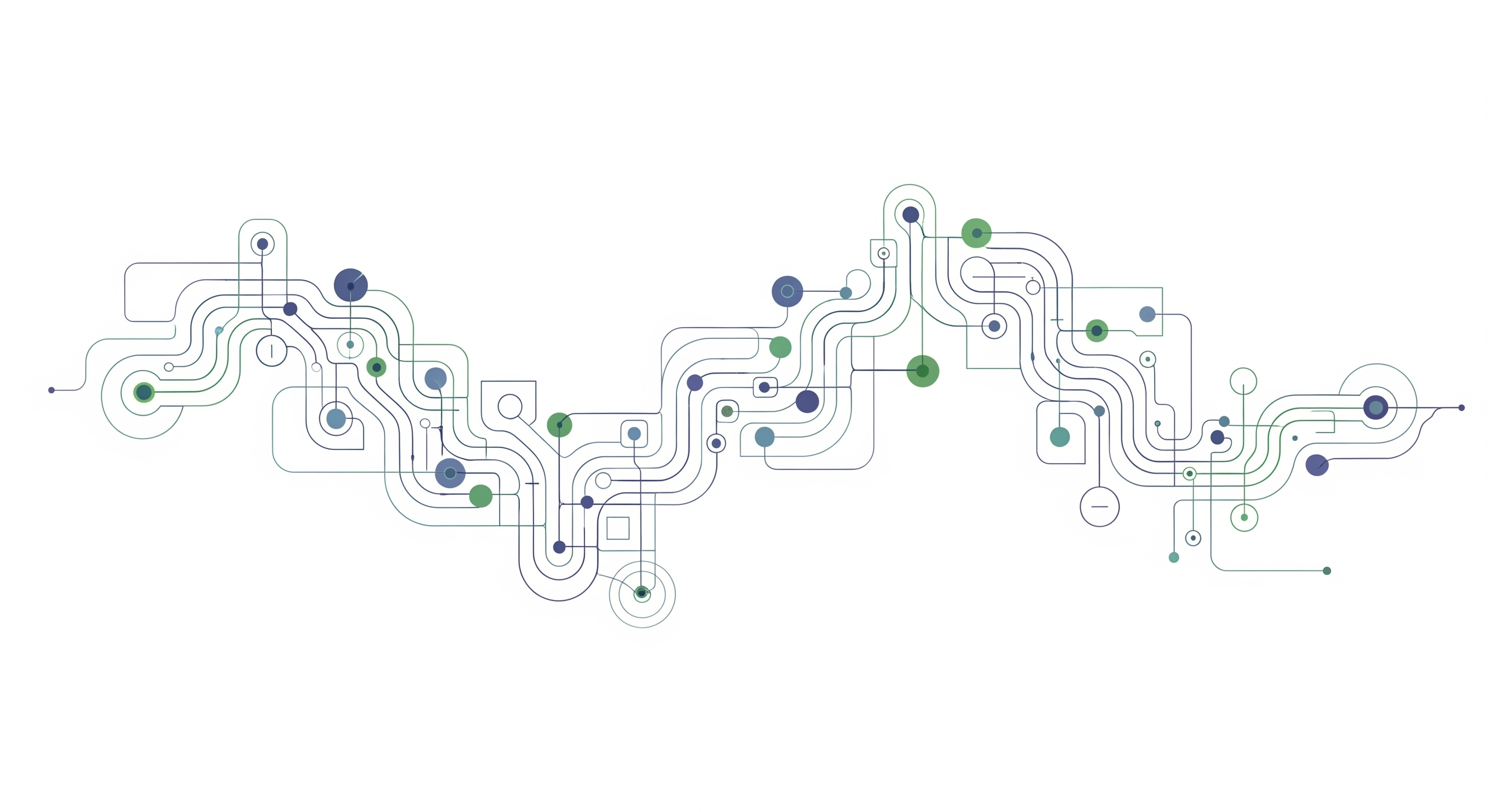
Agent Auto-Tuning with Cognify Pt.2

Agent Auto-Tuning with Cognify Pt.2

March 13, 2025

Dive deeper into the technical secret sauce behind Cognify's efficient and effective autotuning: the AdaSeek algorithm.
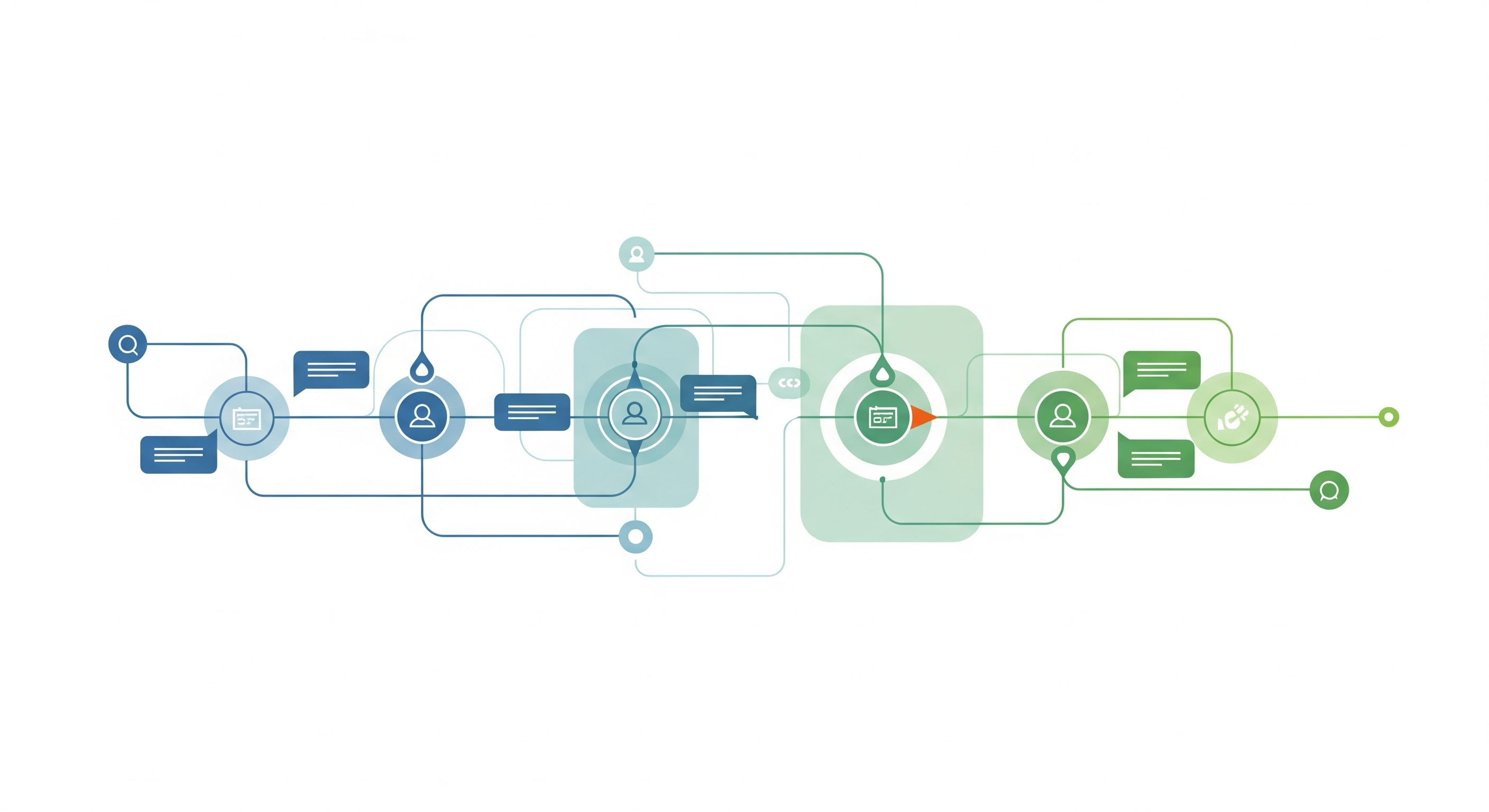
Agent Auto-Tuning with Cognify Pt.1

Agent Auto-Tuning with Cognify Pt.1

March 12, 2025

Is it possible to autotune a 4-step gen-AI workflow's generation quality with a budget of $5 and 30 minutes instead of $168K and weeks?