Before we get started
Gensee Crate Enterprise FAQ.
Answers for the people doing the work—and the people protecting it.
What is Gensee Crate Enterprise?
Gensee Crate Enterprise helps companies use AI agents safely. It brings company policies, agent activity, safeguards, and investigations together across employee devices, business applications, and cloud workspaces.
How does Gensee support Agent Detection and Response (ADR)?
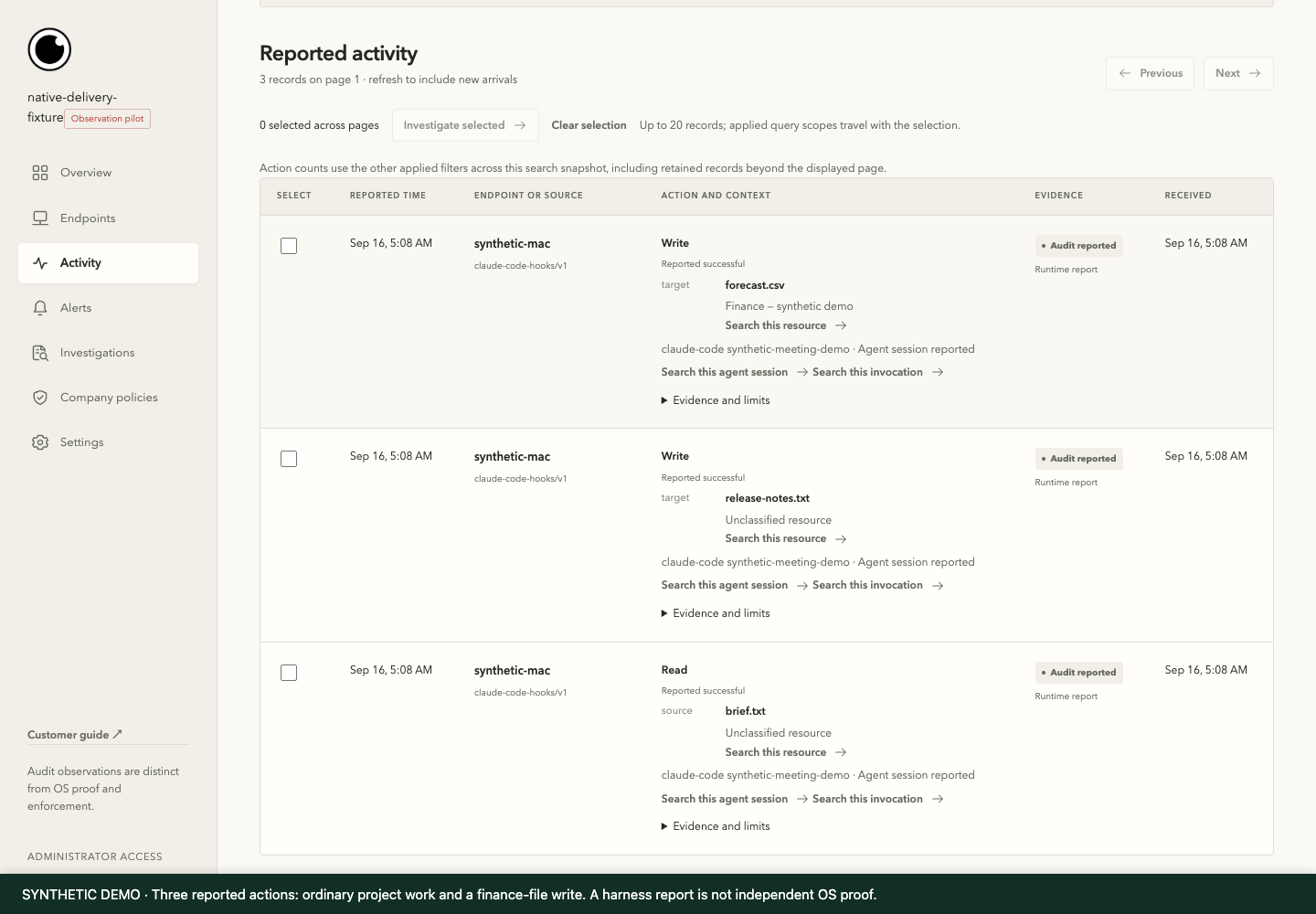
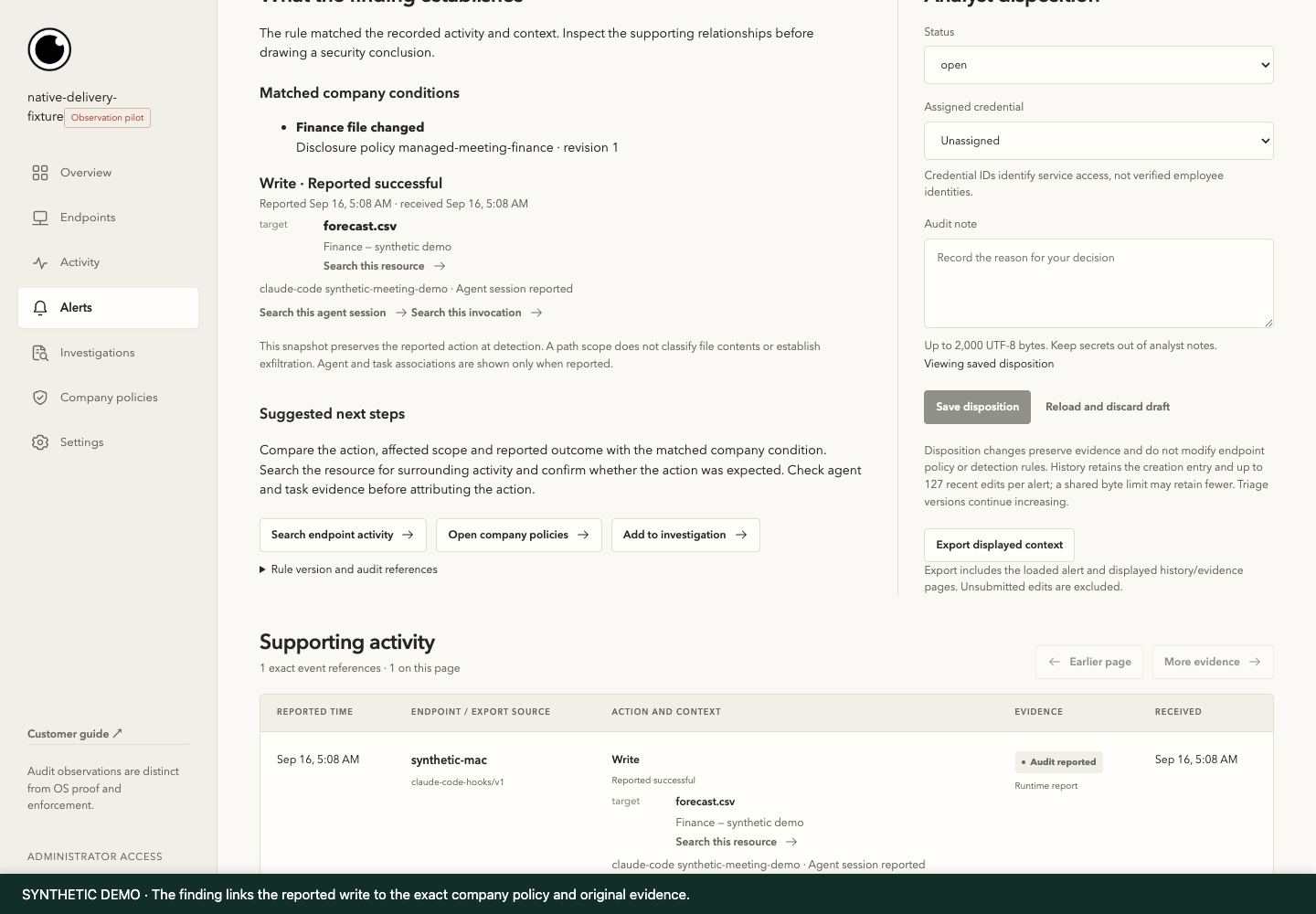
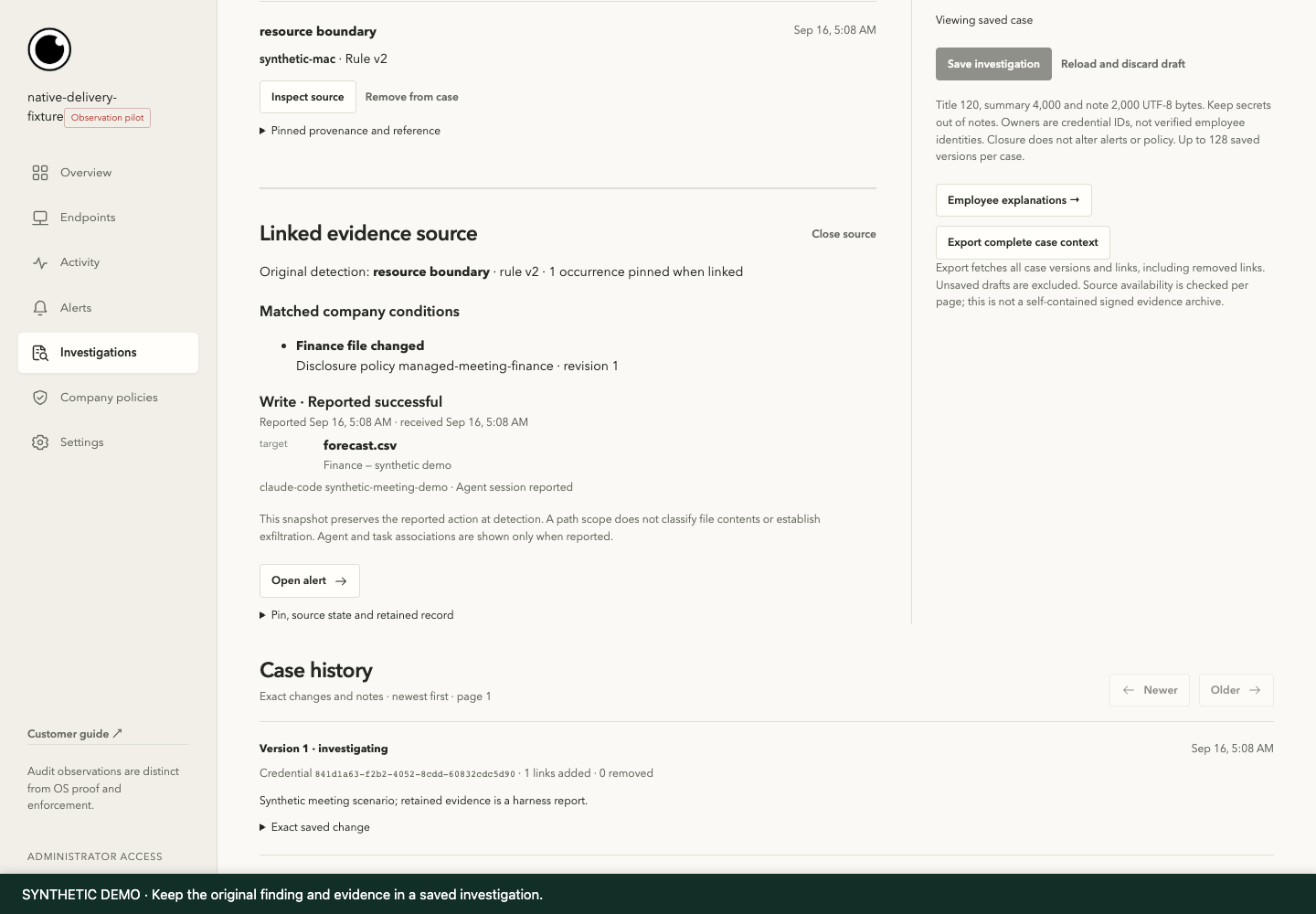
Gensee connects suspicious agent activity with the task, relevant policies, and supporting evidence. Security teams can review related findings together, understand what happened, and decide how to respond.
Read our guide to AI agent security and ADR ↗
Who is Gensee Crate Enterprise for?
Teams with agents that already read sensitive information, run code, or change business systems. Operations and support are a natural starting point, with analytics, finance, and engineering workflows also in scope. The operational owner, platform or IT team, and security team define the boundaries together.
Which agents and tools can I use with Gensee?
Gensee works with supported coding agents, automation agents, and cloud platforms. These include Claude Code, Codex, Antigravity, Cursor, GitHub Copilot, Claude Cowork, ChatGPT Work, n8n, OpenClaw, Hermes Agent, Omnigent, Databricks Agent Bricks, Glean, Workday, Atlassian Rovo, AWS Bedrock, and Azure AI Foundry. We confirm available protections for your integrations and deployment.
Where can Gensee Crate Enterprise be deployed?
Gensee supports employee devices running macOS, Windows, or Linux, agents inside business applications, and managed cloud workspaces. Policies, activity review, and investigations come together in a central dashboard.
Explore deployment options ↗
Will normal work require constant approvals?
Approved tasks can proceed under company policies. People are brought in when an action needs attention, so teams can keep routine work moving and review consequential exceptions.
How does Gensee help with risky code and tools?
Gensee can inspect code, packages, and tool activity, flag risks, and help teams choose a safer path. Available safeguards depend on the connected agent and deployment.
Can Gensee reverse every action?
No. Recovery applies to supported local state. It cannot unsend an email, reverse an arbitrary remote transaction, or recall disclosed data. Those effects need controls at the application or resource boundary before they occur.
What can we evaluate with our team?
Start with one workflow. We’ll confirm the supported agents and applications, agree on policies, and demonstrate the controls and evidence available in that setup.
Let’s talk about your workflow.
Bring the task your team delegates.
We’ll help map the boundaries that matter.