
TL;DR: Agentic AI security fails when defenses only look at one prompt or one command at a time, because the real risk in AI coding agents like Claude Code, Codex, and Cursor builds up across an entire multi-step session. A control framework for long-horizon agents needs sidecar runtime enforcement, transactional workspaces that support fork/inspect/merge/rollback, and cross-session lineage that connects a planted instruction to the unsafe action it triggers hours or days later.
Enterprise security teams rolled out AI coding agents expecting a
productivity gain and got a new attack surface instead. The 2026
“Clinejection” disclosure showed how a prompt hidden in a GitHub issue
title could push an agentic triage bot into poisoning a CI/CD cache and
reaching into secrets like VSCE_PAT, OVSX_PAT,
and NPM_RELEASE_TOKEN, without a human ever approving a
single suspicious command. That is the shape of agentic AI security risk
in 2026: not one bad output, but a chain of individually plausible
actions that only look dangerous in aggregate.
This article lays out a control framework built for long-horizon agents, the kind that read a codebase, call MCP tools, write files, and act on results across dozens of steps and multiple sessions: where memory poisoning and prompt injection actually take hold, why sandboxing alone doesn’t close the gap, and the runtime and transactional controls that do.
Table of Contents
- What Makes Long-Horizon Agents a Different Security Problem
- Where the Attack Actually Lives: Memory Poisoning and Prompt Injection
- Why Sandboxes and Firewalls Alone Don’t Close the Gap
- A Control Framework for Long-Horizon Agents
- Transactional Workspaces: Fork, Inspect, Merge, Rollback
- Deploying Runtime Defense Without Rebuilding Your Agent Stack
- Measuring the Framework: Defense Rate, Not Just Detection
What Makes Long-Horizon Agents a Different Security Problem
Long-horizon agents are dangerous because each individual step is defensible on its own, while the sequence isn’t. A single file read, a single dependency install, a single MCP call to a ticketing system: none of them trip a conventional alert. Strung together across a 40-step coding session, they can plant a backdoor, exfiltrate a credential, or poison a build artifact that ships days later.
Security research from Shattered.io found that in controlled tests, autonomous agents walked through enterprise systems in under two hours, and that prompt injection already affects more than a third of deployed agents; the average AI agent-related breach now costs roughly $4.7 million, and 92% of security leaders are alarmed by agentic AI autonomy specifically. Those numbers track with what we’ve seen in our own testing: the failure mode isn’t one malicious prompt slipping through, it’s a slow accumulation of state and permissions that a point-in-time review never catches.
Note: “Long-horizon” doesn’t just mean a long session; it means step 30 depends on context or memory written in step 3, often by a different trigger, such as an issue comment or a fetched webpage.
Where the Attack Actually Lives: Memory Poisoning and Prompt Injection
Memory poisoning and prompt injection both work by getting untrusted content treated as trusted instructions, but they differ in when the damage lands. Prompt injection typically fires inside a single interaction; memory poisoning plants the payload for a future one.
Prompt injection in developer tooling. The Clinejection disclosure is the clearest 2026 example: an attacker-controlled GitHub issue title contained instructions an agentic bot interpreted as commands, leading to CI/CD cache poisoning and a path toward supply chain compromise. The entry point wasn’t the agent’s own prompt, it was a downstream artifact the agent was told to read as data.
Memory and cross-session persistence. More concerning for long-horizon agents is content written into a memory file, config, or cached tool result that a later session reads back as trusted context. A coding agent that writes notes for “next session’s context” can just as easily be tricked into writing an attacker’s instructions there instead. Nothing looks wrong at write time; the unsafe action happens sessions later, after re-invocation for an unrelated task, which is why root-cause tracing without lineage is so hard.
Non-human identity sprawl. Coding agents accumulate API keys, service tokens, and MCP credentials as they work. Each is individually scoped, but a long session can chain several into privilege never explicitly granted, echoing the concerns NIST’s AI Agent Standards Initiative has flagged around action authority and tool invocation security.

Why Sandboxes and Firewalls Alone Don’t Close the Gap
Sandboxes and allowlist firewalls reduce blast radius, but they don’t
stop a long-horizon agent from executing a sequence of individually
permitted actions that add up to compromise. Claude Code’s sandbox
environments enforce filesystem isolation (blocking access to files like
~/.ssh/id_rsa) and network isolation through HTTP/SOCKS5
allowlisting, and GitHub’s agent firewall restricts outbound internet
access by default. We recommend running these regardless of what else is
in place, but they don’t understand the session as a session: a sandbox
can’t tell you the config file it allowed the agent to write in step 12
is the same file that triggered a destructive command in step 47, and a
firewall can’t roll back a merge. That is the gap a control framework
for long-horizon agents has to close: not “did this action violate
policy,” but “was this session, as a whole, safe, and can we prove it
and undo it if not.”
A Control Framework for Long-Horizon Agents
A workable framework treats the agent session, not the individual prompt, as the unit of security. In our work building runtime defense for AI coding agents, we organize this around four controls that operate together rather than in sequence:
- Sidecar runtime enforcement. Policy checks run alongside the agent, observing tool calls, file writes, and MCP interactions as they happen, without requiring the agent itself to be modified or rebuilt on a custom SDK.
- Transactional workspaces. Every session’s changes are isolated so they can be forked, inspected, merged, or rolled back before they touch production code, credentials, or shared infrastructure.
- Cross-session lineage. Actions are linked back to their origin, so a suspicious command in session five can be traced to a memory write planted in session one, closing the gap that pure point-in-time monitoring leaves open.
- Continuous benchmarking. Defense effectiveness is measured against known attack classes, rather than assumed from policy configuration alone.
Sidecar enforcement catches unsafe actions in real time; transactional workspaces contain the damage when something slips past anyway; lineage tells you how far back a compromise goes; benchmarking tells you whether the whole system is actually working, not just deployed.
Transactional Workspaces: Fork, Inspect, Merge, Rollback
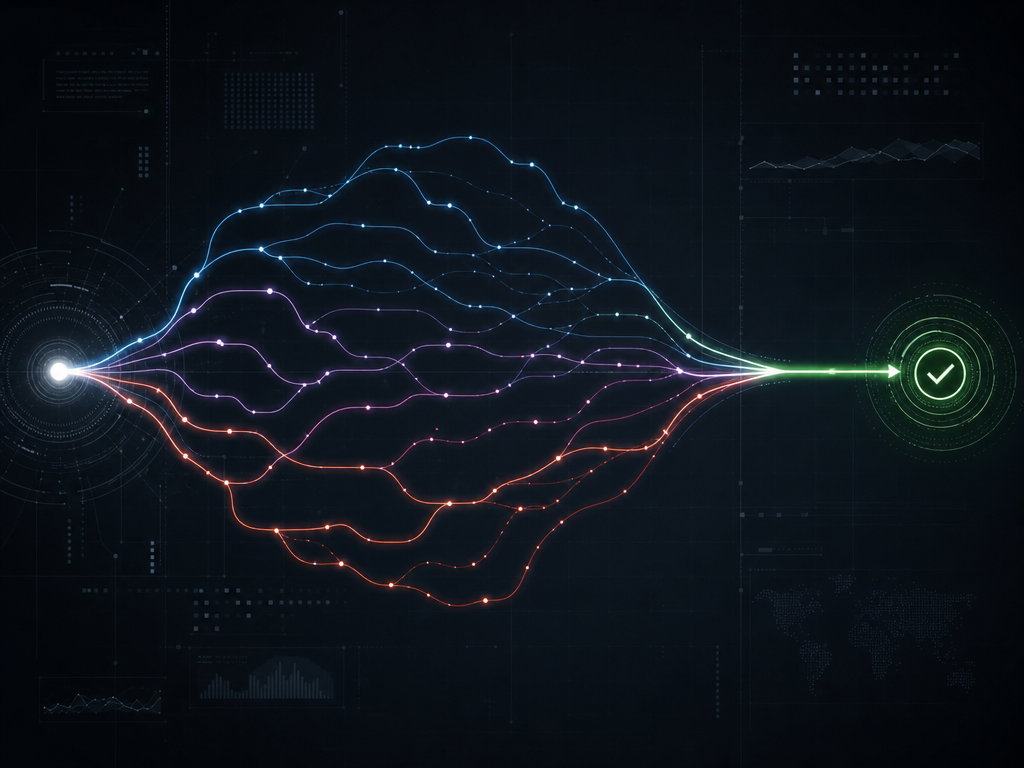
A transactional workspace treats agent work the way a database treats a transaction: nothing is final until explicitly committed, and anything in progress can be inspected or discarded. An agent’s session runs in an isolated workspace that can be forked before a risky operation, inspected by a human or policy engine at any checkpoint, merged into the real codebase once it passes review, or rolled back entirely if it doesn’t.
If a memory poisoning attempt plants a persistence mechanism in step 3, a transactional workspace lets you roll back to before that write happened rather than reverse-engineering which of forty subsequent commits need undoing. If a tool call sequence looks fine individually but produces a suspicious diff at merge time, fork the workspace, hand it to a reviewer, and merge only what’s clean.
Tip: Treat “can we roll this session back cleanly” as a design requirement, not an incident-response afterthought. If rollback requires manual archaeology through commit history, the control isn’t actually a control under time pressure.
Deploying Runtime Defense Without Rebuilding Your Agent Stack
None of this requires replacing Claude Code, Codex, Cursor, or whichever coding agent your teams already use, nor rewriting them against a proprietary SDK. Runtime defense that runs as a sidecar sits alongside the unmodified agent, observing and enforcing policy at the tool-call and file-system layer, so adoption doesn’t force engineering teams onto a new agent runtime just to get security coverage.
Practically, that means integration points with what security teams already run: identity providers for who can invoke which agent with which permissions, endpoint tooling for the machines agents execute on, MCP servers for the tools agents reach into, and SIEM pipelines so agent activity shows up next to every other security signal. NIST’s own guidance points the same direction, calling for updates to SP 800-160 and SP 800-218 to cover agentic multi-agent lateral movement, rather than a parallel governance model.
If you’re evaluating where to start, our open-source tooling is a reasonable way to see sidecar enforcement and transactional workspace mechanics before committing further. For teams ready to scope an enterprise rollout against existing identity and SIEM tooling, you can book a demo to walk through your specific agent stack, or drop into our Discord to compare notes with other teams running agentic coding tools in production.
Measuring the Framework: Defense Rate, Not Just Detection
A control framework is only as credible as the numbers behind it, which is why defense rate against specific attack classes matters more than a checklist of enabled features. In our benchmark testing across memory poisoning, prompt injection, and long-horizon multi-step task scenarios, we’ve measured a meaningful lift in defense rate when sidecar enforcement and transactional rollback are active, compared to running the same agents without runtime controls. The gap is largest on long-horizon tasks, tracking with the underlying problem: single-prompt defenses were never built to catch damage that accumulates over many steps.
Our analysis suggests the biggest blind spot enterprises carry today isn’t the absence of security tooling, it’s the absence of session-level visibility. Sandboxes and firewalls answer “was this action allowed.” They don’t answer “was this session, end to end, safe,” and that second question is the one long-horizon agents put pressure on.
Frequently Asked Questions
What security risks are unique to agentic AI?
Agentic AI introduces risks that don’t exist in single-turn AI use: memory poisoning across sessions, multi-step prompt injection where damage accumulates over many actions, and non-human identity sprawl as agents chain credentials and tool permissions. Any individual action can look safe while the sequence is not.
How do you prevent prompt injection in autonomous agents?
Prevention means treating any content an agent reads, such as issue titles or fetched web pages, as untrusted data rather than instructions, combined with runtime policy checks that flag unusual tool calls. Sidecar enforcement that watches the full session, not just the initial prompt, catches injected instructions that only trigger unsafe behavior several steps later.
What runtime guardrails stop AI agents from executing dangerous code?
Effective guardrails combine sandboxing (filesystem and network isolation) with sidecar policy enforcement that evaluates tool calls and file writes in context, plus transactional workspaces that let risky work be inspected or rolled back before it merges into production.
What is MCP, and why does it matter for agentic AI security?
MCP (Model Context Protocol) is the standard many coding agents use to connect to external tools and data sources. Each MCP connection is a potential entry point for untrusted data or privilege accumulation, making MCP traffic a key layer for runtime enforcement to observe.
Conclusion
Agentic AI security breaks down the moment defenses stop treating a coding agent’s session as a whole and start treating it as a series of disconnected prompts. Long-horizon agents like Claude Code, Codex, and Cursor create risk because individually reasonable steps can chain into memory poisoning, prompt injection payoffs, and privilege accumulation that no single-action review catches. A framework built for this reality needs sidecar runtime enforcement that doesn’t require rebuilding your agent stack, transactional workspaces that make fork/inspect/merge/rollback a first-class operation, and cross-session lineage that connects a plant to its payoff.
If your team is running AI coding agents in production and wants to see how sidecar enforcement and transactional rollback apply to your specific environment, book a demo with us, or explore more on the Gensee blog and FAQ first.