A closer look
Know your boundaries.
Does every agent action need a human approval?
No. The design centers on reusable company policy: work inside an approved boundary can proceed automatically. Human review is reserved for actions and exceptions that require it. Policy decisions, alerts, and employee notifications are separate choices.
How does Gensee help reduce alert fatigue?
Related findings can share one alert while retaining their original evidence. Policy context and tiered screening help focus investigation. Reduced notification volume is distinct from a measured false-positive reduction; evaluation should track both missed issues and unnecessary interruptions.
What does a product demonstration establish?
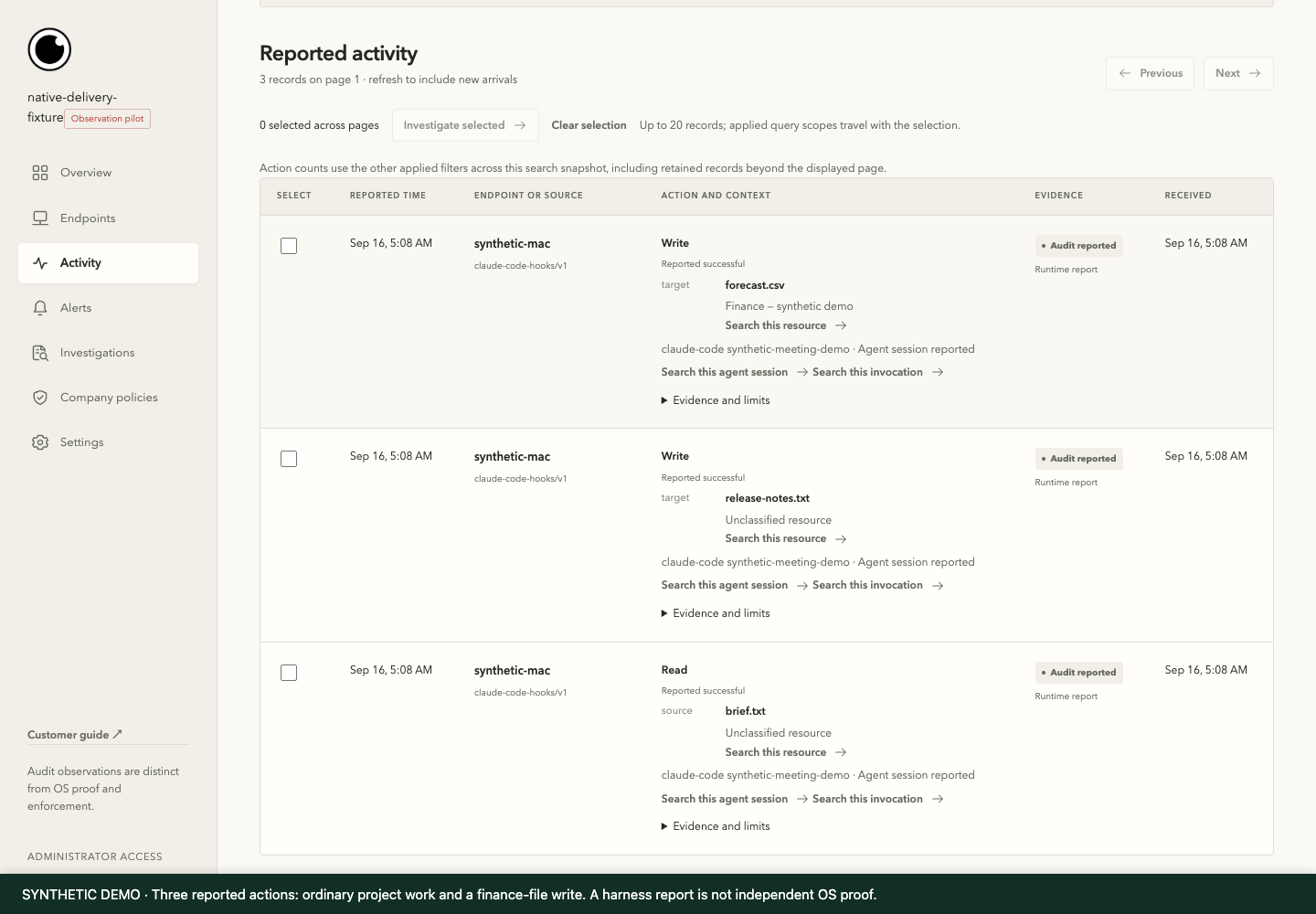
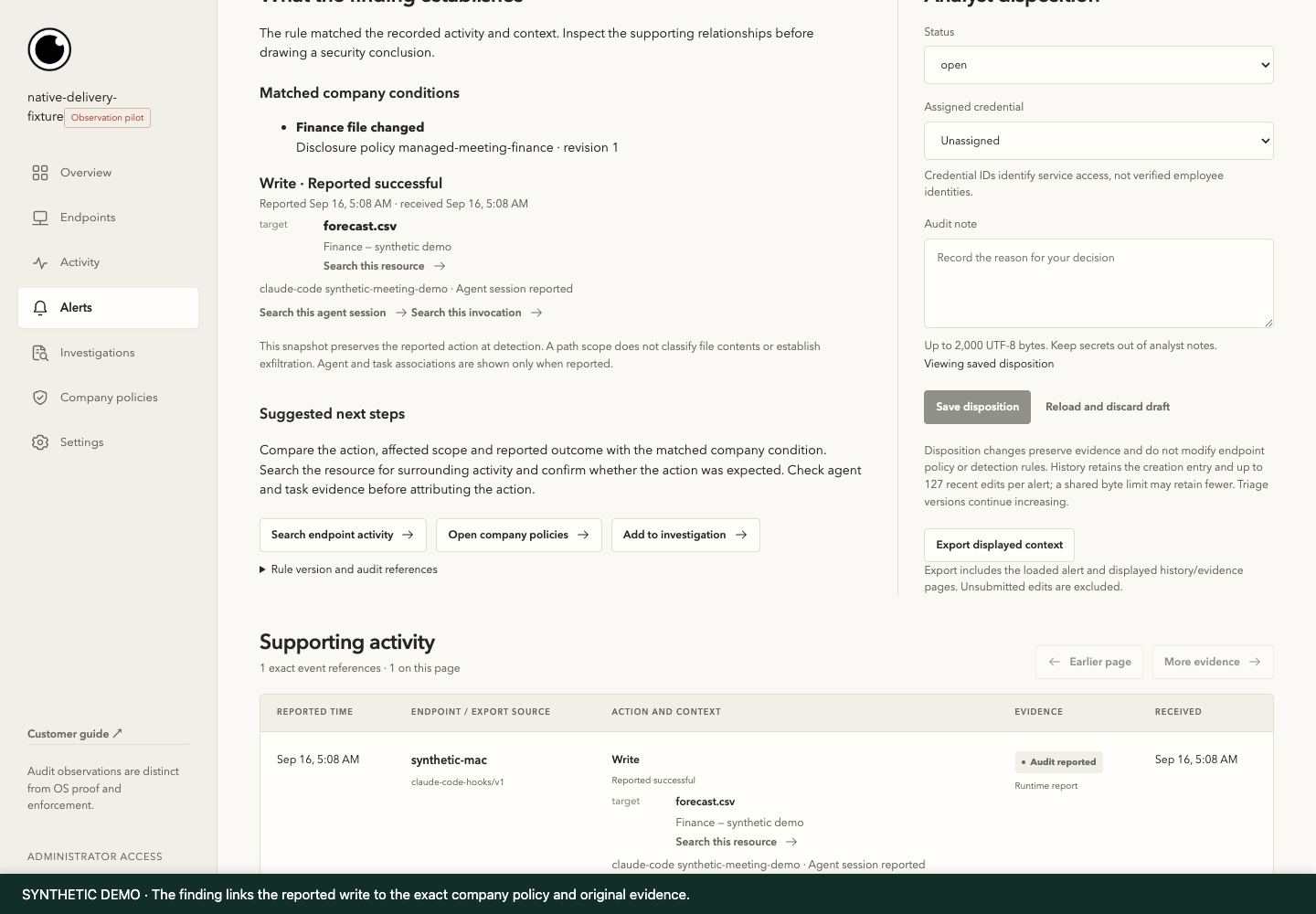
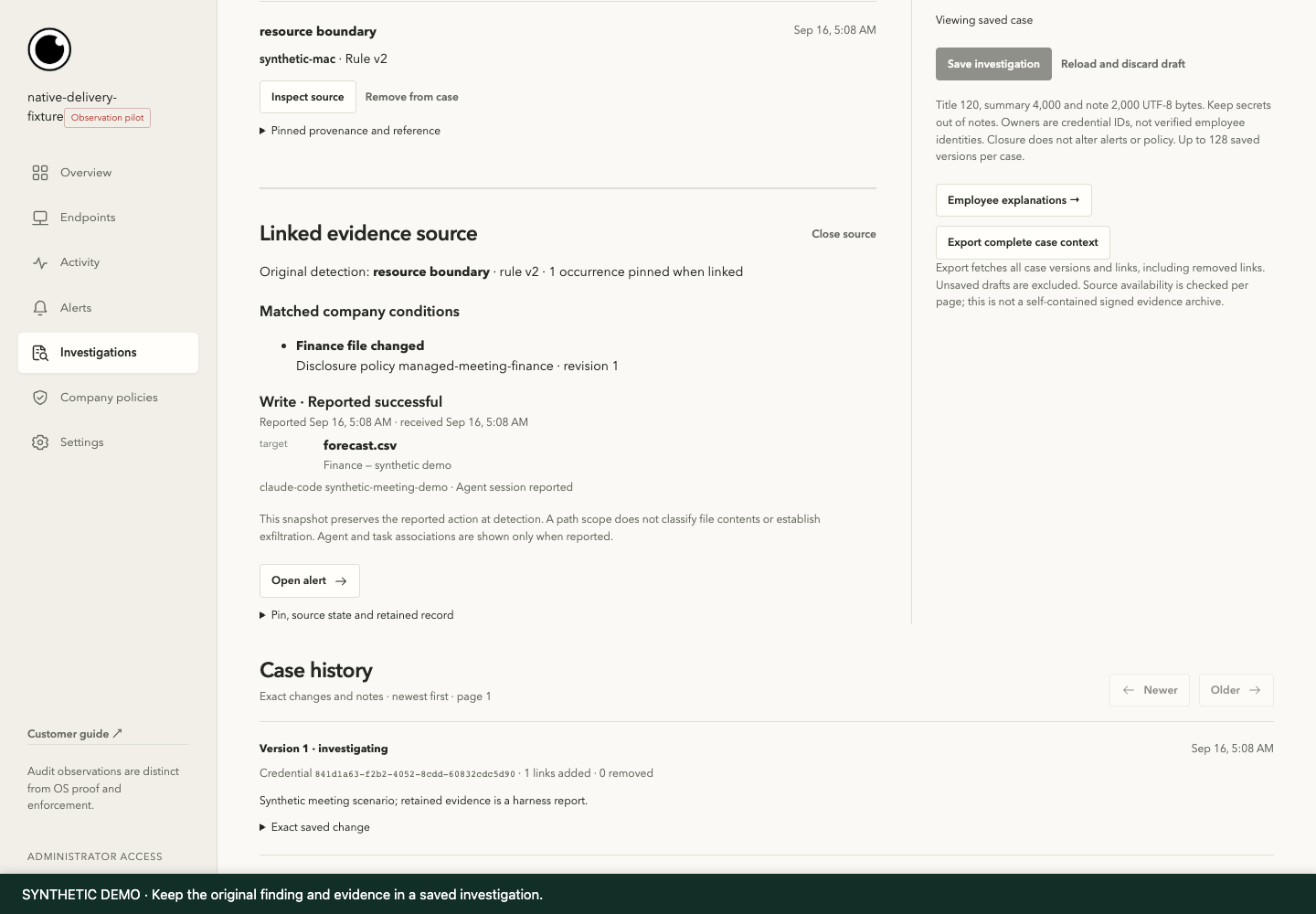
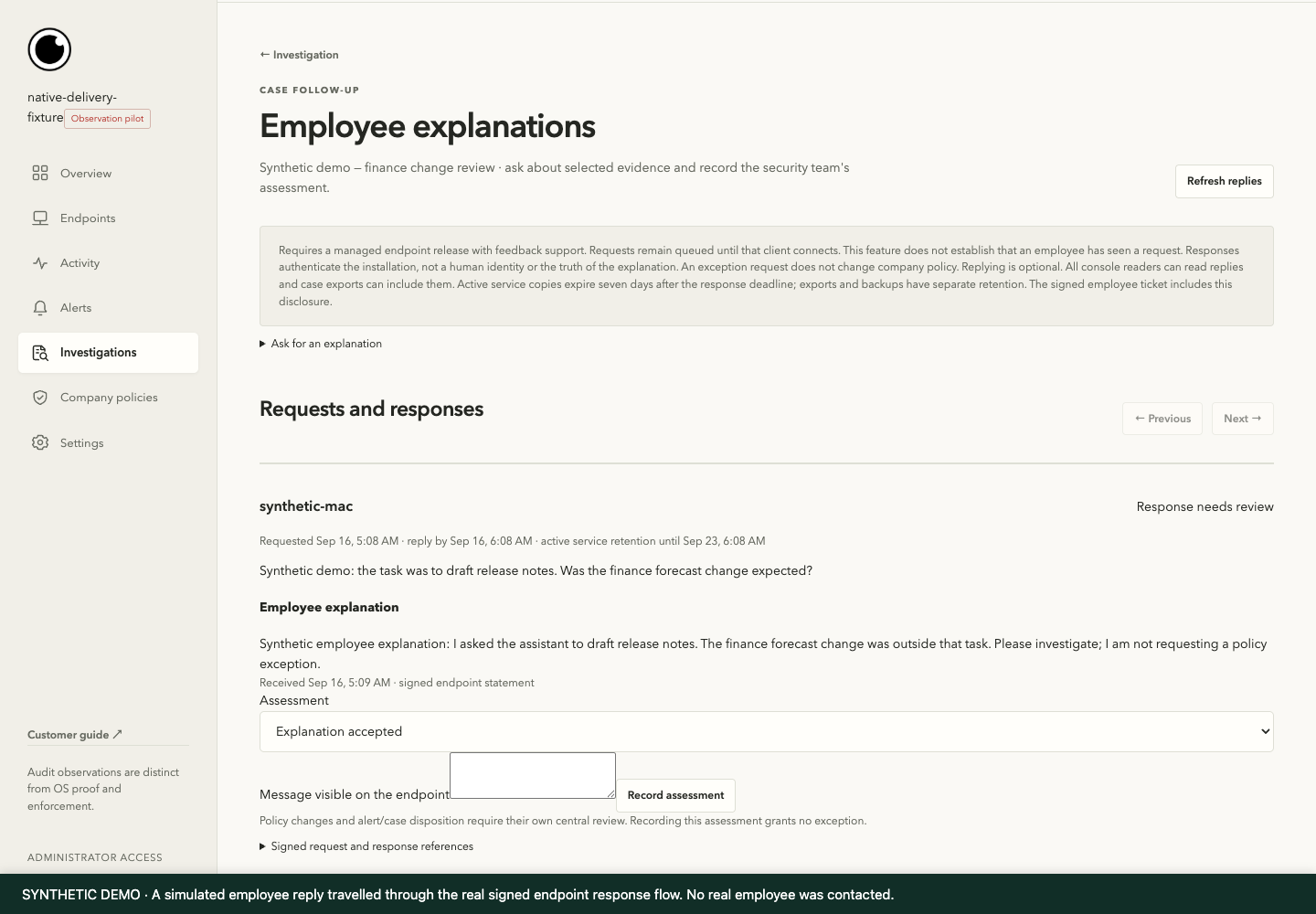
The walkthrough shows the actual console, policy-linked findings, saved evidence, and employee-response workflow using synthetic inputs. A reported action, an observed effect, and verified preventive enforcement are different facts. Coverage depends on the source, integration, platform, and configured release.
Can rollback undo an external action?
Rollback and discard apply to supported isolated workspace state. They do not unsend an email, recall leaked data, or reverse arbitrary remote transactions. Publishing, network writes, and production changes need separately governed execution or approval.
Which environments can we evaluate?
Start with the exact workflows and platforms your team uses. The current demonstration covers the company console and managed Mac evidence workflows, including supported Claude Code and Cowork sources. Runtime isolation and enforcement depend on the execution environment. We will scope the integrations and acceptance criteria with you.