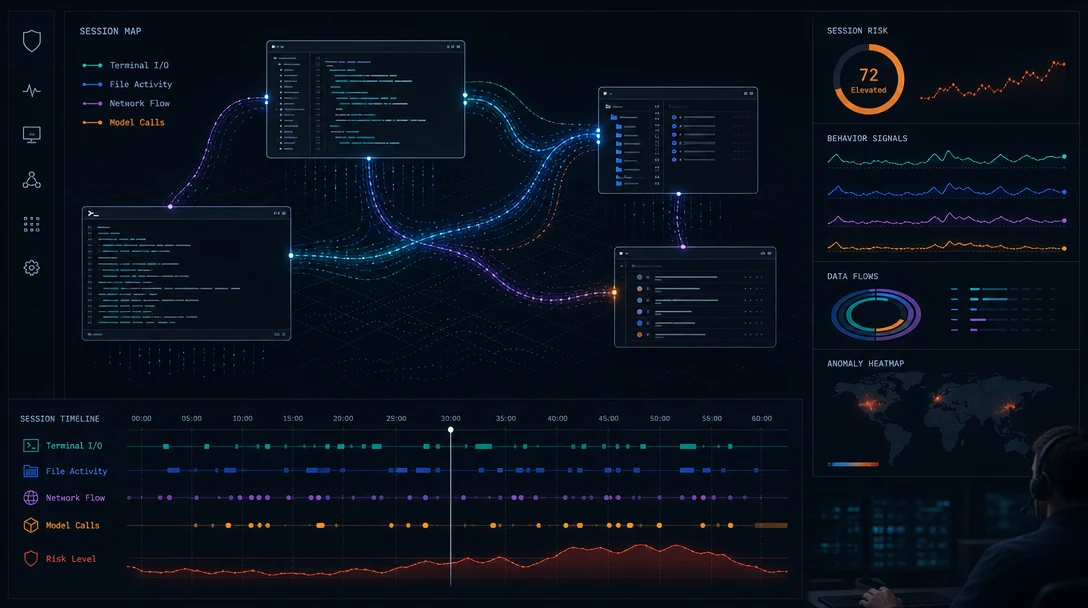
TL;DR: A runtime security benchmark for coding agents measures how a defense tool behaves while an agent like Claude Code, Codex, or Cursor is actually executing: which unsafe actions it catches, how many false positives it throws, how much latency it adds, and whether it produces evidence complete enough to reconstruct a multi-step attack. This is a different question from code-scanning benchmarks that grade static vulnerability detection, and it needs its own test design: a detection coverage matrix, repeated-run consistency scoring, controlled latency experiments, and an evidence-completeness rubric, all run before you ever look at a vendor's marketing claims.
Security teams evaluating AI coding agents keep running into the same wall: the benchmarks they can find grade whether a tool finds vulnerabilities in source code, not whether a runtime defense actually catches an agent doing something unsafe while it works. Those are separate questions, and conflating them leads to procurement decisions based on the wrong evidence. This article lays out a reproducible methodology for benchmarking runtime security tooling for coding agents: what to measure, how to structure the test suite, and how to avoid the traps that make a benchmark look rigorous without actually being useful. It does not report benchmark results. No such published figures exist for any specific product here; the goal is to give you a test design you can run yourself.
Table of Contents
- What Is a Runtime Security Benchmark for Coding Agents?
- Why Code-Security Scanning Benchmarks Don't Measure Runtime Risk
- Building a Detection Coverage Matrix
- Measuring False Positives and Run-to-Run Consistency
- Testing Enforcement Modes Without Breaking Production
- Designing a Latency and Overhead Experiment
- Scoring Evidence Completeness
- Assembling the Test Suite
- FAQ
What Is a Runtime Security Benchmark for Coding Agents?
A runtime security benchmark for coding agents is a controlled test that scores how well a security tool observes, flags, or blocks unsafe agent behavior while the agent is actively running, not how well it analyzes code sitting still in a repository. It requires an instrumented agent session, a set of scripted unsafe and benign scenarios, and a scoring rubric that goes beyond a single pass/fail number.
This is distinct from the benchmarks most teams already know:
- Code-security scanning benchmarks (static or AI-assisted vulnerability detection) grade whether a tool finds known bug patterns in a codebase. They never touch a running agent.
- Model safety evaluations grade a language model's outputs against a prompt, in isolation, without tool access or a live environment.
- Runtime security benchmarks for coding agents grade a defense layer against a full agent session: file writes, shell commands, credential reads, network calls, and MCP tool invocations, across one task or many.
The distinction matters because a tool can score well on one and tell you nothing about the other.
Why Code-Security Scanning Benchmarks Don't Measure Runtime Risk
Code-security scanning benchmarks are scoped to a different question: they ask whether a tool can find a known vulnerability pattern in a static artifact, not whether a defense can catch an agent mid-action. Applying their scoring model to runtime tools produces a benchmark that looks rigorous but measures the wrong thing.
The OWASP Benchmark Project illustrates the static side well: it provides runnable applications seeded with thousands of exploitable test cases, each mapped to a specific CWE, to score the accuracy and speed of vulnerability detection tools. A more recent methodology from application-security vendor Rafter extends this idea to AI code-review agents, scoring them on detection rate, false-positive rate, explanation quality, run-to-run consistency, and novel-pattern discovery using spiked open-source repositories. Both are well-built for their purpose. Neither one instruments a live agent session, and neither one can tell you whether a defense catches an agent reading a credentials file mid-task or exfiltrating data through an MCP tool call.
| Dimension | Code-security scanning benchmarks | Runtime security benchmarks for coding agents |
|---|---|---|
| What's evaluated | Static or generated code, checked for known bug patterns | Live agent actions: commands, file access, tool calls, network calls |
| Test artifact | Source repository seeded with known CWEs | Instrumented agent session running a real or scripted task |
| Time horizon | Single scan of a file, PR, or repo | Multi-step, and often multi-session, task lineage |
| Success metric | Detection rate against a fixed vulnerability list | Action-level detection coverage, false-positive rate, latency, evidence completeness |
Where Standards Bodies Fit Today
Neither the OWASP Benchmark nor Rafter's methodology was built to answer agent-runtime questions, and as of early 2026 no widely adopted public benchmark suite exists that does. Standards work is underway but still forming: the OWASP Top 10 for Agentic Applications 2026, published December 2025 after review from more than 100 practitioners, catalogs the risk categories agentic systems introduce, and the NIST AI Agent Standards Initiative, updated as of August 2026, is developing evaluations for agent authentication and identity. Neither publishes a runtime scoring methodology yet, which is why teams evaluating tools today need to build their own.
Runtime control infrastructure like Gensee Crate is one class of tool such a benchmark would score: it sits between the agent and the system and records which process touched which file, command or tool during a live session.
Building a Detection Coverage Matrix
Detection coverage measures the share of unsafe agent actions a runtime tool actually catches, broken out by category rather than collapsed into one score. A single aggregate number hides which categories a tool is blind to, which is exactly the information a security buyer needs.
Build the matrix around the action categories coding agents actually perform:
- Unsafe shell and filesystem actions: destructive commands, permission changes, writes outside the task's declared scope.
- Secret access and exfiltration attempts: reads of credential files, environment variables, or
.envsecrets, followed by any outbound transmission. - MCP and tool misuse: an agent invoking a connected tool or MCP server outside its intended purpose, or chaining tools in a way no single-step check would flag.
- Privilege escalation: an agent attempting to widen its own permissions or those of a spawned process.
- Cross-repository access: an agent touching a repository or directory outside the one it was scoped to for the task.
Cross-Session and Long-Horizon Attacks
The category most benchmarks miss entirely is the one that matters most for coding agents: attacks staged across multiple steps or multiple sessions rather than a single prompt. HiddenLayer's research notes that a coding agent's harness, meaning its prompts, tools, skills, MCP servers, and orchestration logic, gives an attacker far more surface than the model alone, and that language models are built to follow instructions rather than enforce security policy, which is why independent runtime monitoring is necessary in the first place.
A realistic long-horizon test case: an agent working across sessions in Cursor plants a small persistence mechanism during a routine refactor, then a later session, working on an unrelated ticket, reads and executes it. A benchmark that only tests single-prompt scenarios will never surface this pattern, because no individual step looks unsafe in isolation; only the lineage does. Scoring this category requires the test harness to link actions across sessions by agent identity and task, not just flag isolated events.
This is the layer where runtime control infrastructure like Gensee Crate Enterprise is scoped to operate: as a sidecar that mediates an agent's actions across a full multi-step session rather than a single call, without requiring the agent stack itself to be rebuilt. We've seen benchmarks understate a tool's real detection gap by only running single-session scenarios; in practice, the cross-session category is where defenses most often diverge from each other.
Measuring False Positives and Run-to-Run Consistency
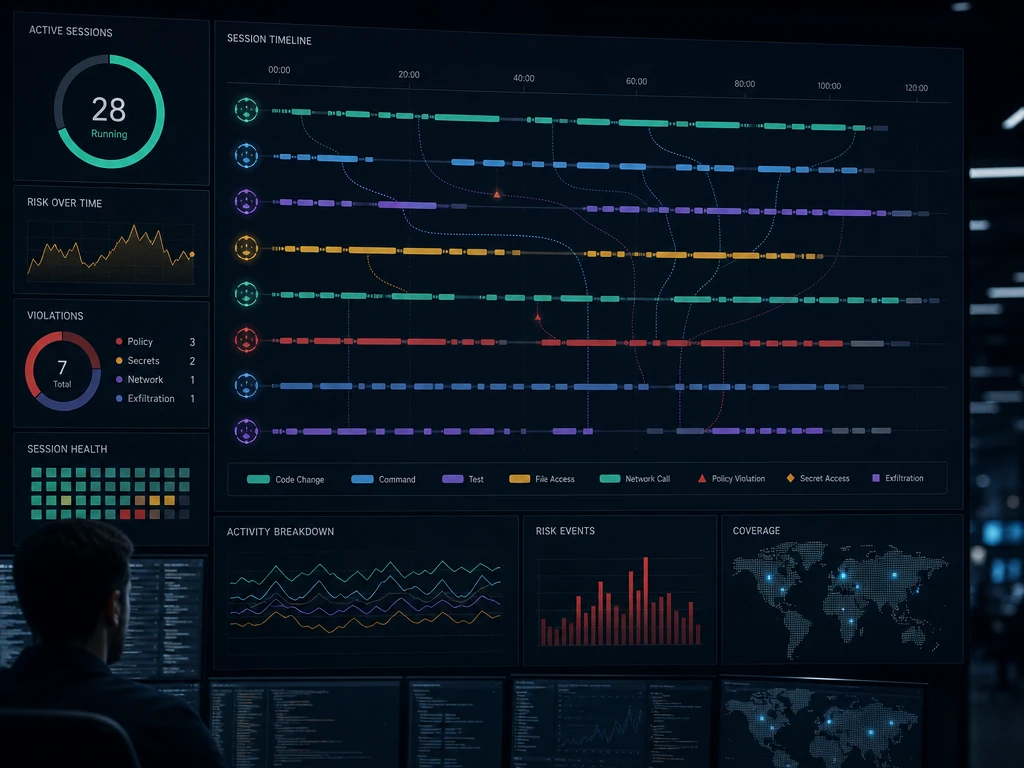
False-positive rate and run-to-run consistency measure whether a tool's alerts are trustworthy enough to act on, not just whether it eventually catches the unsafe action somewhere in its output. A tool with a high detection rate and a high false-positive rate is not usable in production; it trains engineers to ignore alerts.
Rafter's methodology for AI code-review agents recommends running the same scan three to five times and measuring finding stability, since large-language-model-based tools are nondeterministic and can produce a different result on an identical input each run. The same logic applies to runtime tools, arguably more so, because a runtime defense is evaluated against a live, timing-sensitive session rather than a static file. Repeated trials also generate far more raw evidence than a single run suggests: Gensee's controlled reproduction of an autonomous agent's package-service boundary escape recorded 158,394 open events across eight trials.
A workable protocol:
- Run each scenario in the test suite 3 to 5 times without changing the scripted agent behavior.
- Record every flag, block, or alert produced, along with its stated severity and reasoning.
- Triage each result as a true positive, false positive, or uncertain; have a second reviewer validate a sample rather than trusting a single triager.
- Score variance in both the presence of a finding and its severity rating across runs, not just whether it fired at all.
Tip: Track false positives by category, the same categories used in the detection coverage matrix. A tool that is accurate on shell commands but noisy on MCP tool calls needs a different remediation conversation than one that is noisy everywhere.
Testing Enforcement Modes Without Breaking Production
Enforcement-mode testing checks whether a tool's behavior changes appropriately as it moves from passive observation to active blocking, and whether it can be trusted to intervene without causing unintended damage. Detection accuracy alone doesn't answer this; a tool can be accurate in observe-only mode and still be unsafe to trust in block mode.
Score each candidate against four modes:
- Observe-only: logs the action but takes no action. Verifies visibility without disrupting the agent's task.
- Alert: flags the action to a human or downstream system in near real time.
- Human-approval: pauses the action pending explicit sign-off, and measures how the tool handles a denied approval.
- Block: stops the action outright. This is the mode that most needs safety controls in testing, since a mis-triggered block on a legitimate action can itself break a build or a deployment.
A key property to test here is whether the tool practices mandatory mediation: does it intercept every action that matches its policy scope, or does it sample, poll, or rely on the agent voluntarily reporting its own behavior? A tool that only mediates the actions an agent chooses to log is not a runtime defense in the sense this benchmark cares about.
Note: When testing block mode, run scenarios in an isolated, disposable environment. Never test a block-mode false-positive scenario against a production repository or credential set; the point of the test is to find the failure mode safely, not to reproduce it in production.
Designing a Latency and Overhead Experiment
A latency and overhead experiment measures the time and resource cost a runtime defense adds to an agent's task, using a controlled baseline comparison rather than a single anecdotal run. Without a baseline, any latency number is meaningless, because agent task duration already varies by task complexity, model, and tool-call volume.
The controlled design:
- Select a fixed set of representative tasks (a multi-file refactor, a dependency upgrade, a test-suite run) and run each one, unmodified, with no runtime defense attached. This is the baseline.
- Run the identical task set again with the runtime tool attached, holding the agent, model, and task scripts constant.
- Capture the full latency distribution for each run, not just the mean; a tool that adds negligible median latency but occasional multi-second stalls under specific action types behaves differently in practice than one with a flat, consistent overhead.
- Record resource consumption (CPU, memory) for the sidecar or monitoring process itself, separate from the agent process.
- Note any effect on task completion: did the agent finish the task, and did the output match the unmonitored baseline run.
Our analysis suggests that overhead numbers reported without a stated baseline task set and without a full latency distribution are close to unusable for comparison purposes; a mean-only figure hides exactly the tail behavior that matters for developer experience.
Scoring Evidence Completeness
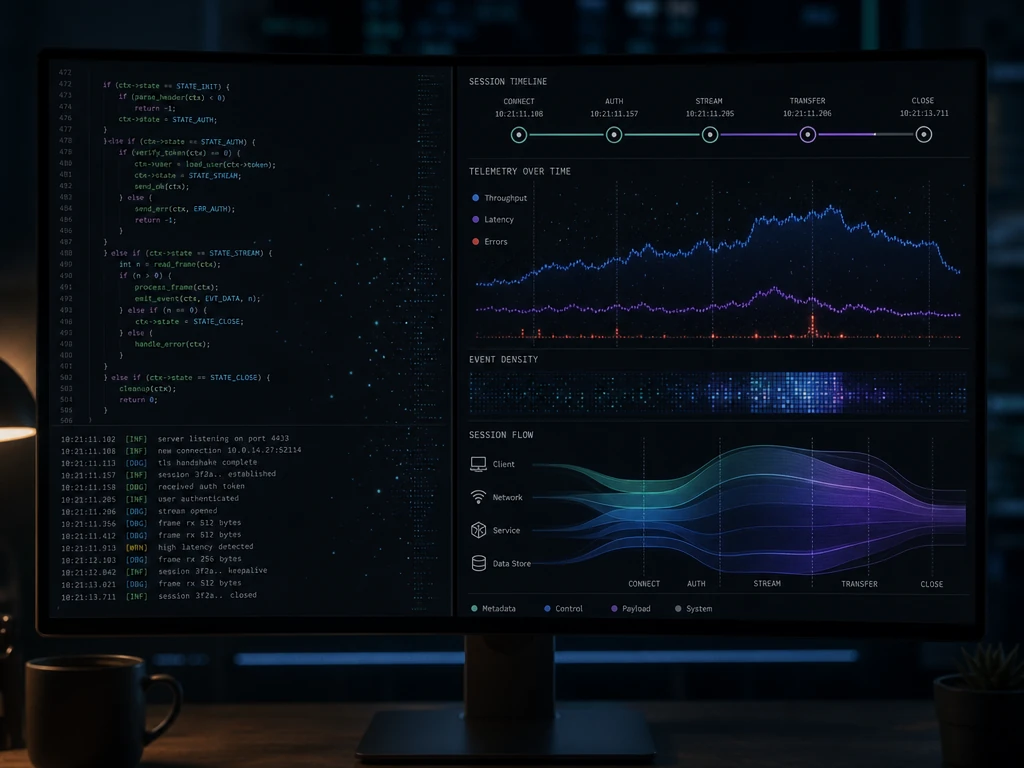
Evidence completeness measures whether an alert or block can be reconstructed into a full account of what happened, not just that something happened. This is the dimension code-security benchmarks don't test at all, because static scanners don't need to explain a sequence of live actions; runtime tools do. For a worked example of what to instrument, see this trace analysis of eight autonomous agent runs.
The Telemetry Schema
Score each alert against a fixed schema and mark which fields are present:
- Agent identity: which agent, session, and credential performed the action.
- Task context: what task or ticket the session was working on when the action occurred.
- Tool call: the specific command, file operation, or MCP invocation, with its parameters.
- Policy matched: which rule or policy the action tripped.
- Target: the file, repository, credential, or endpoint affected.
- Outcome: what actually happened as a result of the action, sometimes called effect evidence, as distinct from just the fact that a rule fired.
- Timestamp and sequence position: when it happened, and where in the session or cross-session lineage it sits.
A tool that fills every field for a single-step alert but drops task context or lineage for a multi-session sequence will score well on detection and poorly on evidence completeness, and that gap is exactly what security teams doing incident response will feel first.
Why Evidence Lineage Matters for Cross-Session Attacks
In practice we find that evidence completeness is the dimension most often skipped in vendor bake-offs, because it doesn't show up in a simple accuracy percentage. But it's the dimension that determines whether a security team can actually investigate an incident once the alert fires, rather than just knowing an alert exists. This is also the design intent behind live workspace forks: forking a session for inspection, comparing it against the original, and rolling it back if the lineage confirms an unsafe pattern, all without touching the developer's live workspace. Score any candidate tool on whether it can produce this kind of connected record, not only on whether it can produce an isolated alert.
Assembling the Test Suite
The test suite is the set of scripted scenarios the tool is scored against, and it needs at least three tiers to avoid both false confidence and unfair difficulty. A suite built entirely from easy, obvious attacks inflates detection scores; a suite built entirely from edge cases doesn't tell you how a tool performs on the common case.
- Synthetic sanity checks: obvious, single-step unsafe actions (a scripted
rm -rfon a scoped directory, a scripted secret read) used to confirm the tool is instrumented correctly before running anything harder. - Spiked repositories and real-world tasks: realistic coding tasks run against real or representative codebases, with unsafe actions seeded into the task script at varying difficulty, mirroring the spiked-repository approach used in code-scanning benchmarks but applied to live agent behavior instead of static files.
- Long-horizon, cross-session scenarios: multi-step tasks split across separate sessions, designed to test whether a tool links a planted action in one session to its use in a later one, the category most current benchmarks skip.
Include benign-but-suspicious-looking scenarios in every tier (a legitimate credential rotation script, a legitimate bulk file rename) to score false positives alongside detection, rather than running those as a separate afterthought.
Tip: If you're building this harness from scratch, it's worth looking at what already exists in the open rather than writing every scenario runner from zero; Gensee publishes sidecar and integration tooling on GitHub that teams can adapt as a starting point for their own test scripts, and our Discord community is a reasonable place to compare notes on scenario design with other teams doing the same evaluation.
Once the suite is built, run it against every candidate the same way: same tasks, same tiers, same number of repeated runs, same scoring rubric. If you're comparing tools that plug in as a sidecar without requiring an SDK rebuild against ones that require reworking the agent's stack, factor that integration cost into the evaluation timeline even though it isn't part of the accuracy score itself. Teams that want a second opinion on scope before committing engineering time to a full harness can book a demo to walk through what a runtime evaluation typically needs to cover.
FAQ
What is runtime security for AI agents?
Runtime security for AI agents refers to controls that monitor and govern an agent's actions while it is actively running, rather than analyzing its code or prompts beforehand. According to IBM, because agents behave nondeterministically, runtime monitoring is often the only way to catch unsafe behavior as it happens, using techniques like anomaly detection, session-bound credentials, and continuous policy enforcement.
What are the security risks of autonomous coding agents accessing enterprise systems?
Coding agents that can read code, invoke tools, modify files, and execute commands can also misuse credentials, exfiltrate data through connected tools, escalate their own permissions, or take unsafe actions that only become clear when viewed across a full multi-step or multi-session task. The risk grows with the number of tools and MCP servers an agent can reach, since each one expands the attack surface beyond the model itself.
How do you secure AI coding agents?
Securing coding agents combines least-privilege tool permissions, human approval for high-impact actions, and independent runtime monitoring that doesn't rely on the agent policing itself. Because language models are designed to follow instructions rather than enforce security policy, an external layer that mediates and logs actions is necessary alongside any prompt-level safeguards.
How do you secure credentials used by AI coding agents?
Credential security for coding agents starts with scoping credentials narrowly to a single task or session rather than issuing broad, long-lived access, and pairing that with monitoring for reads or transmissions of secret material during a session. Session- and intention-bound credentials, combined with runtime detection of unexpected credential access patterns, close the gap that static permission reviews alone miss.
Conclusion
Benchmarking runtime security for coding agents means testing a live defense against a live agent, not reusing a code-scanning scorecard and hoping it transfers. The methodology that holds up combines a detection coverage matrix across unsafe-action categories, repeated-run false-positive scoring, a controlled baseline-versus-instrumented latency experiment, enforcement-mode testing done safely, and an evidence-completeness rubric that can reconstruct a multi-step or cross-session incident end to end. None of that requires trusting a vendor's number; it requires a test design you can run yourself, against your own agents and your own tasks.
If you're evaluating runtime defenses for agents like Claude Code, Codex, or Cursor across your developer environments, book a demo to see how a sidecar-based runtime layer fits into an evaluation like this without requiring changes to your existing agent stack.