When we first built GenseeAI, the product naturally grew around the original OpenClaw workflow.
That made sense. OpenClaw was powerful, flexible, and already loved by a group of users who were willing to learn how it worked and shape it to their own needs. For people comfortable with that model, Classic View still remains a strong way to use GenseeAI today.
But over time, we started seeing a different pattern.
More and more people were coming to GenseeAI not because they wanted to learn a workflow model first, but because they already had something they wanted help with.
They wanted to:
- Monitor markets
- Run e-commerce workflows
- Do research
- Manage recurring tasks
- Build useful automations around their own role
In other words, they were arriving with intent, not with a desire to learn system concepts first.
That distinction became more and more important. Because the more we talked to users and watched how people approached the product, the clearer it became that GenseeAI had two different audiences entering through the same front door.
One group was already comfortable with the OpenClaw way of working. The other group was not.
Hence, the million-dollar question: Should Classic Mode be the only way in?
For us, the answer became increasingly clear: no.
What feedback made clear
A lot of this came from user feedback, interviews, and internal discussion.
We kept hearing some version of the same thing: people liked what GenseeAI could potentially help them do, but they did not always want to begin by understanding instances, sessions, backend controls, file flows, or other concepts inherited from the original OpenClaw structure.
For users coming from a less technical background, or simply from a more goal-oriented mindset, those concepts could feel like one more layer before the real work even started.
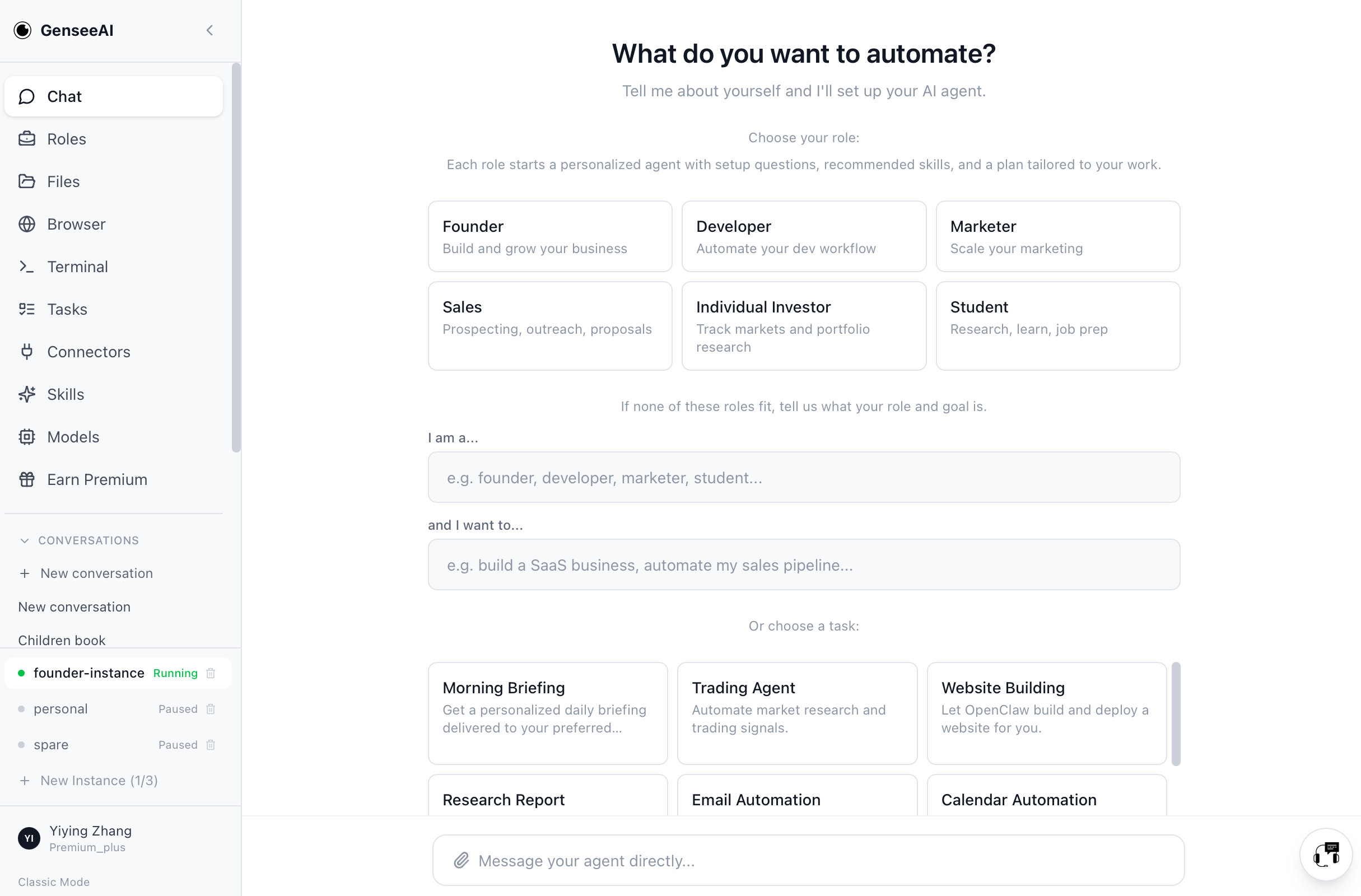
Some users are happy to explore the system first and build their own process from there. Others want to start from a goal and reach useful work as quickly as possible.
Both are valid. But the product was only really designed for the first group.
The starting point of a product shapes how users think about it. If a product starts from system concepts, users learn to think from the system outward. If a product starts from goals, tasks, or roles, users can begin from their own context and work inward.
That difference is especially important in AI. Because a lot of AI products still assume that once users see enough power, they will tolerate any amount of setup or abstraction before reaching value.
Sometimes that is true. But if the goal is to build something that supports real workflows for a broader range of people over time, the starting point matters much more.
We did not want every user to have to become fluent in OpenClaw before they could meaningfully use GenseeAI. That is what eventually led to Guided Mode.
Why roles and tasks became the new entry point
Once we decided that GenseeAI needed another way in, the next question was: what should that new starting point actually be?
We kept coming back to the same answer: most people do not begin with "I want to configure an instance." They begin with "I need help with something specific."
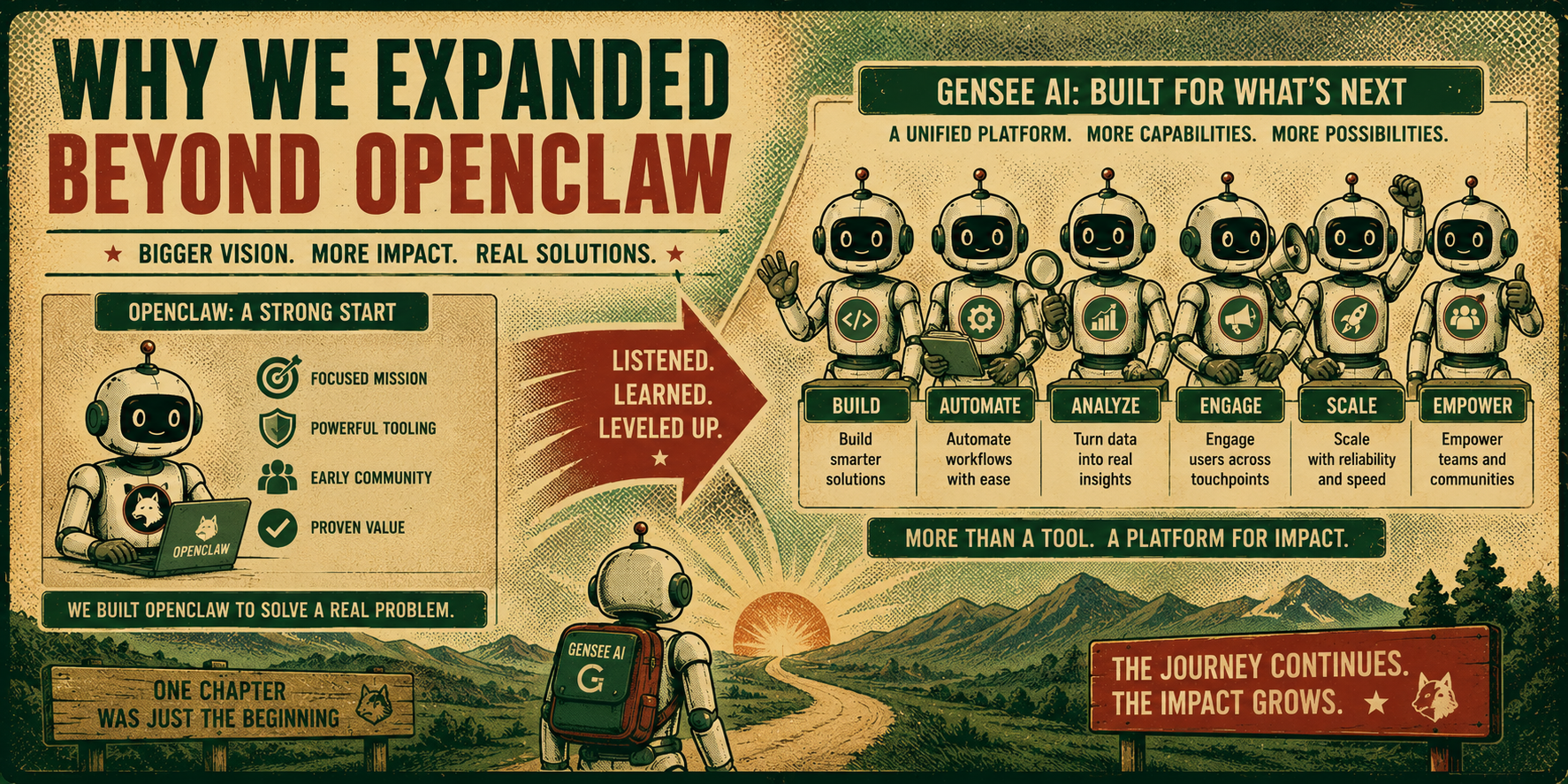
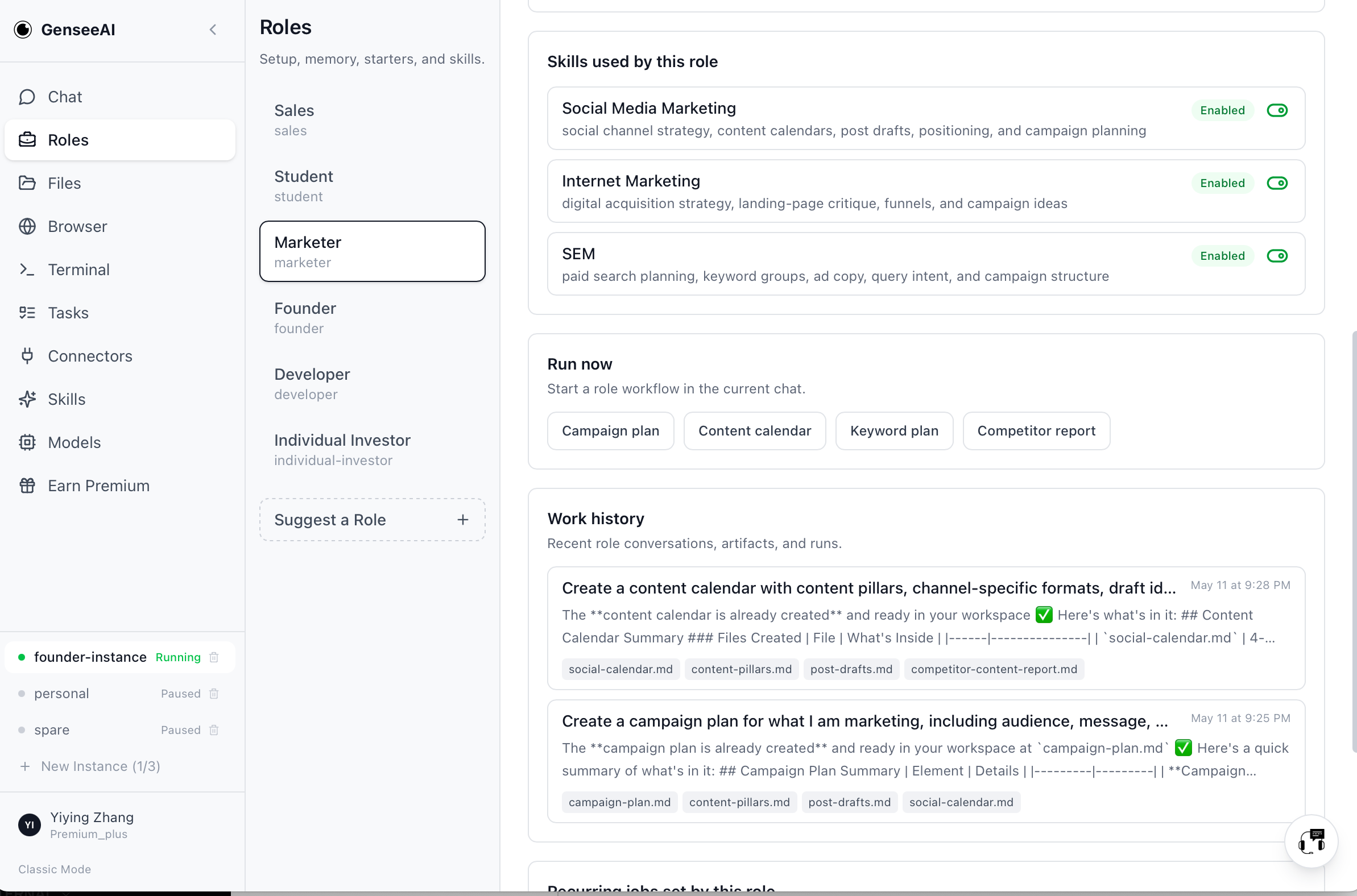
That is why Guided Mode starts from roles and tasks.
A founder can start as a founder. An investor can start as an investor. A marketer can start as a marketer. Each role comes with a tailored setup, relevant skills, and starter workflows that make sense for that context.
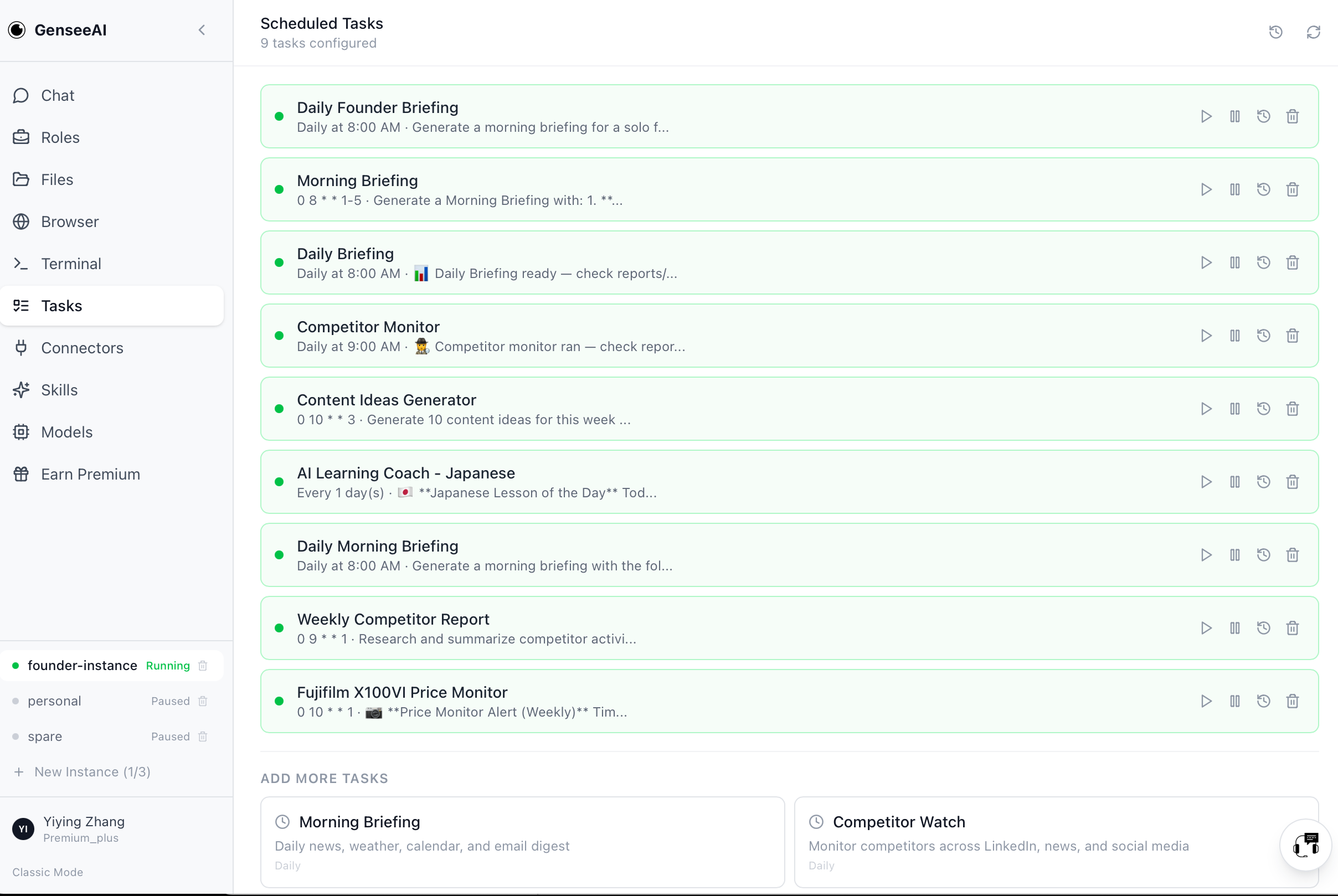
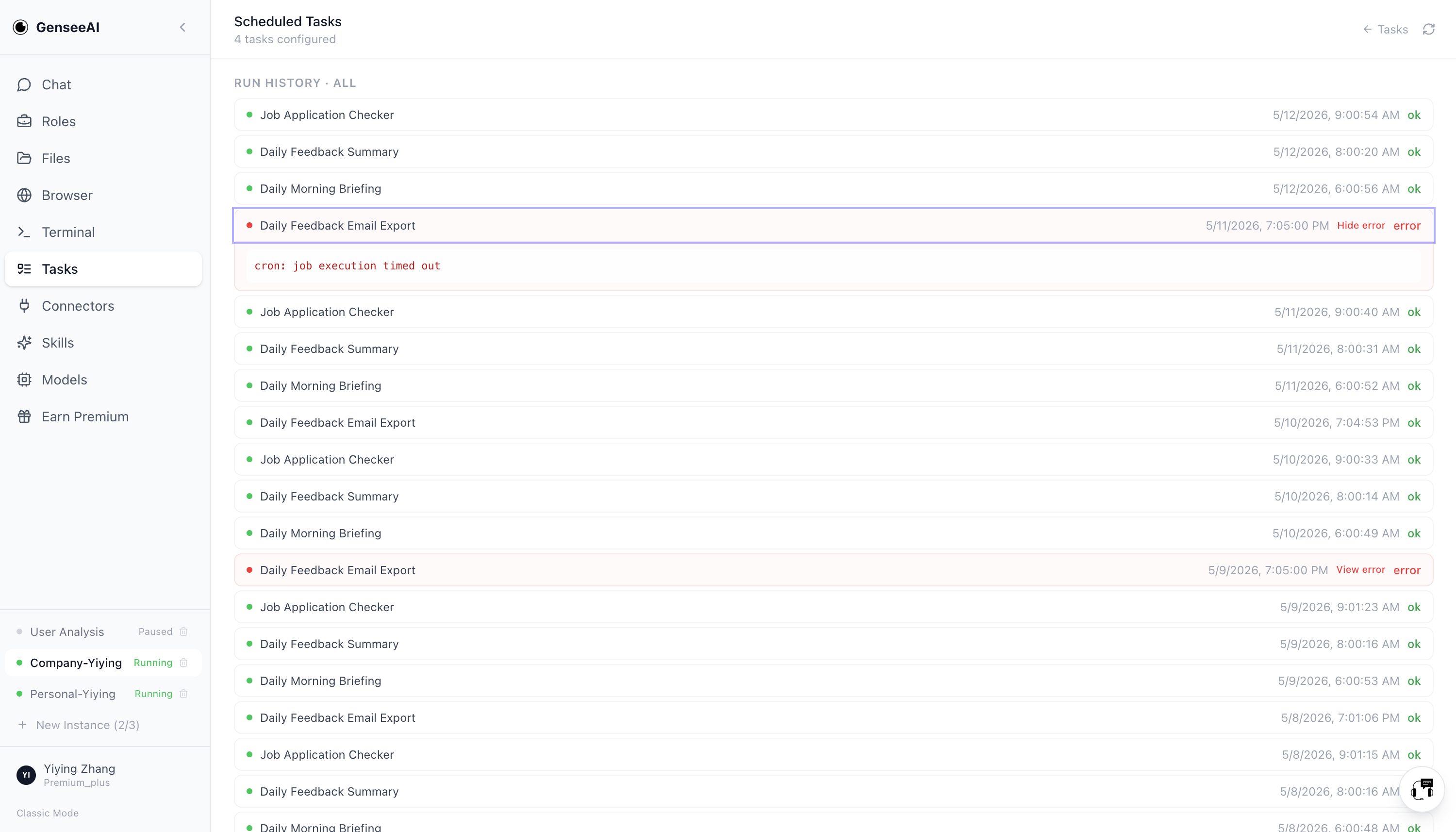
Tasks work the same way. Instead of asking users to learn how cron jobs or background processes work, Guided Mode lets them describe what they want to happen on a recurring basis and sets it up through conversation.
This is not about removing power. The underlying system is the same. It is about making the entry point match the user's intent, rather than asking them to translate their intent into system concepts first.
Why the starting point affects more than onboarding
One thing we realized during this process is that a longer starting point would affect more than onboarding.
It would affect retention.
It would affect confidence.
It would affect whether users could actually turn GenseeAI into part of their regular workflow.
If the first step feels too far removed from the user's intent, many people never make it far enough to discover the rest of the system.
A better starting point changes that.
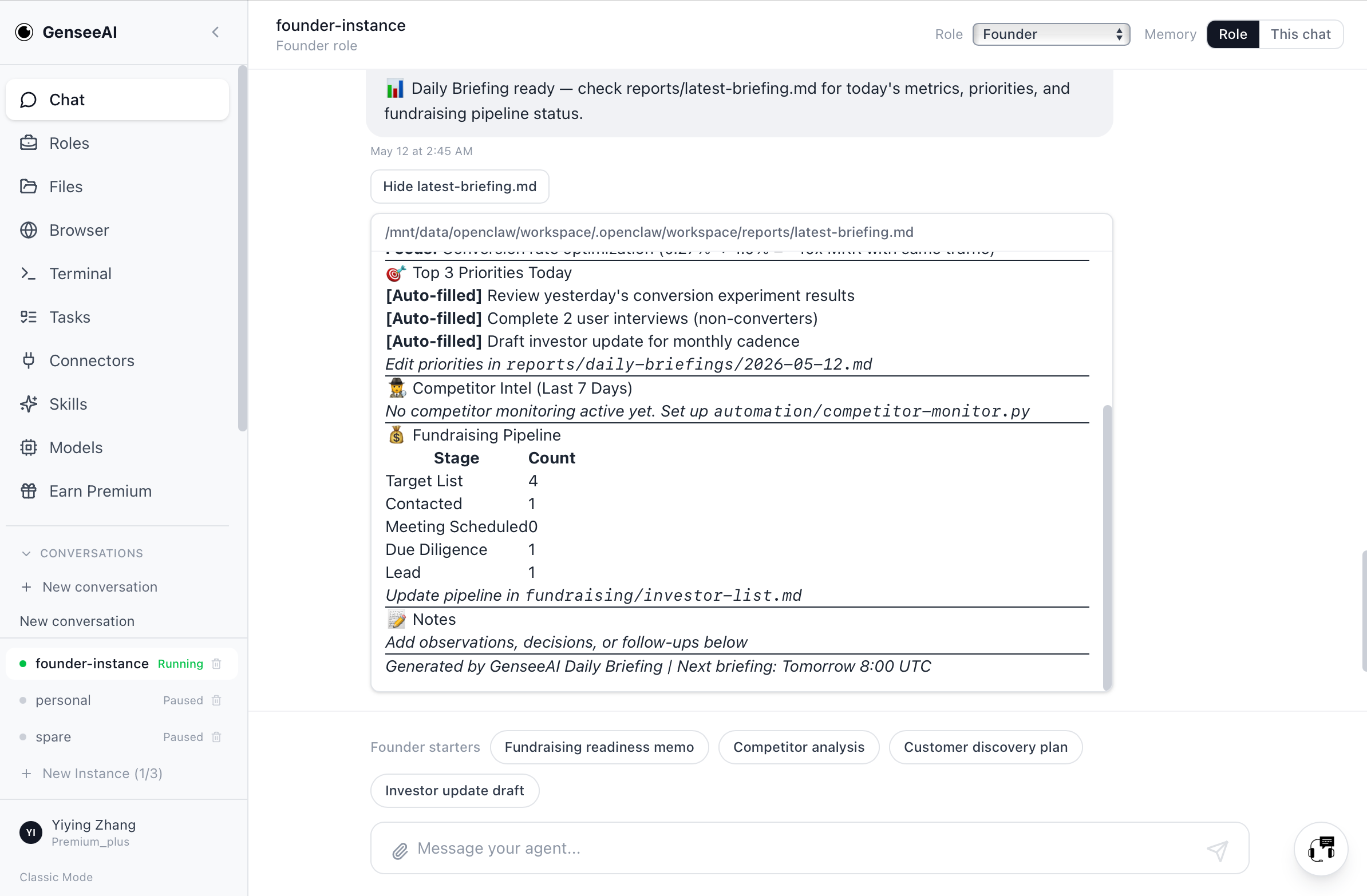
When users can get to useful output faster — a generated report they can preview, a recurring task that runs on schedule, a role that remembers their preferences — they are more likely to come back. And when they come back, they naturally discover deeper capabilities over time.
What we wanted GenseeAI to become
At a product level, this led us to a broader question: What do we want GenseeAI to become?
Not just a place where technically fluent users can operate OpenClaw-based workflows well.
But a place where a much wider range of users can arrive with a real objective and reach something useful faster.
That means GenseeAI needs to support:
- A stronger entry point
- Better continuity after setup
- Workflows that feel sustainable over time
- Mobile and desktop experiences that work together more naturally
- Security and control without requiring every user to think like a system operator
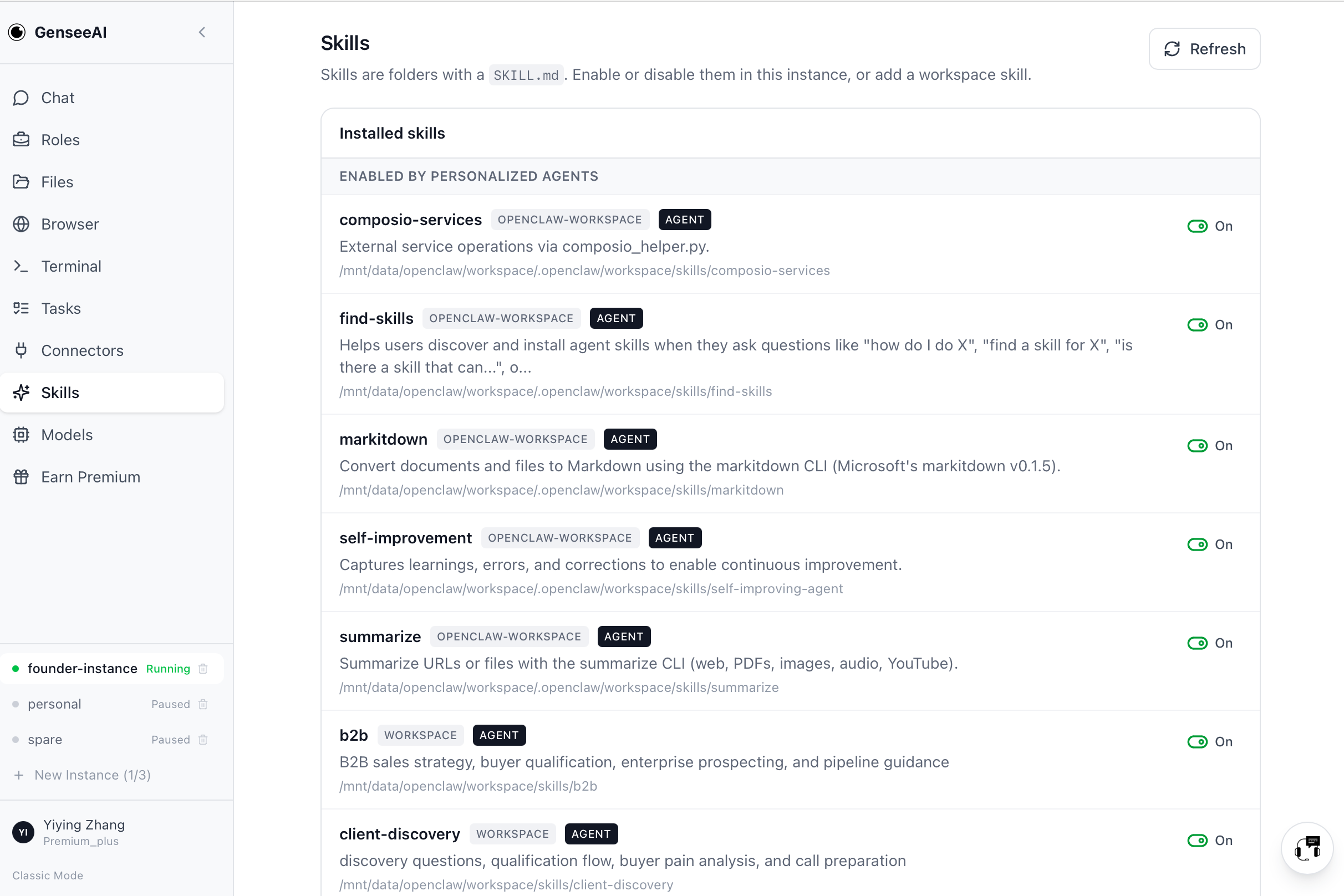
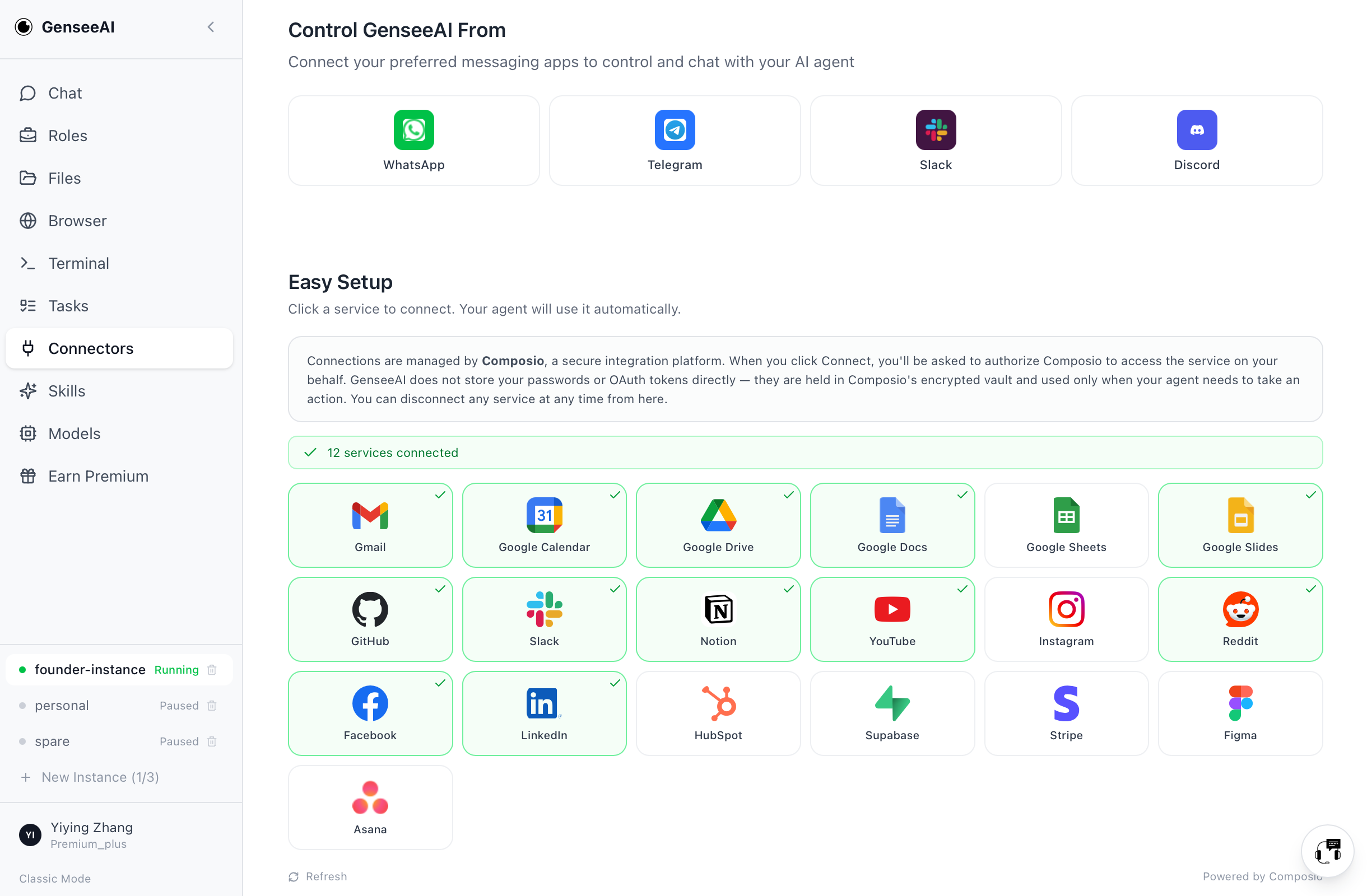
This is the direction Guided Mode represents.
Not a break from the product's roots, but a broader interpretation of who GenseeAI should work for.